Category

Skeleton article title placeholder text spanning two or three lines while the content loads from the CMS


The Alternative for Germany (AfD) won 43.8% of the vote in Saxony-Anhalt on Sunday and thus nearly doubled its result from the last state election. Chancellor Friedrich Merz's Christian Democratic Union (CDU) collapsed to 17.2%, half of what it had before. The AfD now holds 39 of the state parliament's 83 seats, three short of the outright majority that would have let it govern without any of the parties that have shared power in Germany since 1949. That leaves the Bündnis Sahra Wagenknecht (BSW), which cleared the five-percent threshold for the first time with 5.3%, as the potential kingmaker. BSW, which politically assembles far-left and far-right positions, is openly toying with the idea to at least tolerate an AfD-government.
Saxony-Anhalt has 2.18 million residents, about 2.6% of the national population, and four votes in the Bundesrat, the second chamber in German parliament. None of that sounds like much. However, what makes Sunday's result matter has almost nothing to do with the state's size. By controlling Saxony-Anhalt, the AfD has at least a foot in the door also on the federal level.
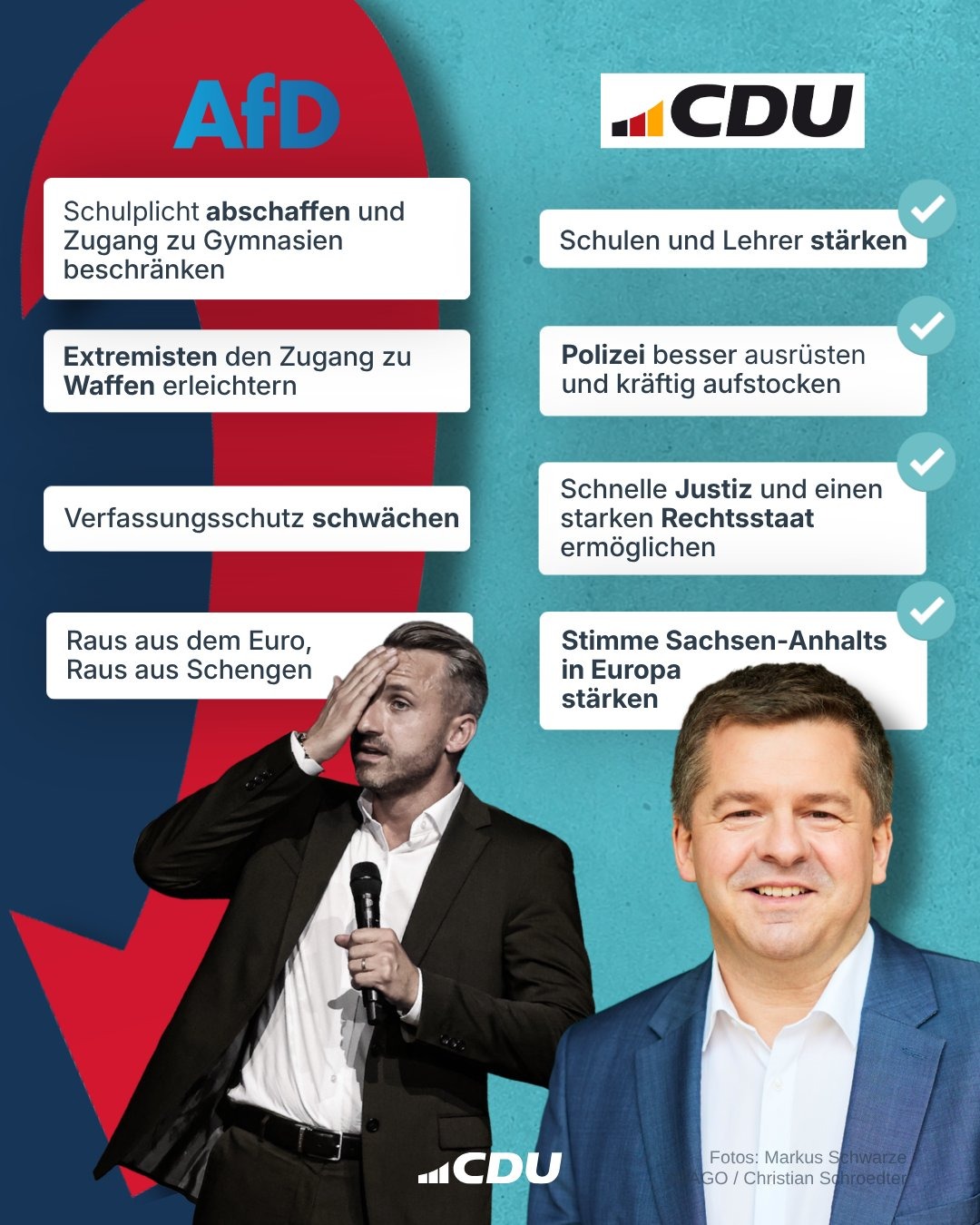
Who is at the control? Federal law overrides state law under Article 31 of the Basic Law, so Magdeburg — the state capital — can't rewrite national immigration or tax policy. But it enforces that law, and enforcement is not a small lever: a state executive can push local authorities toward faster deportations, swap cash benefits for vouchers, and starve the shelters and integration programs that depend on state money. Hold more than a third of the seats in the Landtag, and a party also gets a blocking minority over judicial appointments, including to the state constitutional court, which needs a two-thirds majority to fill its bench.
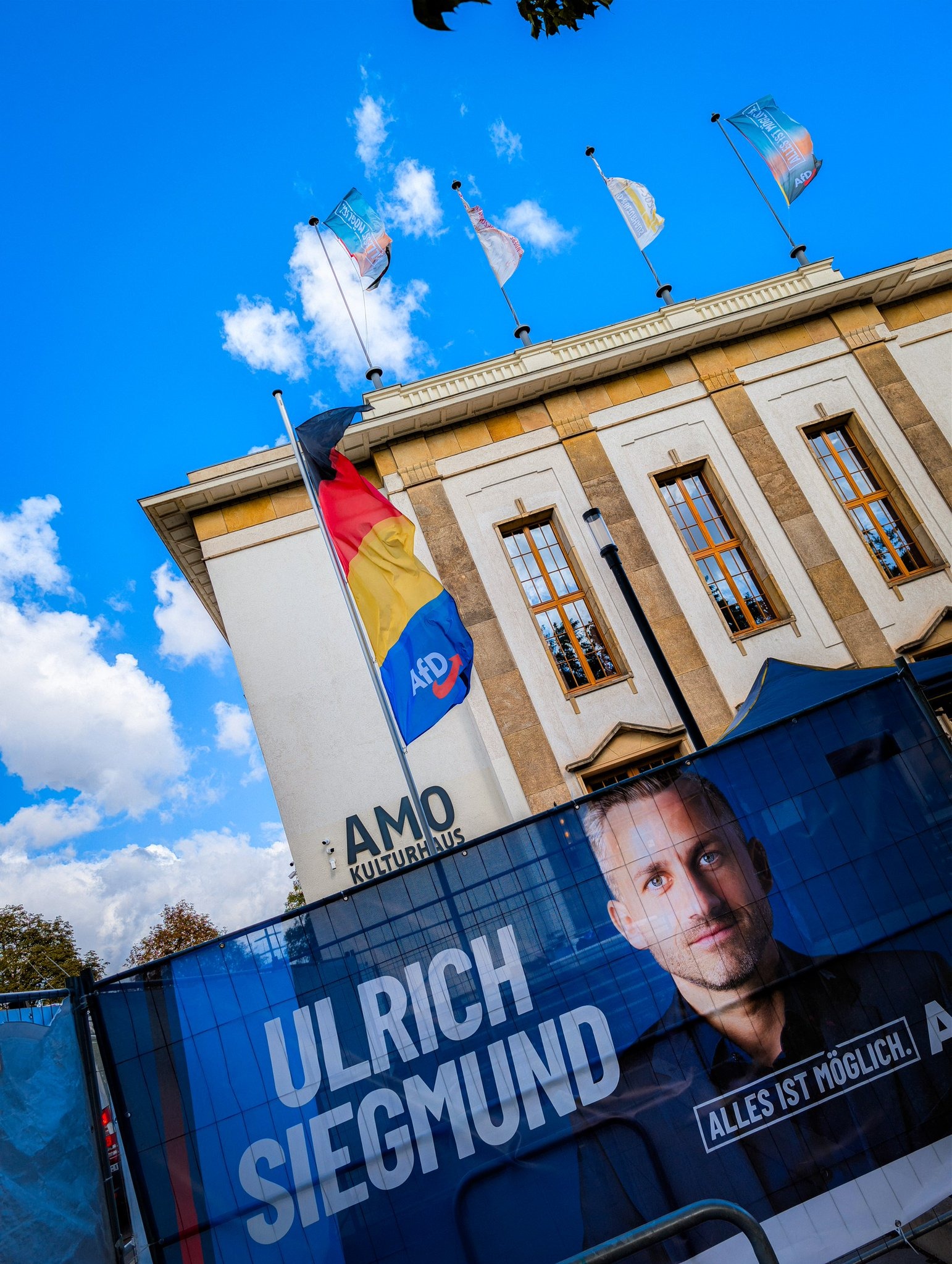
In addition: A state's interior ministry oversees its Office for the Protection of the Constitution, the domestic intelligence service. Whoever holds that ministry in a future government, in Saxony-Anhalt or elsewhere, would gain oversight of, and access to, the same agency's files including any files it keeps on the AfD itself. Who ends up in senior posts is not a merely theoretical worry either: past reporting on Ulrich Siegmund's campaign in Saxony-Anhalt found parliamentary staff who had previously led the banned neo-Nazi youth group Heimattreue Deutsche Jugend, with candidates tied to banned right-wing groups reportedly under discussion for the state chancery and senior justice positions.
It would be convenient to pin all of this on Merz, whose government is struggling badly enough on its own: 13% job approval, the worst number ever recorded for a sitting chancellor. The AfD didn't just capitalize on Merz's weakness. It pulled voters directly from the CDU, the FDP, and the Left, while — most importantly — also reaching people who had stopped voting altogether, through a hyperlocal, emotionally pitched campaign that no mainstream party came close to matching. A growing number of voters, disproportionately in the east, simply don't see themselves in what the established parties are offering.
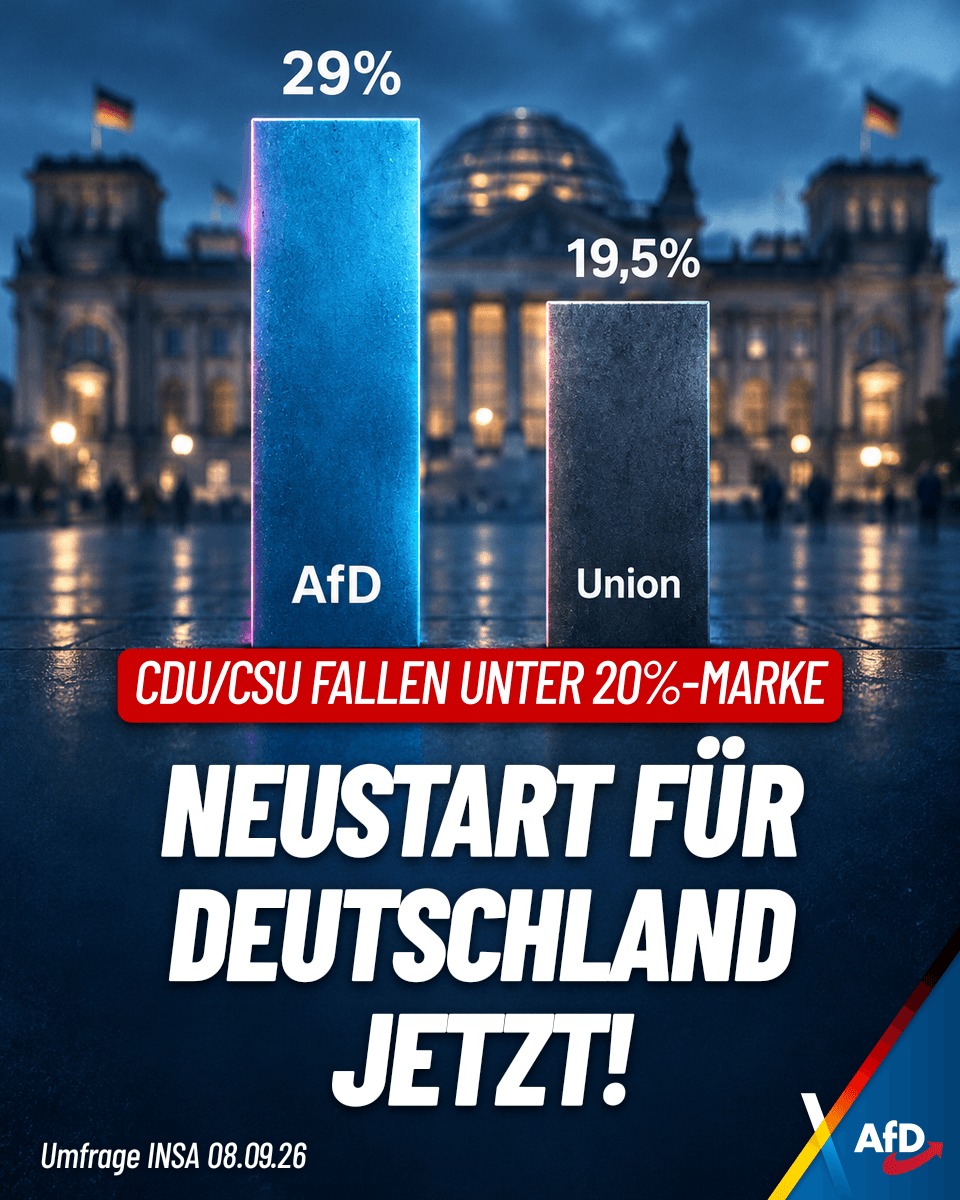
So is Saxony-Anhalt a one-off, or a preview? The national numbers point toward preview. Pollsters from Forsa put support in eastern Germany at 45% this month, a record. This isn't one state's grievance playing out in isolation: Saxony at 42%, Thuringia at 40%, Brandenburg at 37% tell roughly the same story. The underlying drivers look similar everywhere: a governing coalition stuck at 15% approval, migration and energy costs as live grievances, and a party willing to out-organize everyone else at the local level.
None of that means the AfD is about to run the country. Germany's next scheduled Bundestag election isn't until 2029 unless the current coalition falls apart early, and even at 28% nationally, the AfD would need either an outright majority or a coalition partner it doesn't currently have. The real risk is another one: state-level normalization making federal cooperation look less unthinkable over time.
Europe doesn't need to wait for any of that to feel the effects.
If that ever happened, the consequences would be not only symbolic. On Ukraine, the party wants military aid stopped, sanctions on Russia lifted, and Nord Stream gas flowing again. A position that would put Germany at odds with the rest of NATO. On migration, its "remigration" program reaches well past the administrative tools already available at state level. On institutions, the same public broadcasters, courts, and domestic intelligence services that have classified the AfD as extremist would likely become targets.
Europe doesn't need to wait for any of that to feel the effects. Some AfD figures already echo the Kremlin's own account of the war: That NATO's eastward expansion left Russia no real choice but to invade. Every state win for the party narrows the room Merz has to keep Germany as Ukraine's second-largest bilateral backer — with or without the AfD anywhere near federal power.