Category

Skeleton article title placeholder text spanning two or three lines while the content loads from the CMS


Argentina’s renewed pressure over the Falkland Islands is not simply another chapter in a decades-old sovereignty dispute.
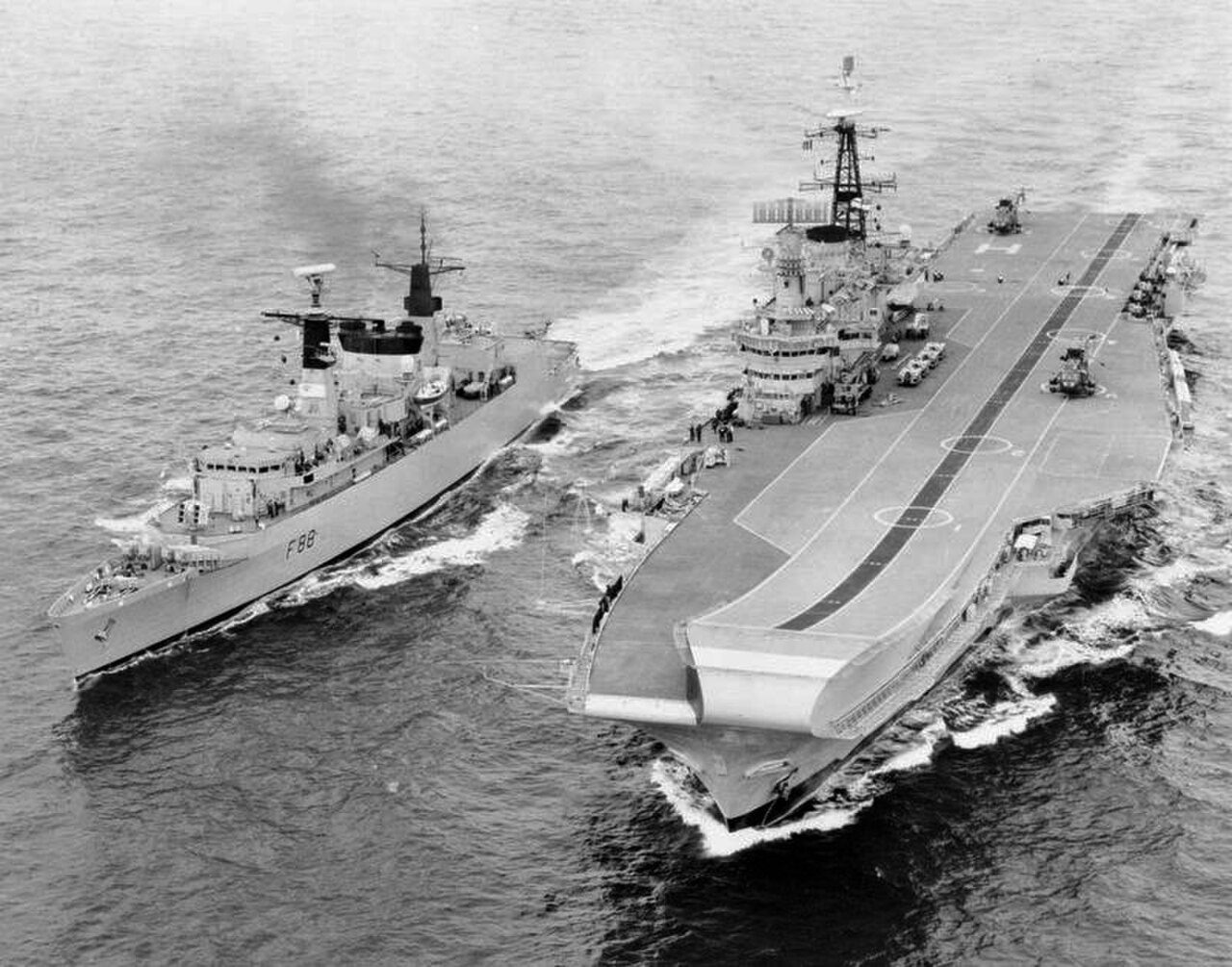
Argentina’s renewed pressure over the Falkland Islands is not simply another chapter in a decades-old sovereignty dispute. President Javier Milei is exploiting a rare convergence of factors: domestic political pressure, the prospect of Falklands oil production, growing friction between Washington and London, and an increasingly transactional approach to alliances under President Donald Trump.
Milei does not need to prepare for war to change the Falklands equation. His objective may be more limited — and potentially more consequential: to raise the political and economic cost of British control while testing whether Washington still treats the British position as politically untouchable.
That makes the Falklands less a question of imminent military conflict than a test of whether the Trump administration’s emerging, more hemispherically focused approach — sometimes described as a "Donroe Doctrine"—could alter the strategic balance in the South Atlantic.
Milei’s assertion that the Falklands are Argentine territory is hardly new. It reflects Argentina’s longstanding position and remains deeply embedded in the country’s political culture. What is different is the environment in which he is making it.
On September 3, Milei again declared Argentina’s sovereignty over the islands and announced measures to accelerate sanctions against companies involved in oil extraction there. His government also moved to strengthen Argentina’s defense posture in the south.
The timing matters. The Sea Lion project, led by Israel’s Navitas Petroleum and Britain’s Rockhopper Exploration, is under development north of the Falklands. First oil is currently planned for early 2028, with drilling scheduled to begin in 2027.
Oil changes the calculation.
A sovereignty dispute can remain symbolic for decades. A producing oil field creates revenues, infrastructure, corporate exposure and strategic stakes. Milei is therefore acting before the economic facts on the ground become irreversible.
The issue is not simply how much oil the Falklands may produce. It is that resource development can transform a political dispute into a contest over who controls investment, infrastructure and future revenue.
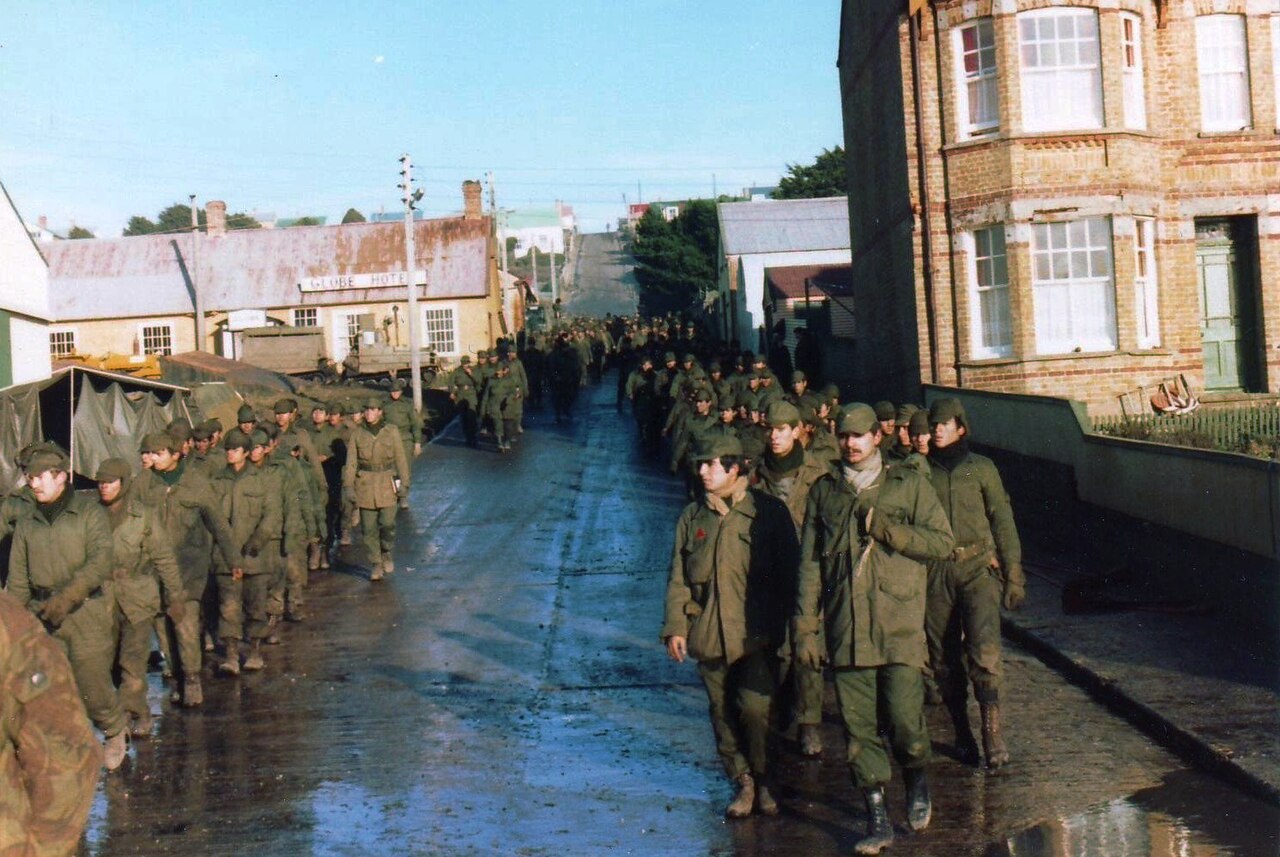
There is an obvious domestic explanation for Milei’s escalation. His political standing has weakened, economic difficulties remain, and the Malvinas issue provides one of Argentina’s most powerful nationalist causes. With elections approaching, sovereignty rhetoric can help redirect public attention and consolidate support.
That explanation should not be dismissed.
But it is insufficient on its own.
If Milei were merely seeking a domestic distraction, he would not need to combine nationalist rhetoric with sanctions against oil companies, a stronger military posture in Tierra del Fuego and explicit references to changing U.S. policy.
The more interesting possibility is that Milei sees an opening abroad as well as at home.
He is betting that the strategic environment surrounding the Falklands is changing — and that Argentina may be able to exploit that change at relatively low cost.
Milei has aligned himself unusually closely with Trump, and his Falklands strategy reflects an understanding of the Trump administration’s transactional logic.
The lesson is not that Washington has abandoned democratic or ideological considerations. It is that strategic utility increasingly matters alongside them. Energy, security, political loyalty and the willingness of partners to support U.S. priorities can shape the value Washington assigns to individual relationships.
The Venezuela experience illustrates the broader principle: where energy and strategic interests are sufficiently important, Washington can move toward pragmatic engagement even after periods of intense political confrontation.
Milei may see the Falklands through the same lens.
Argentina offers Washington several things it values: political alignment, energy potential, critical-mineral resources, and a government willing to deepen security cooperation with the United States.
The calculation may therefore be straightforward. If Britain is becoming a less reliable or less useful partner in Washington’s eyes, Argentina could become more valuable.
The most consequential development may not have come from Buenos Aires at all.
Trump has said he is reviewing the U.S. position on the Falklands. He has also declined to say whether Washington would support Britain if Argentina attempted to retake the islands, while criticizing London for failing to provide the support he wanted during the Iran conflict.
That does not mean Washington supports Argentina’s sovereignty claim. Nor does it mean the United States is preparing to abandon Britain.
But ambiguity itself can have strategic consequences.
For decades, British control of the islands has rested not only on military capabilities but also on the expectation that the United States would ultimately stand behind its closest ally in a serious crisis. Trump’s comments introduce uncertainty into that assumption.
Milei does not necessarily need Trump to recognize Argentine sovereignty.
He may only need Washington to stop treating British control as a political constant.
That is a much lower bar.
The United Kingdom remains a nuclear power, a permanent member of the UN Security Council and a major military actor. London has reaffirmed its commitment to the Falklands and to the islanders’ right to self-determination.
Yet strategic power is partly about perception.
Britain is under pressure to increase defense spending, manage competing global commitments and preserve its relationship with an increasingly unpredictable Washington. Trump’s public criticism has added another layer of uncertainty. He has portrayed Britain as facing serious domestic and economic problems while questioning aspects of its energy and defense policy.
None of this means Britain is incapable of defending the islands.
It means Milei may believe the political cohesion behind that defense is becoming less certain.
That distinction is crucial. Argentina does not need Britain to become militarily weak. It needs London to appear more isolated.
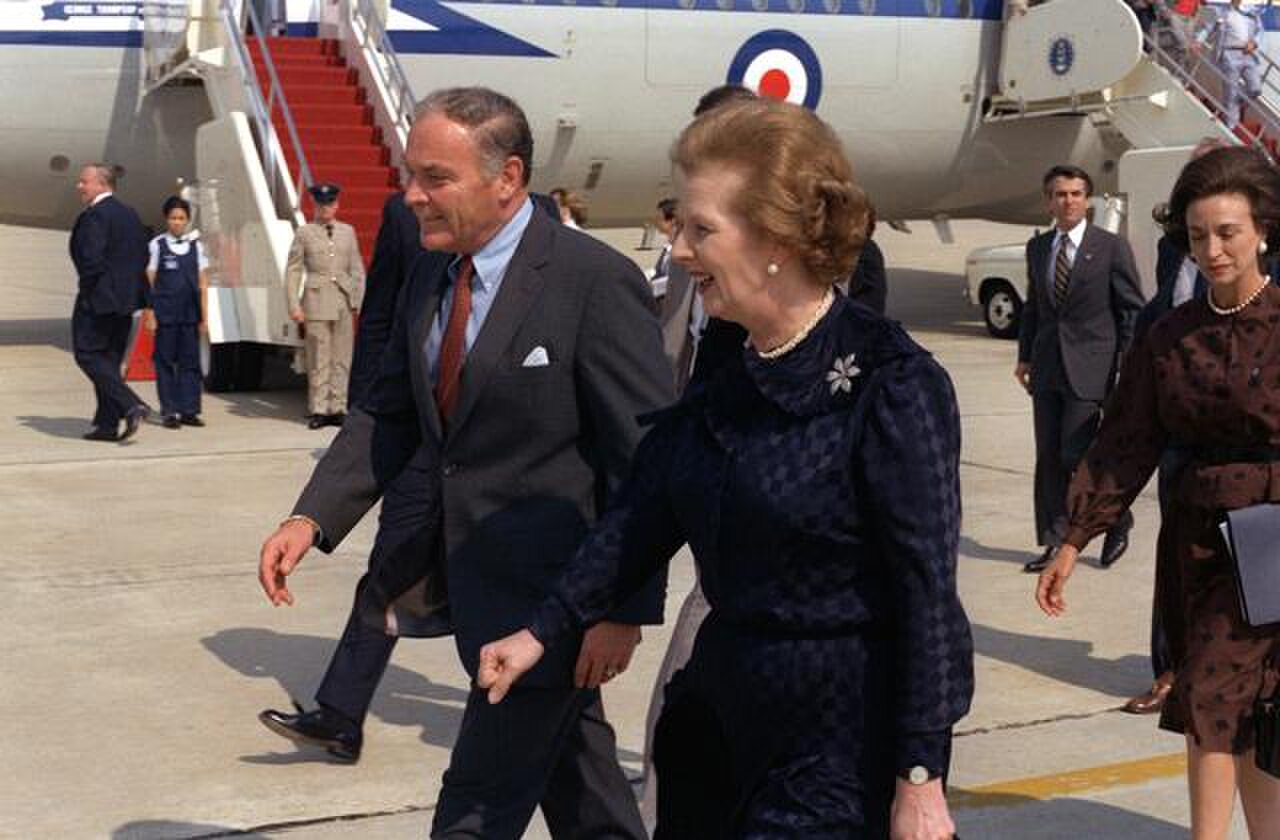
There is an obvious temptation to compare today with 1982. The comparison needs to be handled carefully.
The Reagan administration did not immediately provide Britain with unconditional military backing. Washington initially attempted to mediate and maintained formal neutrality on the sovereignty question. Only after Argentina rejected the U.S. peace effort did Washington move decisively behind London, suspending assistance to Argentina and providing Britain with military equipment, fuel and intelligence.
The lesson is not that America abandoned Britain in 1982.
It is that American support was a political decision, not an automatic reflex.
That distinction may be precisely what Milei is testing today.
It is that American support was a political decision, not an automatic reflex.
An Argentine invasion remains highly unlikely. Milei does not need one.
His more plausible strategy is a cumulative pressure campaign: sanctions against companies operating around the islands, diplomatic escalation, military signaling in southern Argentina and political pressure on Britain.
The objective would be to make the status quo progressively more expensive.
This is where oil becomes more than an economic issue. If Falklands production becomes commercially significant, Argentina can portray British-controlled resources as the exploitation of disputed territory. Britain, meanwhile, would have to decide how far it is willing to defend not only sovereignty but the commercial interests attached to it.
That creates a new political battlefield.
The Falklands dispute is also unfolding within a broader geopolitical shift.
The South Atlantic is no longer strategically marginal. Argentina possesses significant energy potential and critical-mineral resources, while China has expanded its economic footprint across Latin America. Energy infrastructure, maritime access and supply chains are increasingly connected to the wider competition over influence in the Western Hemisphere.
The issue, therefore, is not that Washington needs Falklands oil.
It is that a major new Western Hemisphere energy project could become strategically relevant at a time when the United States is placing greater emphasis on regional energy security, resilient supply chains and limiting extra-hemispheric influence.
That gives the Falklands a relevance far beyond the sovereignty dispute itself.
For Trump, the Falklands could look like an unusually attractive bargaining chip.
Milei is one of Washington’s most sympathetic partners in Latin America. Argentina has substantial energy and critical-mineral potential, wants closer security ties with the United States and has positioned itself firmly within Washington’s broader strategic camp.
It is not difficult to see why a transactional administration might view Buenos Aires as an increasingly useful partner.
But treating the Falklands as leverage against London would carry costs.
A U.S. administration that appears willing to trade an ally’s territorial interests for energy, political loyalty or a better strategic relationship with Argentina would send a message far beyond the South Atlantic.
It would tell allies that sovereignty can become negotiable when strategic priorities change.
That would be a much bigger consequence than anything Milei could achieve alone.
Milei is exploiting a rare convergence: domestic political pressure, Argentine nationalism, oil, British defense challenges, tension inside the U.S.-UK relationship and uncertainty over the future direction of American hemispheric policy.
The Falklands are therefore returning to strategic attention not because Argentina is on the verge of war, but because the assumptions surrounding the dispute are changing.
The most important question is no longer whether Argentina can retake the islands.
It is whether Milei can convince Washington that Britain’s control of them is no longer a political constant.
If that assumption begins to erode, the Falklands will have entered a new strategic era — not of imminent war, but of bargaining, pressure and uncertainty.
And Milei may have already understood the most important lesson of the Trump era: sometimes changing the political price of the status quo is more important than changing the status quo itself.