Category

Skeleton article title placeholder text spanning two or three lines while the content loads from the CMS


Previously in this series: Part I — Colombia: The First Test of America’s New Security Architecture · Part II — Ecuador: The Operational Test of America’s New Security Doctrine
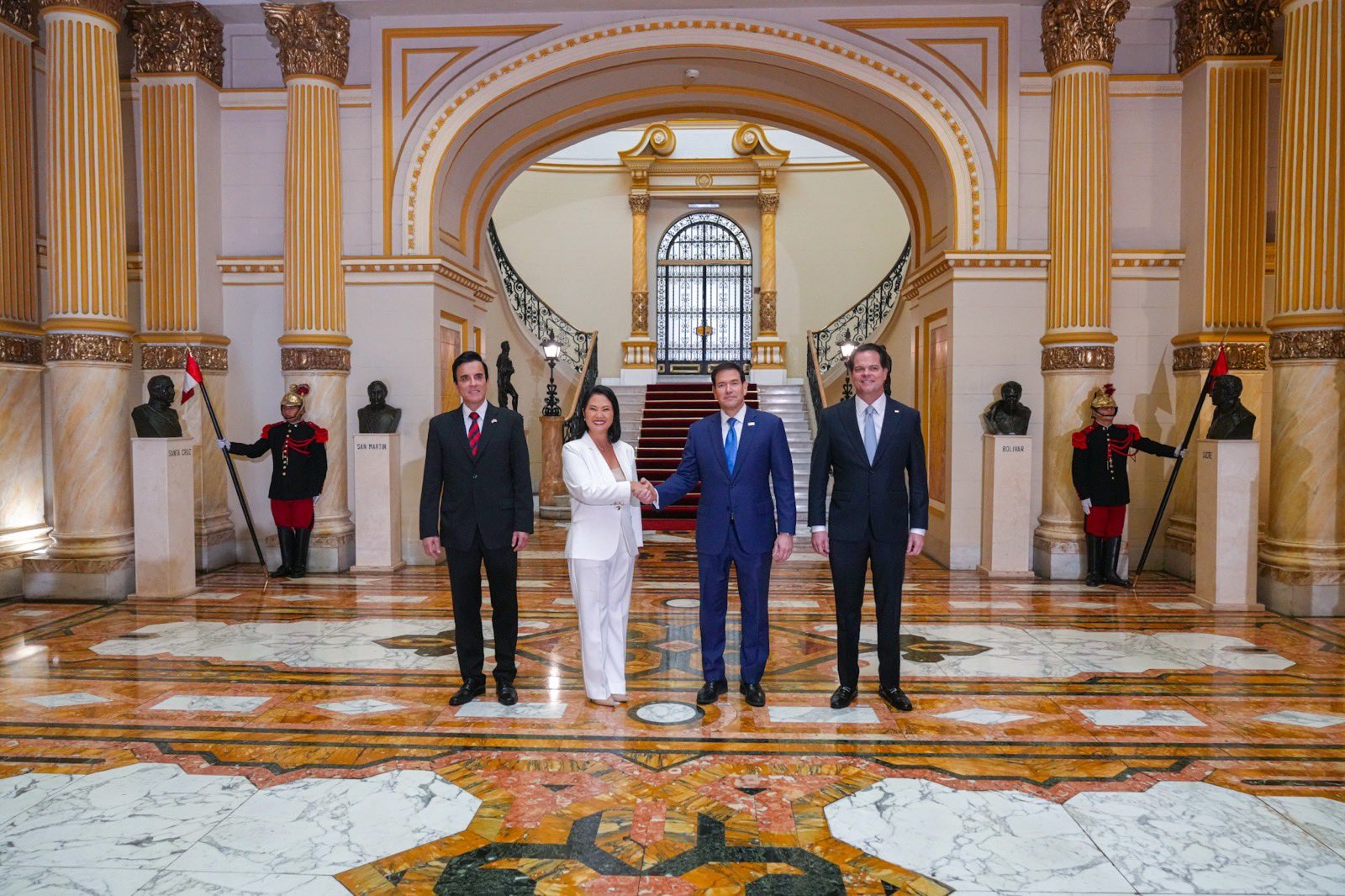
Peru is where the logic of Marco Rubio’s Latin America tour becomes broader than security.
Colombia demonstrated how Washington can build a security relationship around an established regional partner. Ecuador showed how that relationship can be operationalized against criminal organizations. Peru raises the more consequential question: what does Washington gain if these security partnerships become durable — and can security cooperation be converted into broader strategic influence?
The answer is not straightforward because Peru occupies a different geopolitical position.
Lima is moving closer to Washington on security. During Rubio’s visit, Peru formally joined the U.S.-led Shield of the Americas initiative, strengthening intelligence sharing and coordinated action against transnational criminal organizations. The United States had already designated Peru a Major Non-NATO Ally, while Washington has approved a possible $1.5 billion project for design and construction work at Callao Naval Base.
Yet Peru is simultaneously deeply integrated into China’s economic presence in the region.
Chinese trade with Peru grew by 35% in the first half of 2026 and surpassed trade with the United States. Chinese companies have significant interests in mining, energy and infrastructure, while the Chancay port has become the most visible symbol of Beijing’s expanding economic footprint.
This is the strategic problem Washington cannot solve through security cooperation alone.
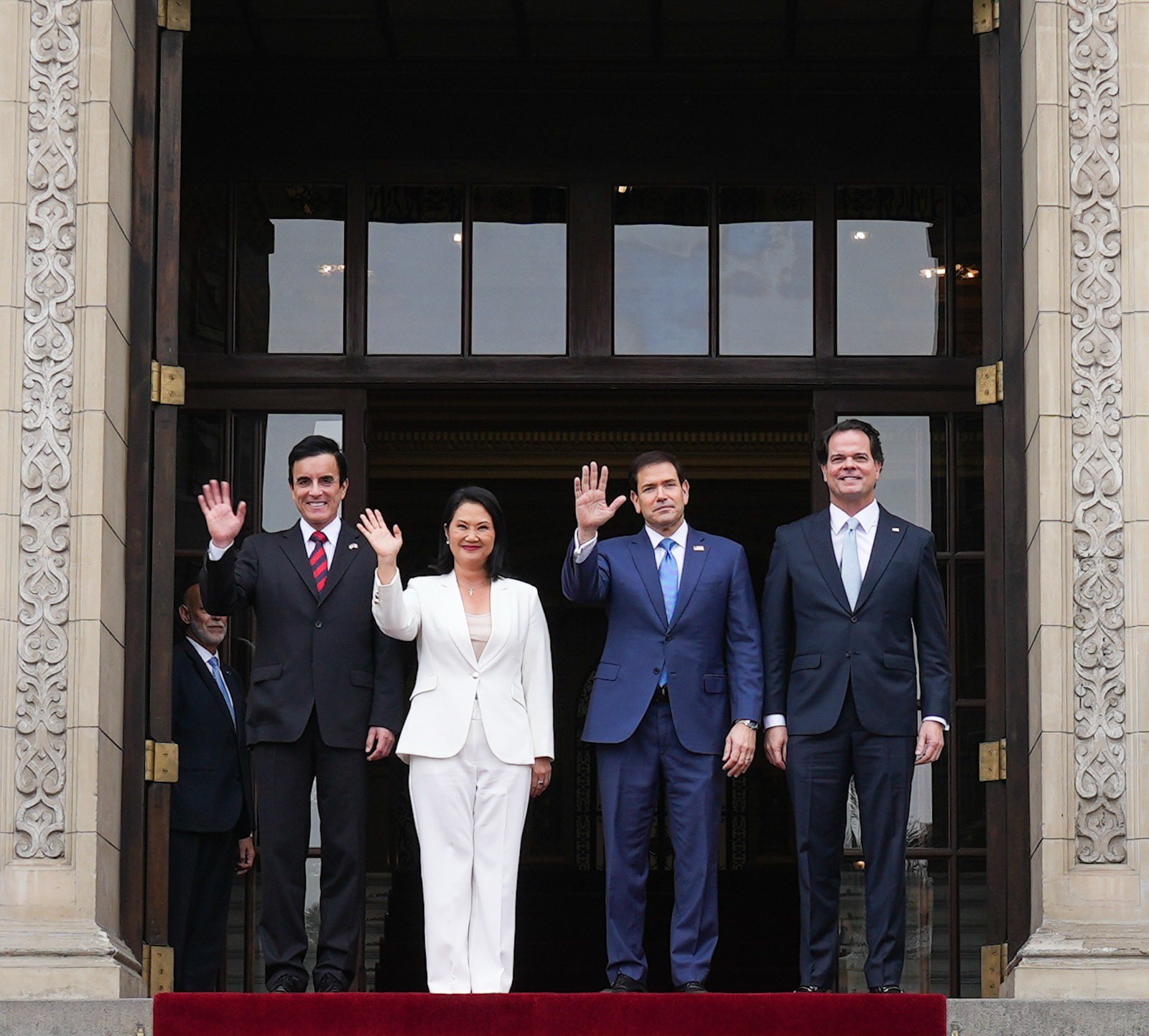
Peru’s decision to join Shield of the Americas is strategically useful to Washington because it creates another institutional link between the United States and a major Pacific-facing South American state. For Lima, the benefits are equally concrete: intelligence sharing, maritime cooperation, security assistance and greater access to American capabilities.
But none of this automatically changes Peru’s economic relationship with China.
That is why Peru is different from Ecuador.
The central issue is no longer whether the United States can provide security assistance. It is whether Washington can become sufficiently important economically and technologically that closer alignment with the United States changes Peru’s strategic calculations.
That requires a much broader proposition.
American influence will depend on investment, infrastructure, technology, energy, critical minerals and market access as much as on military cooperation.
The problem is particularly visible in trade. Peru is seeking relief from new U.S. tariffs while simultaneously experiencing faster growth in trade with China.
This creates an uncomfortable reality for Washington: it can ask Peru to cooperate more closely on security while its own trade policy may make economic alignment more difficult.
If the United States wants strategic influence, the economic component cannot be an afterthought.
The Chancay port illustrates the limits of a binary approach to U.S.-China competition.
Washington can warn about Chinese strategic influence, data security or the long-term implications of Chinese-controlled infrastructure. But Peru has its own economic interests, and Chinese capital remains important to its development.
The relevant question is therefore not whether Peru will “choose” Washington or Beijing. It is whether the United States can create enough economic and technological alternatives that Peru does not have to choose. That distinction is central to the emerging regional strategy.
A successful U.S. partnership should increase a country’s strategic options rather than narrow them. If Washington provides security cooperation while China provides much of the infrastructure, trade and investment, the United States may gain military access without achieving equivalent economic influence.
That would create an incomplete strategic partnership.
There are, however, signs that Lima is moving closer to Washington beyond security.
Peru’s decision earlier in September to break diplomatic relations with Iran was another indication of a foreign-policy orientation more closely aligned with Washington’s priorities. The decision does not by itself establish a new geopolitical bloc, but alongside defense cooperation and participation in Shield of the Americas, it contributes to a broader pattern.
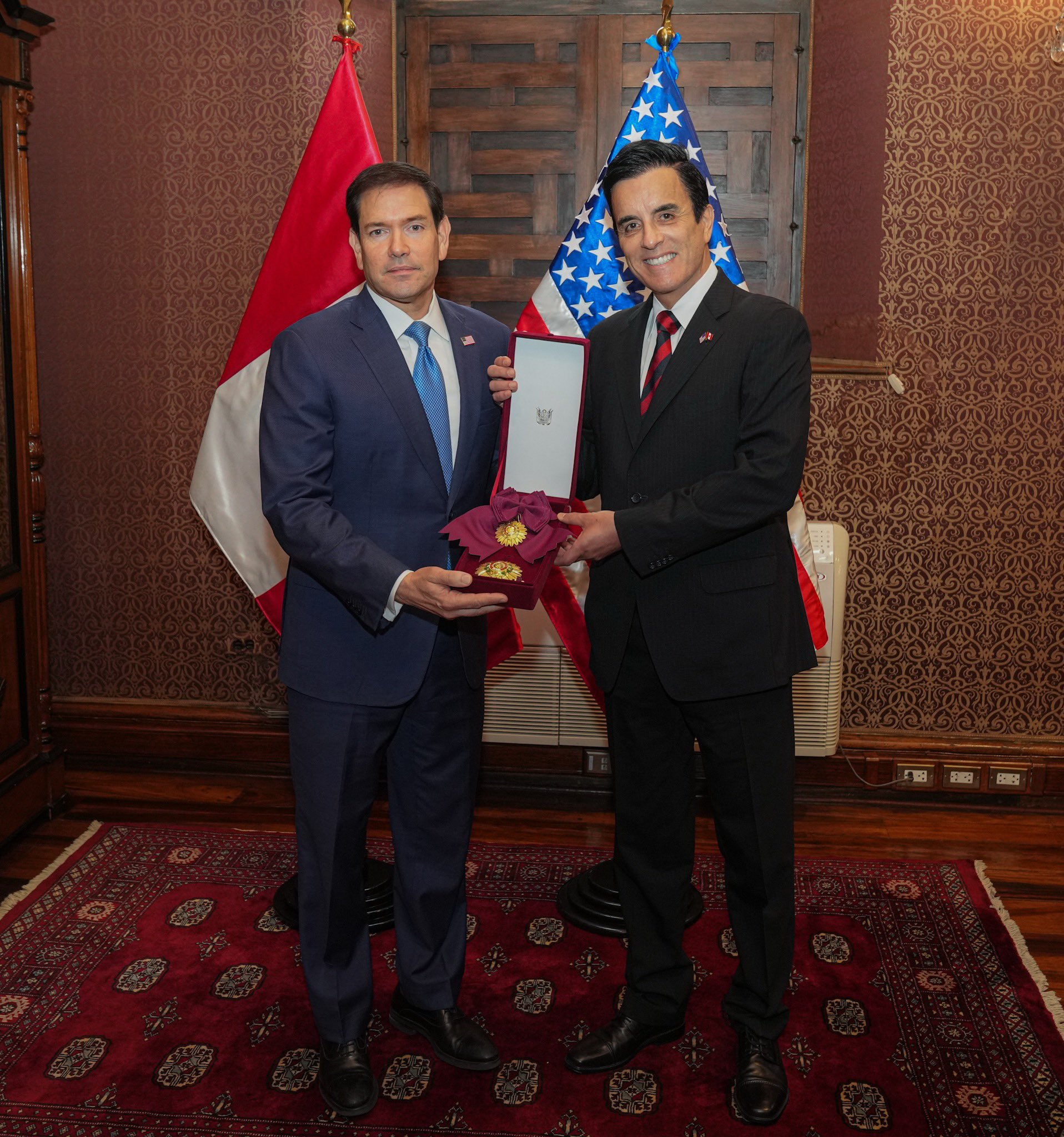
The important point is not that Peru is abandoning strategic autonomy.
It is that Lima appears willing to deepen cooperation with Washington where its interests overlap with those of the United States.
That is precisely the kind of relationship the Trump administration appears to be trying to build.
This brings the Venezuela question back for the final time.
If Washington were building a conventional ideological alliance, Venezuela would present a serious contradiction. The United States is deepening ties with governments such as Colombia, Ecuador and Peru while maintaining pragmatic engagement with Delcy Rodríguez’s interim authorities.
But the contradiction becomes less severe if the emerging strategy is understood differently. The United States appears to be building relationships according to strategic function.
Colombia is valuable for security capabilities and geographic position.
Ecuador is valuable for operational cooperation against criminal networks.
Peru is valuable for security, Pacific access, critical minerals and its position within the wider competition for economic influence.
Venezuela is valuable primarily for energy and its geopolitical position.
These relationships do not need to be ideologically identical — they need to produce strategic benefits.
That is a more flexible model than a traditional alliance — but it also carries a weakness. Transactional relationships can produce cooperation without necessarily producing trust or long-term political commitment.
This is where the three-country series arrives at its central conclusion.
Washington should not measure success by how many governments sign security agreements. Nor should it assume that political alignment automatically produces economic alignment.
The more important question is whether the United States can become a sufficiently important partner that governments voluntarily deepen cooperation across multiple domains.
That requires a different kind of American strategy.
Security cooperation must be accompanied by economic engagement. Defense partnerships should strengthen national capabilities rather than create dependency. Competition with China should offer alternatives rather than simply demand loyalty. And political cooperation should be compatible with institutional resilience rather than relying exclusively on governments willing to use coercive tools.
The distinction between alignment and dependence therefore becomes the defining issue.
A dependent partner may cooperate because it lacks alternatives.
An aligned partner cooperates because it sees a durable convergence of interests.
The second relationship is much more valuable.
An aligned partner cooperates because it sees a durable convergence of interests.
Taken together, the three stops suggest a clearer picture of what Washington is attempting to construct.
Colombia is the architecture. It provides the institutional and operational foundation for a wider security network.
Ecuador is the test. It demonstrates whether that network can translate intelligence, equipment and political alignment into effective action against transnational criminal organizations.
Peru is the strategic payoff. It tests whether security cooperation can become broader geopolitical influence in a country where China remains economically important.
And Venezuela is the stress test running through all three.
It demonstrates that the administration’s policy is unlikely to be organized around a simple division between democratic allies and authoritarian adversaries. Strategic utility increasingly determines the type of relationship Washington is willing to pursue.
That does not make the strategy incoherent.
It makes it transactional.
The advantage is flexibility. Washington can cooperate with different governments for different purposes and avoid imposing a single ideological template on the hemisphere.
The risk is durability. If relationships are built mainly around immediate interests, partners may cooperate when those interests coincide and distance themselves when they do not.
The United States therefore faces a final strategic choice.
It can build a hemisphere in which governments cooperate with Washington because they have few alternatives.
Or it can build one in which cooperation with Washington is attractive because it delivers security, investment, technology, market access and greater strategic options.
The second model would be considerably more difficult to construct — but far more durable.
That is ultimately what Rubio’s three-country tour is beginning to test.
Peru reveals the broader purpose of Washington’s emerging hemispheric strategy. Security cooperation can create access and political alignment, but it does not automatically produce economic or geopolitical influence. Colombia provides the architecture, Ecuador tests the operational model, and Peru asks whether the United States can convert both into durable strategic influence while China remains deeply embedded in regional trade and infrastructure. Venezuela reinforces the central conclusion: Washington is building a flexible, transactional network rather than a purely ideological bloc. Its success will depend on whether that network can evolve from short-term strategic alignment into partnerships that are economically valuable, institutionally resilient and voluntarily sustained.