Category

Skeleton article title placeholder text spanning two or three lines while the content loads from the CMS


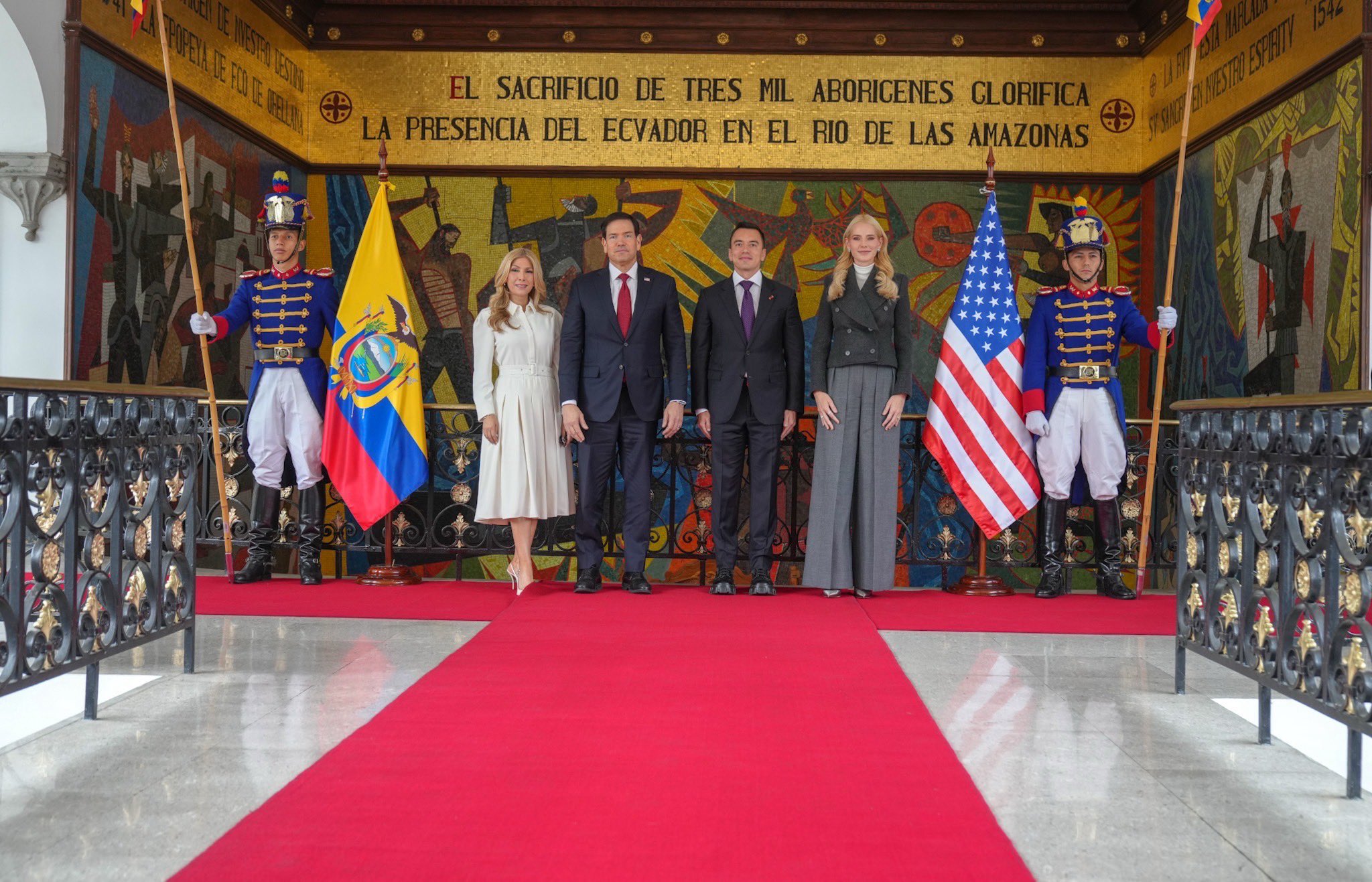
Marco Rubio’s tour of Colombia, Ecuador and Peru offers an early view of how the Trump administration is attempting to rebuild U.S. influence in the Western Hemisphere. The three visits should not be read simply as separate bilateral engagements. Together, they illustrate an emerging approach that connects security cooperation, counternarcotics, intelligence sharing, economic interests and competition for strategic influence.
The three countries occupy different positions within that approach. Colombia has the capabilities and geography to become a security anchor; Ecuador is becoming a test of how aggressively Washington can operationalize its new counter-criminal strategy; and Peru presents the harder question of whether security alignment can be translated into broader geopolitical influence in a country where China remains economically important.
The series also examines Venezuela as a recurring test of the administration’s priorities. Washington is deepening cooperation with governments that are politically close to the Trump administration while simultaneously maintaining pragmatic engagement with Venezuela’s interim authorities where energy and strategic interests are involved. The result is less an ideological bloc than a potentially flexible network of governments whose interests overlap with those of the United States in different ways.
This first part examines Colombia and asks the foundational question: can Washington turn bilateral security cooperation into a durable regional security architecture?
Among Washington’s partners in South America, few countries possess the combination of military experience, intelligence capabilities and strategic geography that Colombia does. For decades, Colombian institutions have operated against insurgent and criminal organizations, developed extensive intelligence networks and accumulated operational knowledge of trafficking routes. The country also has access to both the Caribbean and Pacific, giving it relevance to the maritime routes through which criminal organizations move cocaine, weapons and people.
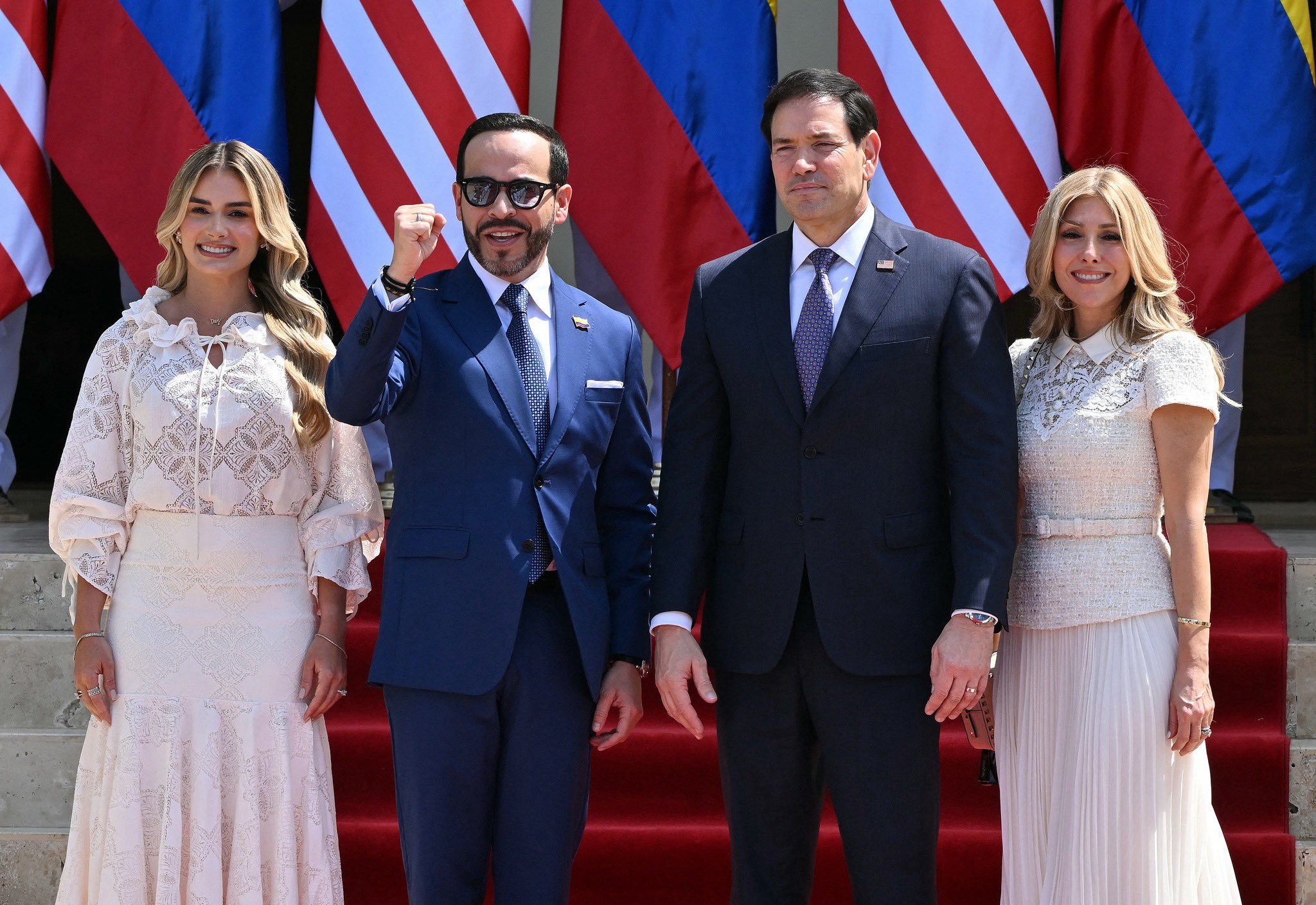
The arrival of President Abelardo De La Espriella has created an opportunity for Washington to rebuild the relationship around those capabilities.
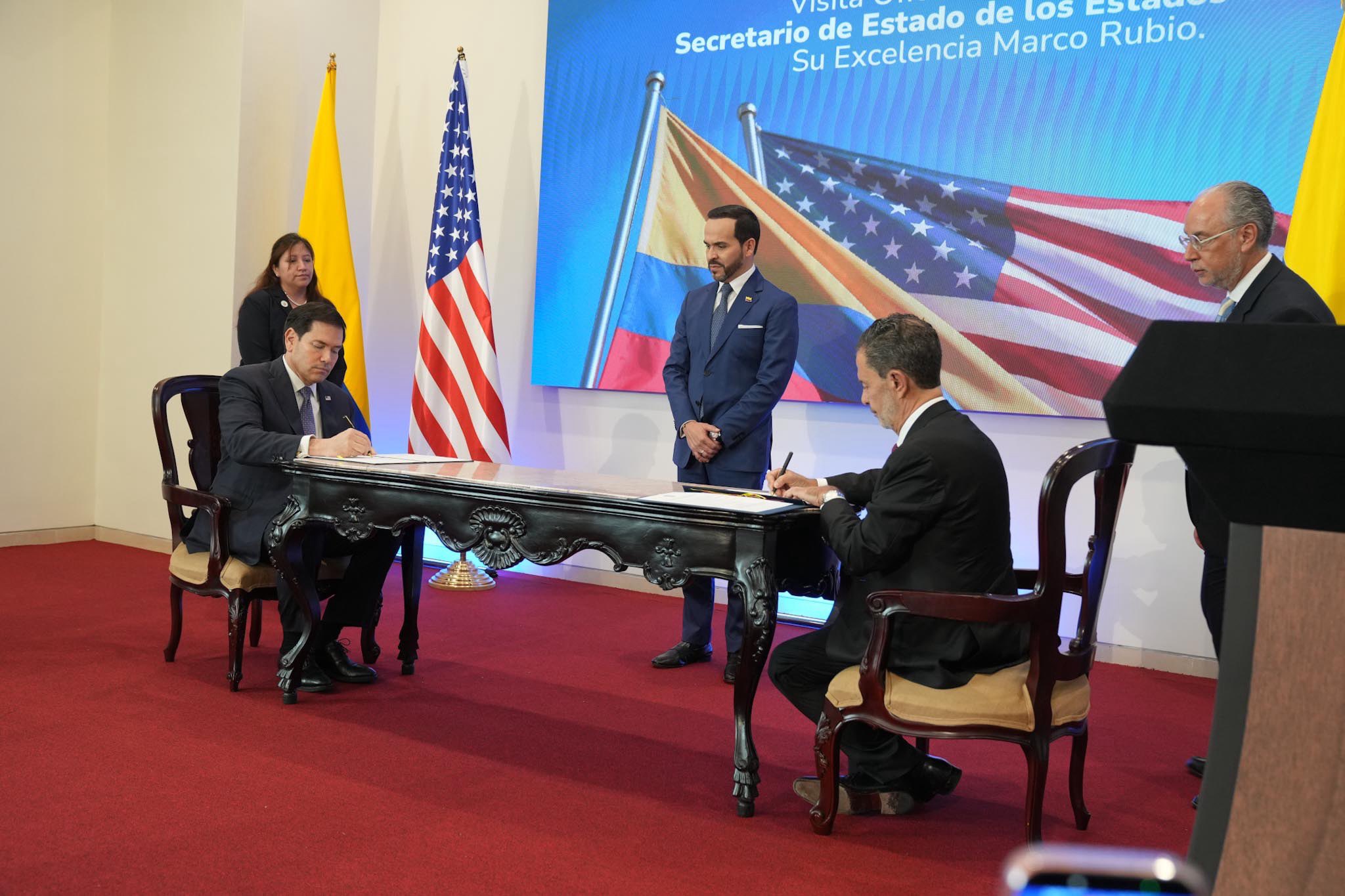
Rubio’s September visit was therefore significant not simply because it restored political warmth to the bilateral relationship, but because the two governments are beginning to connect security cooperation with a broader strategic agenda. During the visit, the United States and Colombia advanced cooperation on critical minerals and civil nuclear energy, while Bogotá committed itself to closer coordination against criminal networks. Colombian officials also indicated a willingness to work with Washington on measurable security objectives and annual targets.
That combination matters. A security relationship becomes more durable when it is supported by economic and technological interests. Intelligence cooperation can produce immediate benefits, but critical-mineral supply chains, energy technology and defense modernization create incentives for a longer-term partnership.
The emerging model is therefore broader than the traditional U.S.-Colombia counternarcotics relationship.
The central question is whether Colombia can become more than a close U.S. partner and instead function as a node within a wider regional network.
The creation of the Shield of the Americas and the administration’s growing emphasis on intelligence sharing suggest that Washington is moving in that direction. Rubio has described the initiative as a mechanism for countries to coordinate against transnational criminal organizations rather than relying on unilateral U.S. action. Colombia is already participating, and its government has signaled that it intends to assume operational responsibilities within the initiative.
This is potentially important because the most difficult security problems in the hemisphere are not confined to national borders.
Cocaine production may occur in one country, precursor chemicals may originate elsewhere, trafficking routes may pass through several states, financial proceeds can be laundered through international systems and criminal organizations can recruit or operate across borders. No single government possesses the intelligence or jurisdiction required to address the entire network.
Colombia’s value to Washington therefore lies partly in its ability to connect national capabilities to a regional system.
The United States can provide intelligence, surveillance technology, training, financing and military capabilities. Colombia can contribute local intelligence, operational experience, geographic access and partner forces familiar with the region’s criminal organizations.
That is the basic architecture Washington appears to be building.
But architecture is not the same thing as effectiveness.
Colombia’s own history provides the strongest reason for caution.
The country has demonstrated repeatedly that military pressure can weaken armed organizations without necessarily eliminating the economic and political conditions that allow them to regenerate. Criminal groups fragment, trafficking routes adapt and illegal economies move into territories where state institutions remain weak.
A new generation of U.S.-Colombian cooperation could repeat that pattern if success is measured mainly in interdictions, arrests or the destruction of individual criminal organizations.
But architecture is not the same thing as effectiveness.
A more meaningful test would be whether cooperation improves the capacity of the Colombian state itself: intelligence collection, financial investigations, border control, prosecution of senior criminal figures, territorial governance and the ability to prevent organizations from rebuilding after leadership losses.
That is also why the relationship should not be judged only by how much military assistance Washington provides.
The strategic value of Colombia lies precisely in the fact that it already possesses substantial national capabilities. U.S. assistance is most useful when it multiplies those capabilities rather than replacing them.
Colombia also introduces a question that will recur throughout this series: how ideological is Washington’s emerging regional strategy?
The government in Bogotá is politically close to Washington and strongly focused on Venezuelan security and regional stability. Yet the administration’s public emphasis during Rubio’s visit was concentrated on security cooperation, counternarcotics and the bilateral strategic relationship rather than making Venezuelan democratic transition the central theme.
That matters because Washington is simultaneously pursuing pragmatic engagement with Venezuela’s interim authorities, particularly around energy.
The recent Venezuela oil arrangement has generated questions about its legal structure, transparency and duration, while giving U.S. interests a significant role in the country’s oil sector. The controversy illustrates the broader tension: the same administration that is building a network of politically aligned security partners is willing to engage with a government whose political character does not fit neatly into that network when strategic interests warrant it.
The implication is not necessarily that democracy has disappeared from U.S. policy. It is that democratic alignment no longer appears to determine the hierarchy of interests in every case.
Security and strategic utility increasingly matter alongside political values.
That makes the emerging coalition more flexible than a traditional ideological alliance, but also potentially more difficult to explain as a coherent foreign-policy project.
For Bogotá, this creates an opportunity as well as a constraint.
Colombia can gain access to American intelligence, military technology, investment and diplomatic support while strengthening its own capacity to confront criminal organizations. But it also has an interest in maintaining room for maneuver in its economic and foreign policy.
The objective should therefore not be to create Colombian dependence on Washington.
It should be to make the partnership sufficiently valuable that both governments have an interest in sustaining it.
This distinction — between alignment and dependence — will be central to the rest of the series.
If Colombia can become a stronger state as a result of deeper cooperation with the United States, Washington will have created something more valuable than a temporary security partnership. It will have established a regional platform capable of supporting cooperation beyond the current counter-criminal campaign.
That is the real test of the new architecture.
Colombia is the potential security anchor of Washington’s emerging hemispheric network. Its value lies not only in its willingness to cooperate with the United States, but in its existing military, intelligence and geographic capabilities. The strategic test is whether Washington can use that foundation to build stronger Colombian institutions and a durable regional network rather than another cycle of short-term counternarcotics operations. Venezuela already complicates the picture: the emerging U.S. strategy appears to prioritize strategic utility alongside ideological alignment.
Read Part II — Ecuador: The Operational Test of America’s New Security Doctrine, which asks whether that architecture can actually be made to work.