Category

Skeleton article title placeholder text spanning two or three lines while the content loads from the CMS


It is only the matter of time, when Russian regime will force Belarussian vassal to become fully involved into the war with Ukraine and the West.
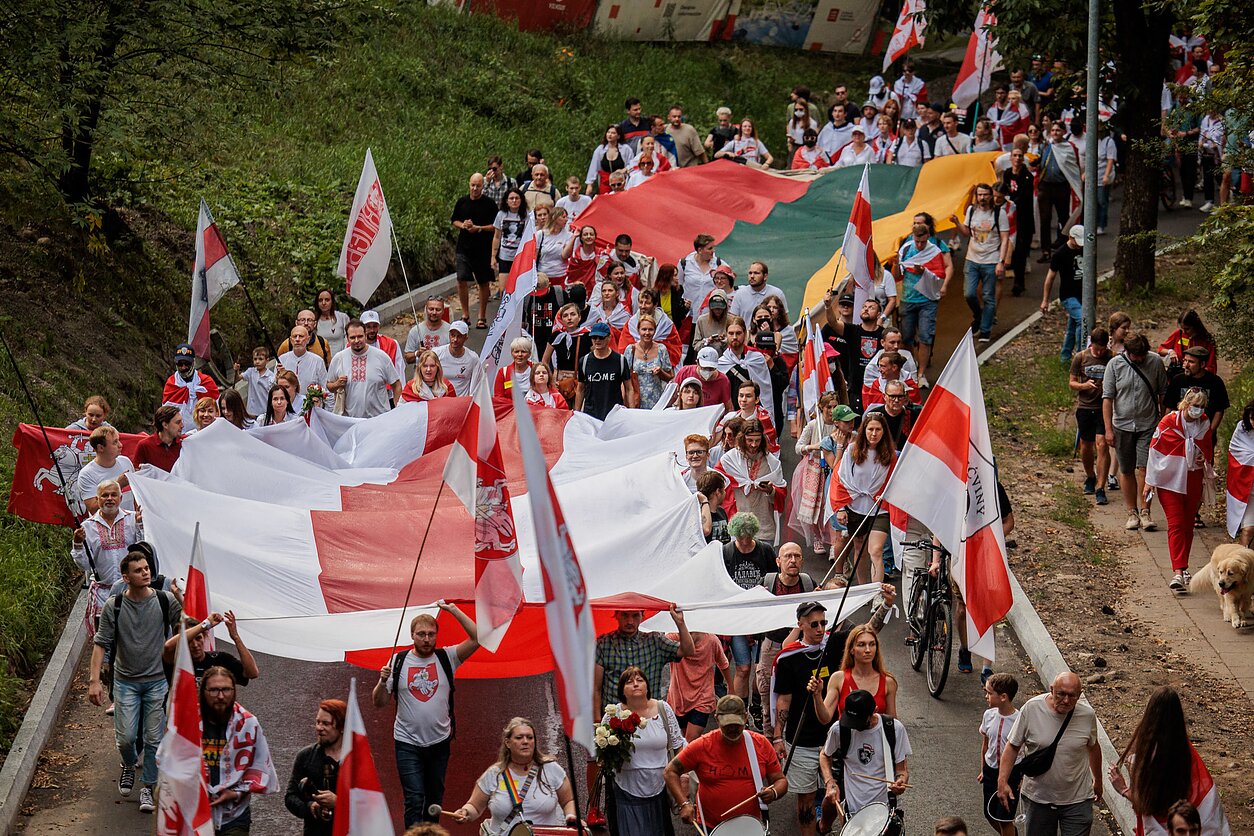
It is only the matter of time, when Russian regime will force Belarussian vassal to become fully involved into the war with Ukraine and the West.
That is the main historical and geopolitical trajectory of Belarus, which editor of “Arch Frontline” Vytautas Bruveris outlined to prominent outlet of Belarussian opposition “Charter'97”.
Here's the full conversation, published on the website Charter97.org.
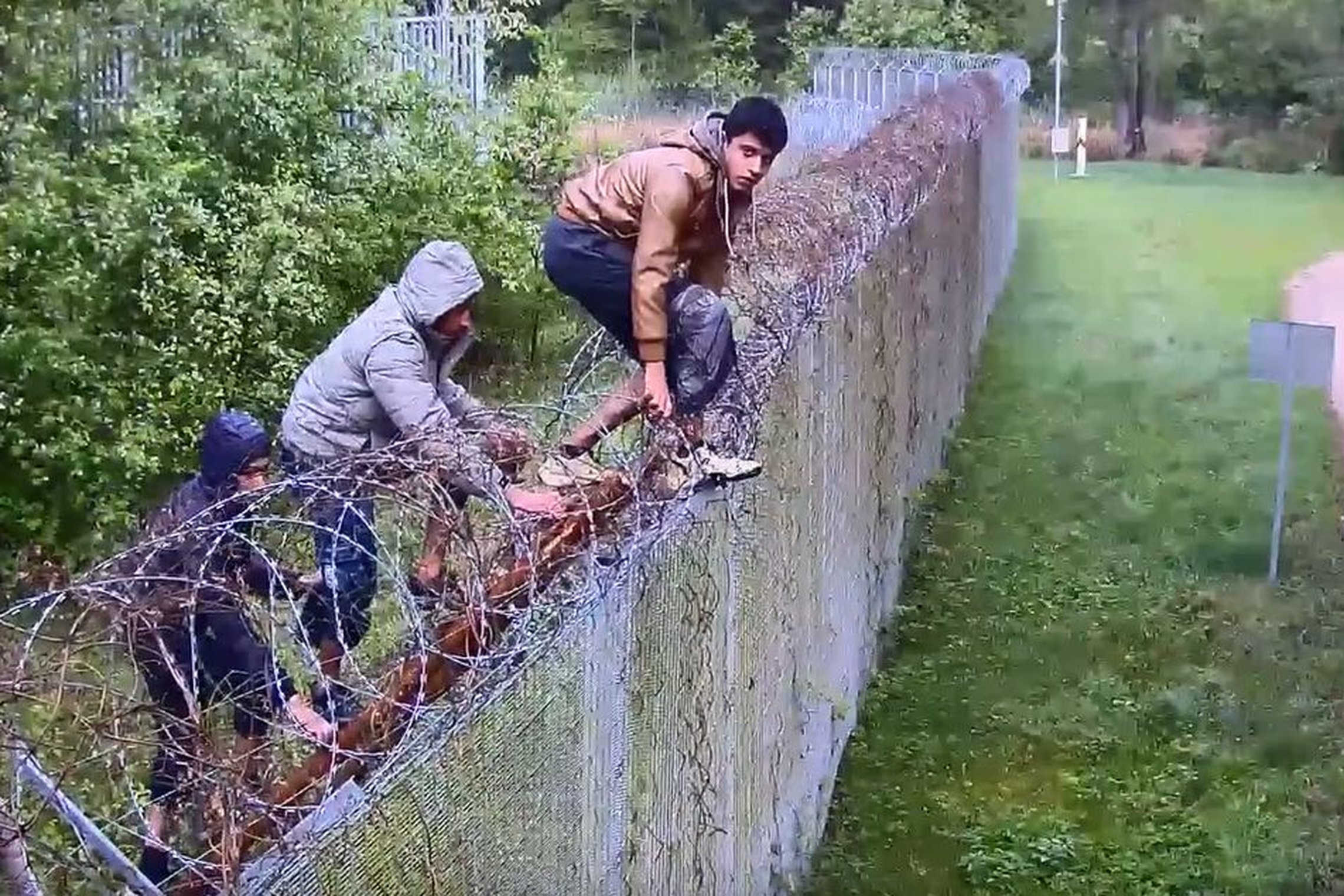
The Lukashenko regime continues to use migrants to put pressure on Lithuania. Specially equipped underground tunnels have already been found at the border leading from Belarus.
The website Charter97.org discussed this with the well-known Lithuanian journalist and political commentator, head of the “Arch Frontline” analytical center Vytautas Bruveris.
The Lukashenko regime’s goal is the same as that of any similar autocratic regime, including Russia’s. With regard to the European Union, it’s essentially the same thing: constant war, aggression, and satisfying the regime’s own needs. Plus direct instructions and orders from the master in the Kremlin.
I do not believe the widespread narrative that Lukashenko is playing games, trying to avoid direct involvement in the war. That Putin is putting pressure on him but can’t quite force him to comply, while Lukashenko constantly slips away. In reality, he has been involved from the very beginning of Russia’s full-scale aggression against Ukraine. He is not involved openly or directly, but he is involved nonetheless. The Russian regime has reached a stage where it can no longer slow down the pace of its aggression against Ukraine and the West. It is forced to escalate further and further. The Belarusian regime finds itself in the same situation. So far, its escalation has consisted of balloons and illegal migrants — both above and below ground. But, in my view, it’s only a matter of time before it becomes fully and openly involved in the war.
Of course, this threat is real. I’ll put it even more bluntly: in my opinion, it’s simply historically inevitable. The main trend, the main dynamic of the global historical process — which is currently revolving around the war in Ukraine — is this: the escalation is only spreading and intensifying. First and foremost, this is due to the internal state and overall dynamics of the Russian regime. And the Belarusian regime is an extension of it — literally a branch of the Russian regime.
So, in my view, it is only a matter of time before the conflict between Russia and NATO — primarily with neighboring countries, the so-called frontline states — becomes open, kinetic, and armed. But what does “open” even mean? After all, it’s already happening. We see that even in Germany, terrorist attacks are taking place. And what is a terrorist attack, if not an open act of kinetic aggression? In other words, it’s already happening. And I believe there will be an attack on the Baltic states.
And I believe there will be an attack on the Baltic states.
I consider a specific scenario involving a ground operation launched from Kaliningrad or Belarus to be the least likely. But I wouldn’t be too quick to draw such conclusions either. I think the Russian regime has both the forces and the resources even for such an operation. Of course, not on the same scale as against Ukraine. And Belarus — its territory, its institutions, and its military resources — can certainly be used for this purpose. I think the overall logic of how events are unfolding is moving precisely in this direction.
Yes, of course. And now there’s also the American factor to consider. We’ve already seen the peak of this process, but it hasn’t gone away. It’s only a matter of time before it intensifies again. This also applies to direct pressure on Lithuania, for example regarding the transit of potash fertilizers from Belarus. We’ve seen pressure aimed at getting Lithuania to lift sanctions and allow the transit. But for Lithuania, that would mean a direct conflict with the European Union’s common policy and, in effect, its undermining.
The Americans think they can play the same game with Belarus: try to pull Lukashenko away from Putin and draw him closer to the U.S. I simply don’t believe that. I think that everything happened in coordination with Moscow and even with American involvement. American interests in a new partnership and in striking deals with Belarus, in my opinion, coincide here with Russian interests and with pressure on the European Union. And they’re pursuing a similar policy toward the head of the Belarusian-Russian tandem — Putin. So, to me, these are all elements of a single process.
The minimum requirement is to maintain the current course. No easing of sanctions, no high-level political contacts — at least not open or official ones. No abandoning of sanctions. Because that would amount to granting the regime new legitimacy and would be a blow to Lithuania’s sovereignty. If Lithuania yields to pressure — including from the Russian regime backing Lukashenko and from the Americans — it will be a blow to Lithuania’s own sanctions policy. Therefore, at the very least, we must maintain the current course. And, of course, we must pressure the European Union as a whole to further strengthen its sanctions policy and policy of isolation toward the Russian and Belarusian regimes. That is the only course of action. Of course, there are certain fears. It is clear that the current Lithuanian leadership and the new government are torn internally. On the one hand, there is fear of the Americans. On the other hand, there is a desire to respond to the demands of a segment of the Lithuanian electorate that is more pro-Russian, anti-Western, anti-Ukrainian, and pro-Chinese. This segment of society demands so-called “normal relations with neighbors.” Hence all this vacillation within the government and the media. Now, it seems to me, the situation has settled down a bit.
We need a clear, well-defined, and level-headed policy. But so far, there isn’t one. You mentioned a trend toward tightening restrictions. Yes, it is indeed evident. Here, two demands converge — one coming from society and, let’s say, from certain segments of political and security structures. The first is a demand for a tougher immigration policy. There is a growing general sentiment against Russian-speaking immigration. Belarusians are also caught up in this trend. On the other hand, there is a growing demand from those social and political groups I mentioned earlier: pro-Russian, pro-Belarusian, anti-Ukrainian, and anti-Western groups. And, paradoxically, Belarusian migration is also coming under this pressure.
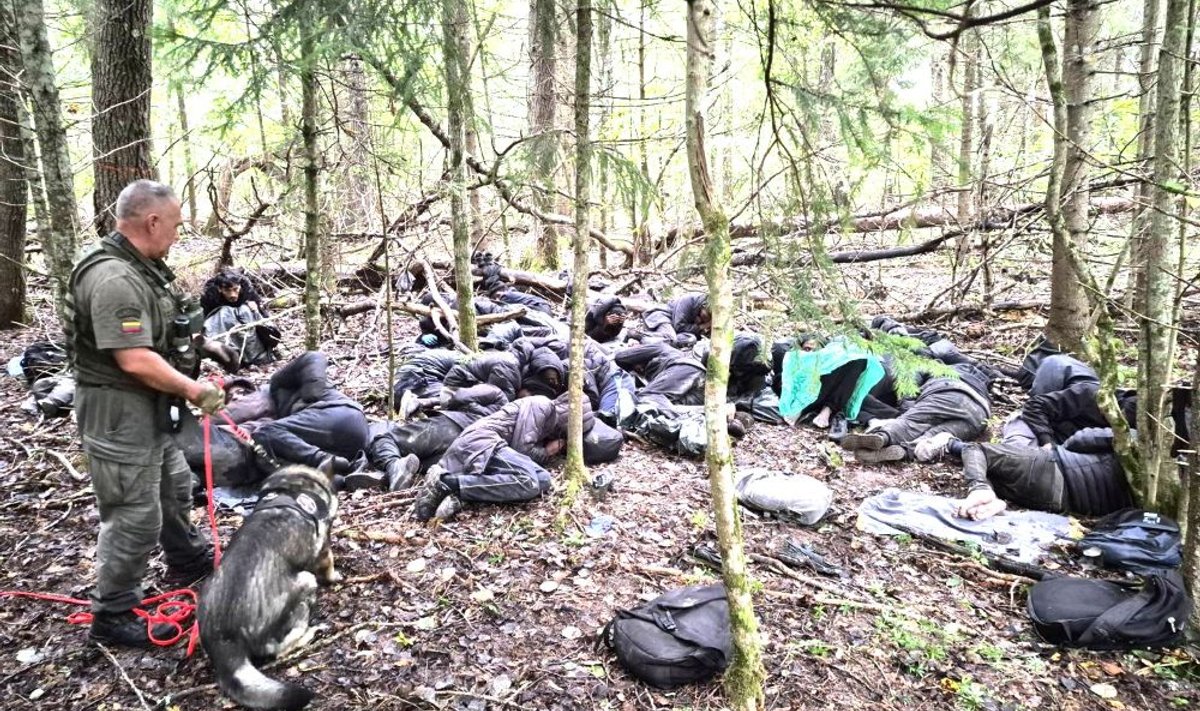
The logic goes something like this: we don’t need all these refugees and migrants from Belarus; we shouldn’t let them in; we should expel them, because they’re getting in the way. The reasoning goes: if we take them in and treat them well, we’ll anger our “friends,” “brothers,” and “partners.” This is where these two issues converge. And so far, the trend is moving more in this direction rather than the opposite.
Of course, I understand that Belarus is not Germany. Every person who comes from such a country carries a certain presumption of risk. I don’t even know how to describe it more precisely. In essence, the Belarusian regime is also a terrorist state. A terrorist state is a criminal organization operating under the guise of a state. Therefore, every citizen arriving from there really must be vetted to determine who they are. But our agencies, our Department of State Security, constantly say that we do not have — and will not have — sufficient resources to screen everyone properly. Therefore, by that logic, it would be better to simply seal the border. As far as I’m concerned, that’s foolish logic. We need to find the necessary resources — and allocate even more if needed — to ensure proper screening that would guarantee the security of the Lithuanian state to the greatest extent possible. And at the same time, it would serve Lithuania’s strategic interests.
Because the Lithuanian state’s primary strategic interest regarding Belarus is to maintain and strengthen ties with that segment of society from which a Belarusian political nation might emerge. That part of society which, if historical circumstances align, will return to its country, emerge from exile, and become the new ruling power there. And we must begin building relationships with these people right now. Of course, I don’t have much faith in such a historical miracle, but miracles do happen sometimes. And we must be prepared for them.