Category

Skeleton article title placeholder text spanning two or three lines while the content loads from the CMS


There is a growing contradiction at the heart of Donald Trump’s Venezuela policy.
When the United States removed Nicolás Maduro on January 3, I disagreed with analysts who argued that the operation had little to do with U.S. national security and was primarily about Venezuela’s oil. That interpretation was too narrow. Whatever one thinks of Trump personally, the national-security case against the Chávez-Maduro system was real. For more than two decades, the Venezuelan regime had cultivated relationships with Russia and Iran, enabled transnational criminal networks, destabilized neighboring states and contributed to a migration crisis affecting the entire hemisphere.
Venezuela had become a regional security problem.
That is precisely why the policy that followed is so disappointing.
Washington removed Maduro, but it has yet to deliver the second step that should have followed: a credible transition toward democratic government. Instead, the United States increasingly appears to be normalizing the political system that Maduro left behind — now under Delcy Rodríguez.
The central problem is not that Washington is talking to Rodríguez. Any serious transition requires dealing with whoever controls the state. Nor is economic engagement itself problematic. Venezuela needs investment, infrastructure and access to international markets, and American companies can legitimately contribute to rebuilding the country.
The problem is political normalization without political transformation.
Rodríguez is not an outsider who inherited a broken system. She is a senior figure of the Chavista establishment — part of the very political structure that Washington argued had destroyed Venezuela’s democratic institutions and turned the state into an instrument of an entrenched elite.
That distinction matters.
If the Maduro system was a threat because it had captured the Venezuelan state, then removing Maduro personally was never sufficient. A genuine transition requires changing the political structures that allowed that system to survive.
Instead, Washington risks simply changing its interlocutor.
Maduro is gone.
The Chavista system remains.
And Rodríguez is becoming its new international face.
The problem is political normalization without political transformation.
The most important issue now is not formal recognition. It is de facto legitimacy.
Governments do not necessarily become legitimate through one declaration. They become legitimate when other governments begin treating them as legitimate — through diplomatic meetings, economic agreements, security cooperation and increasingly normal political relations.
That is why Trump’s suggestion that he may meet Rodríguez during the UN General Assembly matters. If such a meeting takes place, it would be another step toward normalizing relations between Washington and the regime in Caracas.
The question is not whether Trump should speak to her.
He should, if doing so serves U.S. interests.
The question is what Washington demands in return.
If Rodríguez’s government can secure international recognition, economic investment and security cooperation without establishing a credible path toward elections and democratic institutions, then the United States will have created a powerful incentive for the interim arrangement to become permanent.
That would be a fundamental strategic mistake.
The recently negotiated oil arrangements are relevant mainly because they reinforce this broader process of normalization. The issue is not whether Venezuela should rebuild its oil industry. It should. The issue is whether economic cooperation becomes a substitute for political transition.
It cannot.
The irony is that Washington currently has more leverage over Venezuela than any U.S. administration in decades.
Maduro has been removed. Venezuela needs American investment and access to international markets. Washington has enormous influence over the country’s economic and diplomatic reintegration.
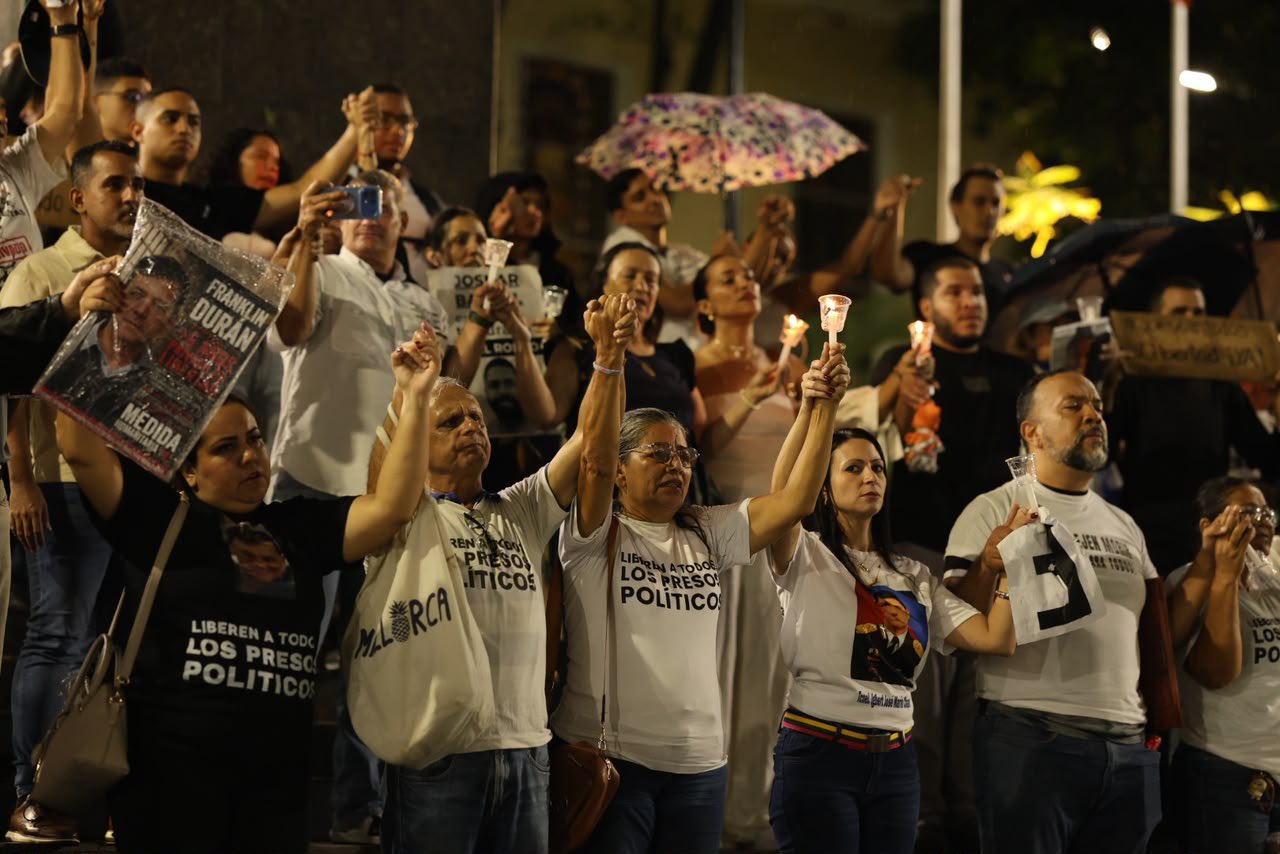
That leverage should be used to establish clear conditions for transition: release political prisoners, restore independent institutions, establish a credible electoral timetable and prevent the security apparatus from preserving the existing political order under a different leadership.
Instead, the United States appears increasingly willing to prioritize stability and cooperation.
That may be pragmatic in the short term.
It could be strategically damaging in the long term.
A Venezuela that is more stable and cooperative with Washington is unquestionably preferable to the Maduro-era state. But stability without political transformation does not necessarily eliminate the underlying security problem. It can simply make it more manageable — and therefore easier to ignore.
This matters beyond Venezuela.
Washington is simultaneously trying to build a stronger political and security architecture across Latin America. That effort depends on the credibility of American commitments.
If Venezuela becomes an exception — if an unelected government can acquire de facto legitimacy simply because it is cooperative with Washington — regional governments will notice.
The message would not be that democracy is irrelevant.
It would be more subtle: democracy can be postponed when strategic interests are sufficiently attractive.
That would weaken U.S. credibility precisely when Washington needs stronger partnerships across the hemisphere.
There is also an obvious political incentive for Trump to preserve Venezuela as a success story.
The administration has struggled to produce clear foreign-policy victories elsewhere. Iran remains unresolved, Russia has not been persuaded to end its war in Ukraine, and relations with NATO allies have repeatedly become contentious.
Venezuela is different. Maduro is gone, American power produced a tangible result, and U.S. companies are returning.
Trump has repeatedly described Venezuelans as celebrating their new circumstances and emphasized the economic potential of the country. But economic recovery is not the same thing as political legitimacy.
Nor does the fact that Venezuela may become a more successful U.S. energy partner mean that the political problem has been solved.
Only Trump knows whether domestic politics influences his Venezuela policy. But there is a clear incentive to preserve the appearance of an unambiguous victory rather than confront the unfinished question of what happens after Maduro.
I still believe the national-security rationale behind the January 3 operation was fundamentally sound. But that makes the current trajectory harder to defend. Political systems do not disappear when one leader is removed. They survive through institutions, networks, elites and security structures and Delcy Rodríguez represents that continuity.
The United States therefore faces a simple choice. It can use the leverage created by Maduro’s removal to push Venezuela toward a genuinely different political order. Or it can decide that a cooperative version of the old system is good enough.
The first would make January 3 the beginning of a strategic transformation.
The second would make it merely a change of leadership.
The danger is not that Washington is talking to Delcy Rodríguez. The danger is that Washington is treating her government as legitimate without requiring it to become legitimate. That made Venezuela a strategic problem in the first place.