Category

Skeleton article title placeholder text spanning two or three lines while the content loads from the CMS


There is something increasingly curious about Washington’s Latin America policy.
The United States is speaking loudly about Cuba. President Donald Trump has repeatedly suggested that the Cuban regime is approaching a breaking point. Secretary of State Marco Rubio has maintained a hard-line position toward Havana and has warned that Washington will continue applying maximum pressure.
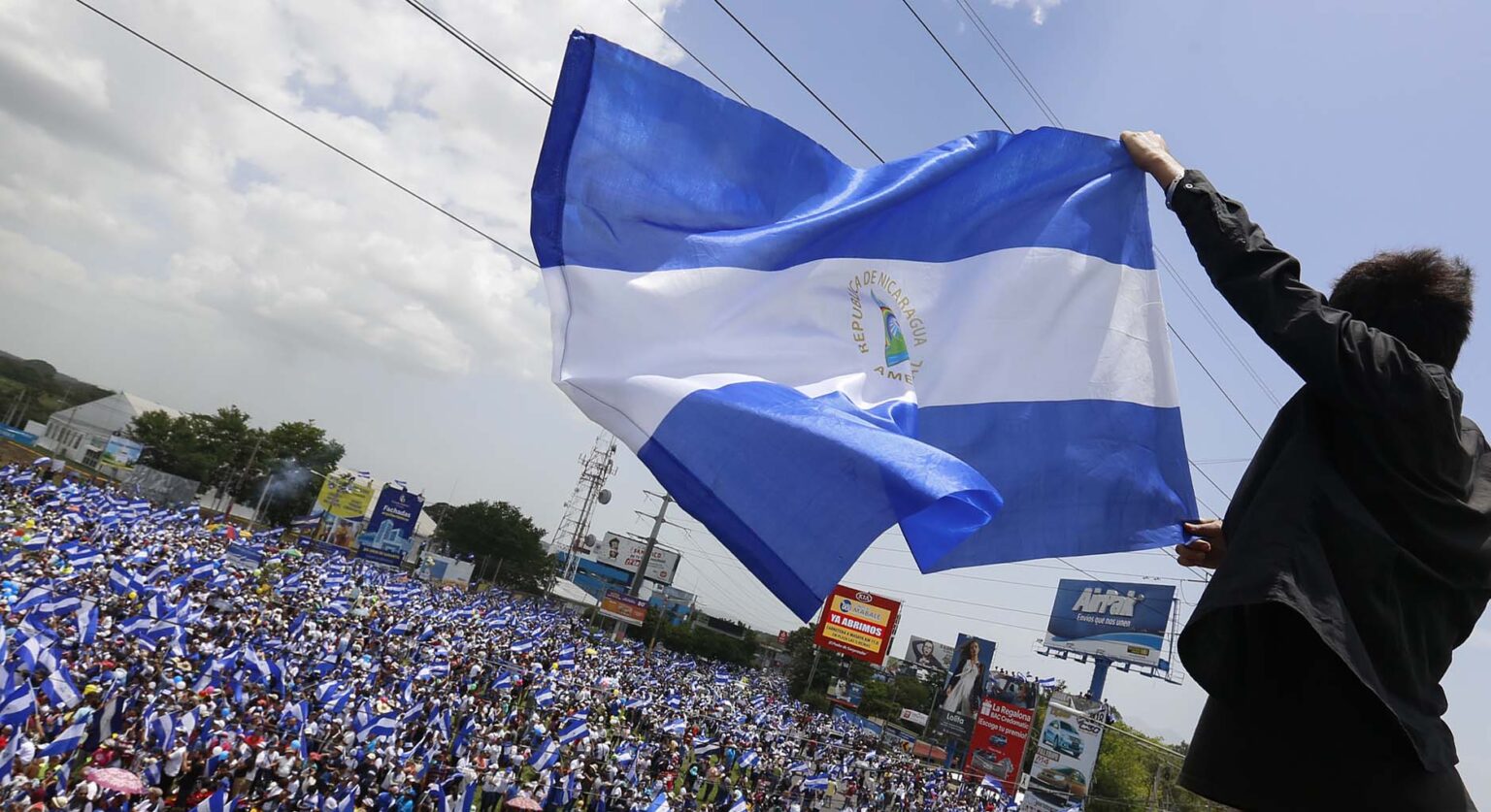
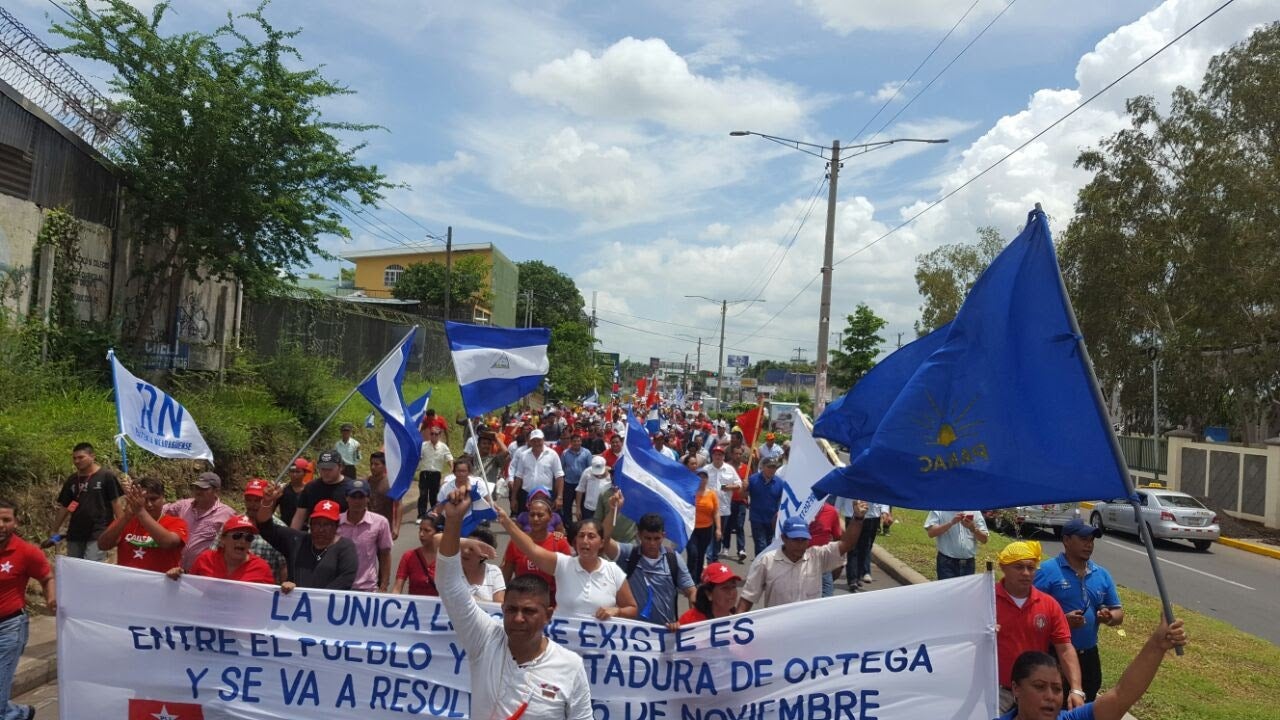
Yet another authoritarian government in the region has received considerably less presidential attention: Nicaragua’s Ortega–Murillo regime.
That asymmetry raises a question worth asking — not as a claim of established U.S. policy, but as a strategic hypothesis:
Could the intense focus on Cuba be obscuring a different calculation in Central America, where Nicaragua may offer Washington a more politically manageable target for pressure?
There is no public evidence that the United States has decided to use military force against Managua. Any claim that Washington is preparing such an operation would go beyond what the available evidence supports.
But the hypothesis deserves attention because the strategic environment around Nicaragua is changing.
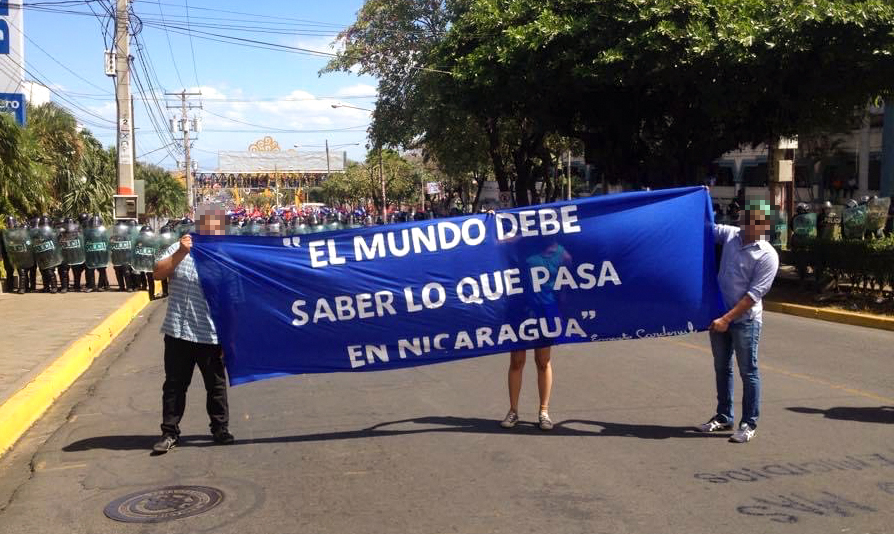
The Ortega–Murillo government is no longer merely an authoritarian regime that refuses to liberalize. It is moving toward eliminating the possibility of meaningful political alternation altogether.
The Inter-American Commission on Human Rights reported in August that Ortega had declared that there would be no more elections, while a proposed constitutional reform sought to extend the co-presidency and further restrict political competition. By October, the IACHR and the UN Group of Human Rights Experts were warning that Nicaragua had effectively dismantled institutional checks and balances and that elections were not expected in 2027.
That matters because Nicaragua is becoming a much clearer strategic problem for Washington than it was several years ago.
The issue is no longer simply whether Ortega is authoritarian. The question is what happens when an authoritarian government begins removing even the institutional mechanism through which it could theoretically be replaced.
At that point, Washington faces a familiar dilemma: continue with sanctions and diplomatic pressure indefinitely, or eventually consider whether a different form of pressure is required.
The second reason the Nicaragua hypothesis deserves attention is not Nicaragua itself. It is the growing U.S. security architecture around it.
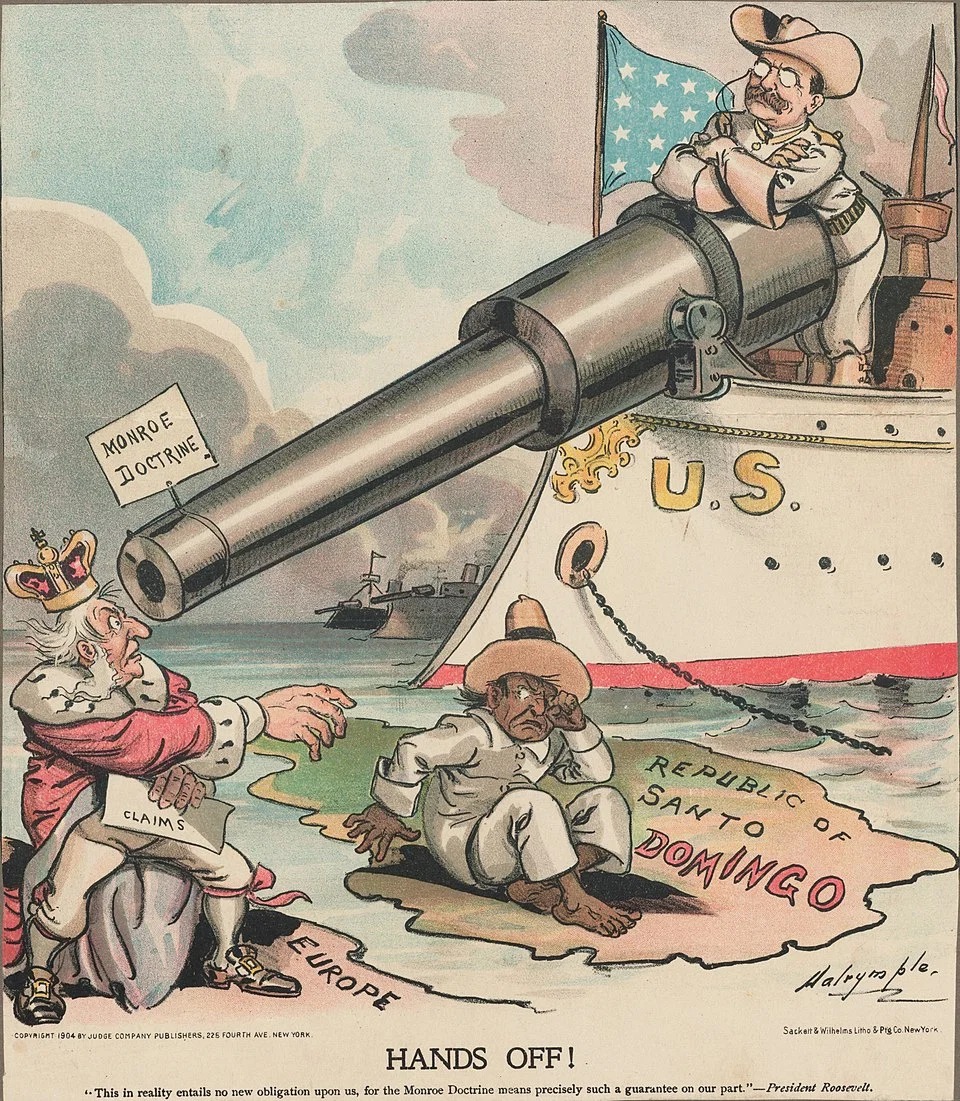
U.S. Southern Command has explicitly identified expanded regional access as a priority. Its 2026 posture statement highlights deeper cooperation with Panama, including rotational U.S. military presence and expanded training and interoperability. SOUTHCOM also describes Panama as strategically important for protecting critical infrastructure and the Panama Canal and for denying adversaries the ability to establish military capabilities in the hemisphere.
That does not mean these arrangements were created for Nicaragua. They were not. Their stated purposes are much broader: regional security, protection of critical infrastructure, countering malign influence and strengthening partnerships. But strategic infrastructure rarely has only one possible use.
A United States with stronger military access, logistics and interoperability across Central America possesses more options than a United States whose regional posture is primarily diplomatic.
That distinction matters.
The question is therefore not whether Washington has built a Nicaragua invasion infrastructure. There is no evidence to make that claim, yet.
The more interesting question is whether Washington is gradually building a regional posture that would give it considerably greater freedom of action if a Central American crisis escalated.
Strategic infrastructure rarely has only one possible use.
This is where the Cuba hypothesis becomes interesting.
Cuba is politically symbolic. It has been an American foreign-policy problem for generations. It is deeply embedded in U.S. domestic politics and particularly important to Rubio’s political worldview.
Nicaragua is different.
It is smaller, more isolated and geographically embedded in a region where Washington has extensive security relationships. That does not make Nicaragua an “easy” military target. Such language would underestimate the political, humanitarian and regional consequences of any use of force.
But it does make the strategic calculation different.
Cuba would involve an enormous geopolitical question: what happens to a post-Castro state with a powerful security apparatus, a complicated political opposition and a population already suffering from a severe economic crisis?
Nicaragua presents a different problem: what happens when a highly concentrated family regime increasingly removes the possibility of elections while becoming more internationally isolated?
The difference is important.
Cuba is the historic problem. Nicaragua may be the emerging problem. And Washington does not necessarily have to solve both simultaneously.
There is another reason this hypothesis cannot simply be dismissed.
The United States has already demonstrated that its Western Hemisphere policy is capable of moving from sanctions and political pressure toward much more direct action. That does not establish that Nicaragua is next. But it changes the psychological and strategic threshold for considering what was previously regarded as unlikely.
For decades, military intervention in Latin America appeared politically almost unthinkable in Washington. The recent Venezuela experience has changed that perception. The important question is therefore not whether Nicaragua will become “another Venezuela.”
It is whether Washington now thinks differently about the range of options available when an authoritarian government becomes sufficiently hostile, isolated and resistant to political pressure.
That is a much more consequential question.
There is, however, a major reason to be cautious.
The United States already has extensive tools for pressuring Nicaragua without military action. Washington can use sanctions, visa restrictions, diplomatic isolation, financial pressure and coordination with regional governments. The OAS and other international institutions can also increase pressure on Managua. And unlike Cuba, Nicaragua is deeply connected to Central American migration, trade and regional security. Any serious destabilization could create consequences well beyond Managua. There is also no evidence that Washington currently regards regime change in Nicaragua as an immediate military objective.
Indeed, much of the current U.S. strategy appears to rely on partners rather than unilateral intervention. SOUTHCOM itself describes its approach as working “by, with, and through” regional allies and partners.
That makes a direct military scenario possible to imagine, but far from inevitable.
Because foreign policy is often revealed as much by what governments do not emphasize as by what they say.
Washington is making Cuba highly visible. Nicaragua is comparatively quieter.
But Nicaragua is simultaneously becoming more authoritarian, more institutionally closed and more difficult to address through conventional democratic pressure. At the same time, the United States is strengthening its security relationships and access across the broader Central American environment.
None of these facts proves a hidden American plan. Together, however, they create an interesting strategic pattern. Perhaps Cuba really is the central problem. Perhaps Washington is preparing for a long confrontation with Havana and Nicaragua will remain a secondary issue.
But there is another possibility: Cuba is the headline, while Nicaragua is part of the calculation.
That does not mean an American operation in Managua is imminent. It does not mean that U.S. forces are secretly moving toward Nicaragua. And it certainly does not mean that regime change would automatically produce democracy. In fact, the last point may be the most important.
Removing an authoritarian government is not the same thing as creating a democratic political order. That lesson applies to Cuba, Venezuela and Nicaragua alike.
If Washington is genuinely reconsidering how it uses American power in the Western Hemisphere, the ultimate question is therefore not whether the United States can pressure another authoritarian regime. It is whether it has a credible political strategy for what comes after the pressure succeeds.
Cuba may be the headline. Nicaragua may be the calculation. But the real test of American power will be whether Washington can distinguish removing a regime from building a viable alternative to it.