Category

Skeleton article title placeholder text spanning two or three lines while the content loads from the CMS


It has become a truism that Ukrainian domestic politics is hostage to the war. But this story didn’t start on February 24, 2022. Russia’s full-scale invasion merely highlighted a structural problem that emerged right after the Euromaidan Revolution: Ukrainian civil society is vastly more dynamic and resilient than the state institutions tasked with executing its demands.
After Viktor Yanukovych fled in February 2014, the country was left on the brink. The state apparatus managed to keep running, but a major chunk of the political system went into meltdown. On February 22, the Verkhovna Rada declared that Yanukovych had "unconstitutionally withdrawn" from his duties and called early presidential elections, which Petro Poroshenko went on to win.
By October 26, a new parliament was elected, bringing in a wave of fresh or heavily rebranded political projects born out of the Maidan.
Even back then, elections were held under the shadow of Russia’s "hybrid" aggression.
Voting couldn't take place in occupied Crimea or across large swathes of the Donbas controlled by the Kremlin. As a result, only 423 of the constitutionally mandated 450 parliamentary seats were filled. That handicap would go on to limit parliament's ability to pass critical decisions — especially constitutional amendments.
The ultimate paradox of post-Maidan Ukraine was that society demanded deeper, faster reforms than the state machinery was capable of delivering.
And the only entity that could reform that state machinery was the machinery itself — and only if it was backed into a corner and forced to do so. To make that happen, the country needed bulletproof mechanisms to hold public officials accountable.
In 2014, parliament passed a landmark package of anti-corruption laws, establishing the legal framework for the Prevention of Corruption and the National Anti-Corruption Bureau (NABU). By 2015, NABU was taking shape, followed by the National Agency on Corruption Prevention (NACP), the Specialized Anti-Corruption Prosecutor’s Office (SAPO), and the High Anti-Corruption Court (HACC).
The European Commission explicitly singled out the creation of these bodies as a major breakthrough in reforming the country's law enforcement landscape.
Decentralization was another crucial front. Voluntary mergers of local communities began in 2015, culminating in 2020 with a brand-new territorial framework for local self-government. Over a few short years, thousands of small municipalities consolidated into larger, more viable administrative units (hromadas). Yet, the Rada ultimately failed to pass the constitutional amendments needed to give this new local government model a genuinely European design built on the principle of subsidiarity.
Judicial reform followed a remarkably similar script. On June 2, 2016, parliament passed constitutional amendments to overhaul the justice system. The Venice Commission praised it as a major step toward European standards, but issued a clear warning: writing new rules doesn't automatically create an independent and effective judiciary. That warning came home to roost in the fall of 2020 under President Volodymyr Zelenskyy, when the Constitutional Court issued Ruling No. 13-r/2020. The decision struck down key anti-corruption provisions, effectively gutting the financial disclosure system. Outraged citizens took to the streets, forcing parliament to scramble and reinstate criminal liability for illicit enrichment through new legislation.
The pattern was unmistakable: shiny new legal mechanisms were introduced, but ingrained institutional habits and entrenched conflicts of interest refused to die. The old guard simply used those habits to neutralize the new tools. In a system riddled with corruption, the "wheeler-dealers" can always find off-the-books shortcuts to dodge accountability.
Naturally, this dynamic triggered deep public cynicism, setting the stage for the political earthquake of 2019. Newcomer Volodymyr Zelenskyy crushed incumbent Petro Poroshenko in the presidential runoff, taking 73.22% of the vote against Poroshenko’s 24.45%. Months later, his Servant of the People party won 254 seats in the 450-seat Rada — the first single-party parliamentary majority in independent Ukraine's history. A 35-year-old Oleksiy Honcharuk was appointed Prime Minister, and the new team pitched itself as a generation of technocrats ready to fast-track long-overdue reforms.
Yet the sheer inertia of the political system proved stronger than the fresh faces running it. Young ministers and lawmakers stepped into a state bureaucracy that had been operating the same way for decades and had zero interest in giving up its old tricks. Some of the new ministers quit, others adapted to the game, and the rest ended up hopelessly trapped in the exact same institutional gridlock as their predecessors.
Think of the Ship of Theseus paradox: if you replace every single plank on a ship one by one, is it still the same ship, or a completely new one? Post-2014 Ukraine was swapping out parts of its state mechanism at breakneck speed, but the core logic and operational principles of the system remained untouched.
On February 24, 2022, debates over reform efficiency instantly took a backseat. Russia posed an existential threat to Ukraine's survival. In those terrifying first days of the invasion, the political system gained something it had always lacked: a single national priority that dwarfed all traditional party feuds and clan rivalries.
Zelenskyy suddenly found himself thrust into an entirely new role — for himself and for the world. His most powerful political tool turned out to be his communication skills. Speaking simultaneously to the Ukrainian public and Western governments, he framed the conflict in clear, unmistakable terms: "aggression" versus the "right to self-defense."
His team churned out and amplified messaging and memes that helped allies grasp the stakes. U.S. Secretary of State Antony Blinken’s famous line — "If Russia stops fighting, the war ends; if Ukraine stops fighting, Ukraine ends" — became one of the defining soundbites of Western policy on the war.
Domestically, wartime logic took over: the longer a war lasts, the more decisions must be made quickly, behind closed doors, and from the center. But that logic carries a dangerous downside. In peacetime, mistakes made by one branch of government can be checked and balanced by another — parliament, the courts, elections, or an independent press. In wartime, the bandwidth for those checks and balances shrinks dramatically.

This is precisely where wartime Ukraine’s political paradox comes to a head.
The longer the war drags on, the greater the need for an efficient, centralized vertical of power. But the longer that vertical operates without checks — including electoral competition — the heavier the burden falls on non-governmental institutions to monitor its decisions and call out its mistakes.
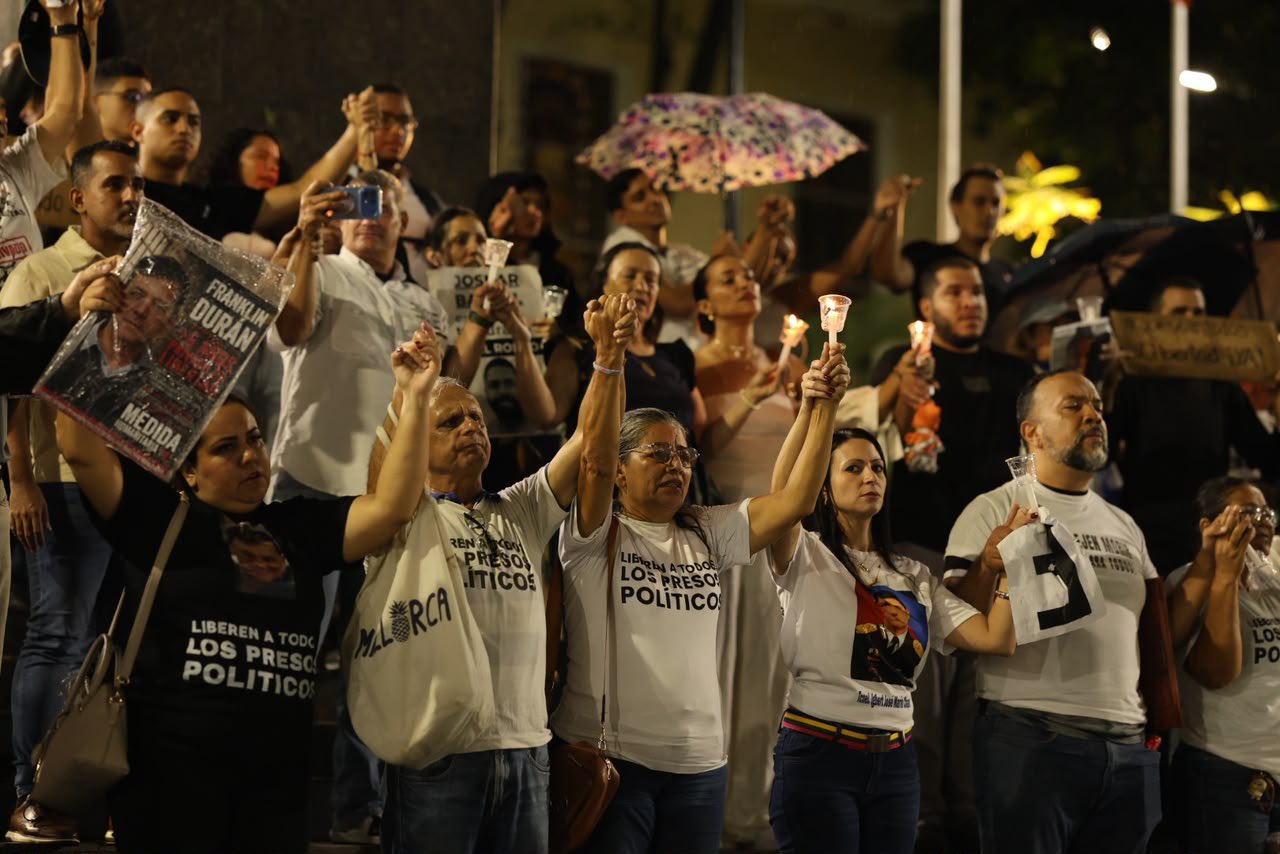
In 2025, that tension spilled over onto the streets. On July 22, parliament passed a bill curbing the independence of NABU and SAPO. The move triggered immediate public outrage, sparking mass protests in Kyiv and other major cities — the first large-scale demonstrations since the full-scale invasion began. Western partners also reacted sharply. Confronted with pushback at home and abroad, parliament reversed course on July 31 and restored the anti-corruption bodies' independence.
The precedent mattered far more than the law itself. It proved that Ukrainian civil society had not gone quietly into the night during the war. Citizens had tolerated an unprecedented concentration of executive power, viewing it as the price of national survival. But the moment that power was used to undermine the very institutions meant to keep the government in check, public patience ran out.
The administration took another massive hit — largely self-inflicted — in November 2025. NABU and SAPO unveiled Operation "Midas," an investigation into an alleged massive corruption scheme in the energy sector, centered around the state nuclear operator Energoatom.
On November 11, seven suspects were formally served with notices of suspicion, and five were taken into custody. Among those implicated was Timur Mindich, a former business partner of Zelenskyy. Although Mindich held no official government post, his ties to top-tier state officials were impossible to hand-wave away. Within weeks, Andriy Yermak was forced to step down as Head of the Presidential Office.
Reuters called his departure "the most high-profile casualty of the corruption crisis."
Then, in July 2026, a different kind of eruption occurred. The dismissal of Defense Minister Mykhailo Fedorov sparked a wave of public backlash highly unusual for wartime. Thousands of protesters gathered in Kyiv and other cities demanding explanations and calling for his reinstatement, explicitly tying his leadership to ongoing defense sector reforms.
This was a sharp departure from the previous social contract, where the public agreed to shelve internal political grievances until "after victory."
It brought an infinitely more complex question to the fore: if public frustration is rising and the leadership repeatedly fails to answer pressing questions, can you actually swap out political leadership during a war for survival?
Article 108 of the Constitution of Ukraine explicitly states that the sitting President continues to exercise power until a newly elected President assumes office. Early termination of presidential powers is restricted to just four scenarios: resignation, inability to exercise powers for health reasons, impeachment, or death.
Meanwhile, Article 19 of the Law On the Legal Regime of Martial Law explicitly bans holding presidential or parliamentary elections under martial law. Parliament’s authority is automatically extended until a new Rada convenes after martial law is lifted, and the President's term continues until a successor is officially sworn in. Amending the Constitution during martial law is strictly prohibited.
Thus, the war forces Ukrainian civil society and the government down a razor-thin political corridor. On paper, changing the guard is legally restricted, and the standard mechanism for doing so — elections — is temporarily switched off.
This vastly increases the system's reliance on the interplay between the state's capacity to survive and civil society's ability to keep executive power in check.
In this light, the last twelve years of Ukrainian history aren't just a basic story about one president being "better" or "worse" than another. Poroshenko came to power on the heels of a revolution promising reforms, only to leave behind a faded momentum for institutional modernization.
Zelenskyy enjoyed a historic mandate, built the country's first single-party parliamentary majority, but ran straight into the brick wall of state bureaucracy and the age-old trap of power centralization.
The old political cycle is repeating itself in an unprecedented setting: the public demands real change, the government promises it, the bureaucracy sabotages it to protect its own interests, and the public grows disillusioned with the leader it chose.
Except this time, the entire structure is suspended beneath an active war, where the question of "to be or not to be" is no longer poetic hyperbole. For a nation fighting for its right to exist, it is a matter of immediate political reality.
Yet surviving as a state means nothing if you destroy the very qualities that make that state worth saving in the first place.
As long as the war rages on, Ukrainians are forced to solve both equations at once. That is why the current friction between society and the state cannot be reduced to a petty fight for the presidency, nor dismissed with the claim that all domestic issues should be put on ice until victory.
Yet surviving as a state means nothing if you destroy the very qualities that make that state worth saving in the first place.
War narrows political choices, but it does not extinguish political life. And the longer it lasts, the more urgent the central question becomes: what mechanisms can stop the state from sliding back into its old habit of consolidating power to solve a crisis, only to discover that consolidating power has become more important than solving the crisis itself?
No one can guarantee Ukrainians that, even after defeating Russia, they will manage to defeat the sabotage of an un-reformed state machinery. Truth be told, people here stopped believing in guarantees a long time ago.
But having already committed to this fight, Ukrainians aren't walking away empty-handed.
To borrow a phrase from a moderately successful politician: "Stadium or no stadium — let's do this."