Category

Skeleton article title placeholder text spanning two or three lines while the content loads from the CMS


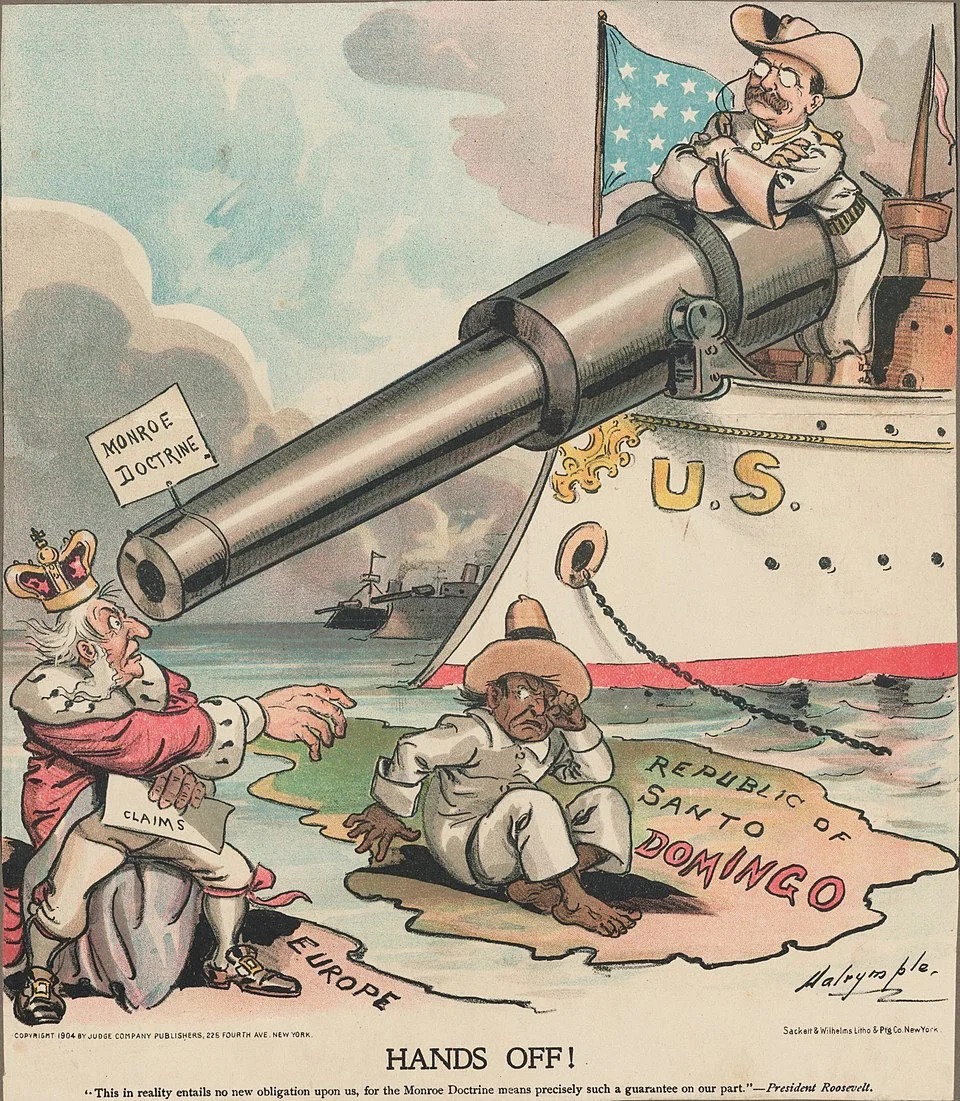
Donald Trump returned to the White House promising to restore American primacy in the Western Hemisphere. His administration has increasingly framed that ambition as a modern version of the Monroe Doctrine: the United States should be the dominant external and military power in the Americas, while preventing strategic competitors from establishing positions that could threaten U.S. interests.
The ambition is clear. The difficulty is that American power in the hemisphere does not automatically translate into political influence over America’s closest neighbors.
Nowhere is that more visible than in North America.
Mexico, Canada and Greenland are all moving through a difficult renegotiation of their relationships with Washington. None is breaking with the United States. All remain deeply connected to it economically or strategically. But each is also responding to Trump’s approach by placing greater emphasis on sovereignty, diversification and the ability to operate independently of Washington.
That may ultimately prove to be one of the unintended consequences of the strategy designed to make the hemisphere more firmly American.
Mexico is perhaps the clearest example.
President Claudia Sheinbaum has made national sovereignty a central principle of her relationship with Washington. Her government is cooperating with the United States on migration, intelligence and counter-narcotics, and that cooperation has produced tangible results.
But Mexico has consistently rejected the idea that cooperation should extend to unilateral American military operations on Mexican territory.
That distinction is increasingly important as Washington presses Mexico to take more aggressive action against the cartels. The United States has explored deeper military and intelligence involvement, while Sheinbaum has maintained that Mexico will not accept American forces operating inside the country.
Mexico is therefore not choosing confrontation with Washington.
It is choosing cooperation without subordination.
That is a perfectly rational position for a sovereign state — particularly one that is simultaneously America's largest trading partner and its southern neighbor.
The contrast with countries such as Ecuador and El Salvador is revealing. Washington has found governments prepared to accept a much more direct American security role in confronting organized crime. Mexico, despite its enormous exposure to the same transnational threat, has deliberately maintained a much narrower definition of acceptable U.S. involvement.
The difference is not simply about counter-narcotics.
It is about who controls the use of force on Mexican territory.
Canada presents a different challenge.
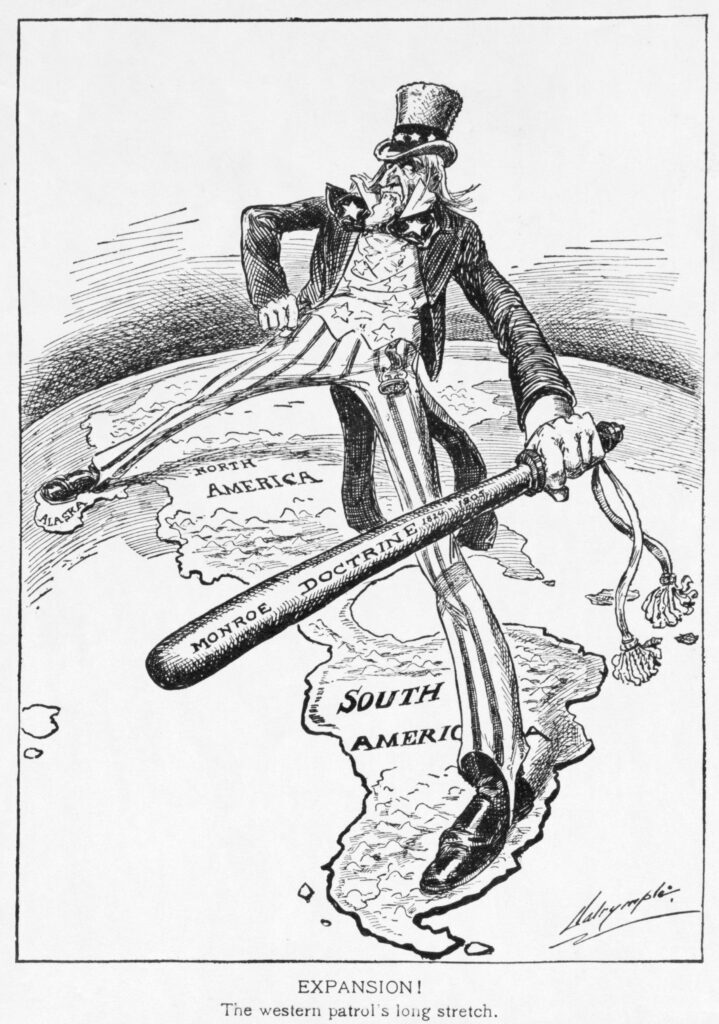
Ottawa remains deeply integrated with the United States and has no interest in dismantling the economic and security relationship that has defined North America for generations. But the political response to Trump has been increasingly focused on reducing vulnerability to Washington.
The most striking development is Canada's rapidly expanding relationship with Europe.
Prime Minister Mark Carney has welcomed a proposal from European Commission President Ursula von der Leyen to explore an unprecedented form of EU "associate membership" for Canada. The concept has no established legal status, and its eventual form remains uncertain, but the political direction is clear: Ottawa wants a much deeper relationship with Europe in trade, defence, critical minerals, energy, technology and other strategic sectors.
Carney has explicitly described the objective in terms of strengthening Canadian strategic autonomy and sovereignty.
This does not mean Canada is abandoning the United States.
It means Canada is trying to ensure that it has alternatives.
That distinction matters. For decades, geography appeared to make American economic dominance unavoidable. Canada could diversify only so far because its economy was overwhelmingly connected to the United States.
Trump's approach is testing whether that remains true.
Canada is now demonstrating that even a country deeply embedded in the American system can begin building additional strategic options when it believes dependence has become a vulnerability.
Greenland is the most complicated case because Washington has a legitimate and substantial security interest there.
The island occupies a critical position between North America, the Arctic and the North Atlantic. The United States already operates Pituffik Space Base, and preventing hostile military or strategic infrastructure from taking root in Greenland is plainly consistent with American security interests.
The Trump administration nevertheless turned that strategic question into a much broader political confrontation by repeatedly raising the possibility of taking control of Greenland.
The outcome is now more pragmatic.
The United States, Denmark and Greenland have moved to formalize a new arrangement that will significantly expand the American military presence and prevent U.S. adversaries from establishing bases or sensitive strategic positions on the island. Trump has described the agreement as giving Washington permanent control over Greenland's security, while Denmark and Greenland insist that their sovereignty remains intact. The agreement is also being framed within NATO rather than as a transfer of Greenland to the United States.
From Washington's perspective, this is a meaningful strategic outcome.
But it also raises an uncomfortable question.
How much of this did the United States actually need to fight for?
American military access to Greenland already rested on a longstanding defence relationship with Denmark dating back to the 1951 agreement. Analysts have noted that several elements of the new arrangement appear to formalize or expand capabilities that were already available under existing frameworks.
The United States may therefore emerge with greater military access while having spent considerable diplomatic capital confronting one of its most loyal allies.
That is not the same as strategic failure.
But it illustrates the difference between having power and exercising it efficiently.
These three cases point to a broader issue.
Washington is not dealing with weak states that can simply be compelled into alignment. Mexico and Canada are major economic powers. Denmark is a NATO ally. Greenland has its own government and an established claim to self-determination.
Their responses are therefore not attempts to challenge American power directly.
They are attempts to preserve room for manoeuvre within an increasingly unequal relationship.
And that is where Trump's approach faces a structural problem.
A strategy based heavily on pressure can produce compliance on individual issues. It is much less effective at producing durable political alignment.
Governments that fear becoming overly dependent on Washington have an incentive to diversify their economic relationships, deepen ties with other partners and strengthen their domestic political emphasis on sovereignty.
Canada's turn toward Europe is the clearest example. Mexico's insistence on controlling foreign military activity on its territory is another. Greenland's insistence that expanded U.S. security access does not diminish Danish or Greenlandic sovereignty is a third.
None of these developments represents an anti-American coalition.
They represent something potentially more consequential: the gradual normalization of strategic hedging among America's closest partners.
A hemisphere dominated by Washington is not necessarily a hemisphere aligned with Washington.
This distinction is particularly important for the Trump administration.
The United States remains overwhelmingly the most powerful military actor in the Western Hemisphere. Its economic weight is enormous. Washington has extraordinary leverage over migration, trade, security and access to global markets.
There is no serious question of American power disappearing. The question is whether that power produces the political outcomes Washington wants.
If American pressure convinces neighboring governments that closer alignment with Washington also means greater vulnerability to American decisions, those governments will naturally seek alternatives.
That does not make them enemies.
It makes them less dependent.
And that is a very different outcome from the one implied by a strategy of hemispheric dominance.
The United States wants a Western Hemisphere in which hostile outside powers cannot establish strategic footholds and in which Washington remains the indispensable security and economic partner.
But indispensability cannot be imposed indefinitely — it has to be maintained.
For Mexico, that means demonstrating that cooperation with Washington does not threaten Mexican sovereignty. For Canada, it means preserving enough economic and strategic alternatives to prevent the bilateral relationship from becoming a one-way dependency. For Greenland and Denmark, it means strengthening American security access without turning an alliance relationship into a dispute over sovereignty.
The United States can probably secure many of these objectives through its enormous economic and military power.
The harder question is what kind of regional order that power will produce. A hemisphere dominated by Washington is not necessarily a hemisphere aligned with Washington.
The distinction matters.
If America's closest neighbors increasingly conclude that their security requires stronger ties to Europe, greater domestic control over security policy and more diversified economic relationships, then the United States may remain the hemisphere's strongest power while becoming a less exclusive source of influence.
That would not mean the failure of American power. It would mean that the limits of American power are becoming clearer.
Trump's central challenge in the Western Hemisphere is therefore not whether the United States can impose its preferences. It is whether Washington can remain the partner its neighbors choose to depend on.
That is a much harder form of dominance to achieve — and one that cannot be secured by pressure alone.