Category

Skeleton article title placeholder text spanning two or three lines while the content loads from the CMS


During the past decades, the information environment in the modern World changed dramatically. Today, it is possible to say that the internet has become an absolutely revolutionary phenomenon. It itself also becomes an area for significant changes in the field of information and communication, in how we understand and evaluate it.
In the beginning, the internet was seen as something like "a newspaper in the computer". Today, this vision is left far, far behind. The important change occurred when the internet transformed from the primary condition, WEB 1.0, to the advanced one, WEB 2.0. This transformation is linked to users' ability to easily create and share their own content online, which gave rise to social media.
New information technologies open great possibilities. The challenge of the COVID pandemic showed that a lot of work can be done distantly, online, which would be impossible in the era before the internet. Artificial Intelligence (AI), which has made enormous progress in recent years, has become an everyday assistant in people's work and daily lives. On the other hand, this technological progress has its dark side.
The internet is a useful tool, but like other tools, it can also be used as a weapon. For example, online communication is a great thing that allows us to reach people in real time in different parts of the World. At the same time, this opportunity can be used perfectly by the secret services of unfriendly countries. As a means of communication, the internet has become a platform for recruiting agents for espionage and sabotage. Maybe the most shocking thing about it is the fact that such activities include teenagers and even children as targets.
The internet is a useful tool, but like other tools, it can also be used as a weapon.
The problem of children and teenagers being recruited in the virtual information environment has become an increasingly visible challenge. Here, the experience of Lithuania can be mentioned. In August 2026, Lithuanian police issued a warning about such activities. It was stressed that recruitment for various forms of destructive action now occurs on social media, gaming platforms, and messaging apps. The parents were urged to pay more attention to their children's online activities.
The public message from the Lithuanian police was part of a national campaign. Earlier, in May 2026, it was announced that different Lithuanian governmental institutions, including the Office of the Government of the Republic of Lithuania, some Ministries, and other services (i.e., Department of National Security of Lithuania), united in attempts to implement the plan of action to protect children and teenagers from recruitment activities of hostile countries on social media and messaging apps.
Lithuania wasn't the first country to face the problem mentioned above. The broad painful experience of this kind has affected Ukraine in the context of the Russian war of aggression. Russia tries to recruit children in Ukraine for acts of terrorism and sabotage. As mentioned in the report of the United Nations, "most cases followed a similar pattern: individuals contacted boys and girls over social media and instructed them to set fire to objects such as vehicles belonging to members of the military or railway equipment." The recruitment activities occur on social media.
The first lady of Ukraine, Olena Zelenskaya, addressed this issue at the roundtable "Children, technologies and security" during the NATO summit in Ankara in 2026. She stressed that Russian secret services are active on platforms that children and teenagers use mostly - Telegram, TikTok, Instagram, Roblox, and Discord. The youngest child in Ukraine, affected by the recruit, was 11 years old. He tries to set the personal car of a Ukrainian soldier on fire.
Of course, children and teenagers are not the only category of Ukrainian citizens who try to recruit Russia. In February 2026, the Ukrainian Security Service also warned that Russian secret services in general were strengthening their efforts for the recruitment of Ukrainians to espionage and sabotage. On the other hand, children and teenagers can be evaluated as the most vulnerable targets of Russian hostile activities.

It is possible to outline the main principles of the mechanics of recruiting children and teenagers for espionage and sabotage activities on the internet, which Russia is using.
Agents of Russian secret services (in the article, the term "curators" will be used) first of all try to establish relations with a potential target. They pretend that they are children or teenagers too - peers of their objects for recruiting.
The communication first goes through a "shared interests". It is not by chance that one of the most commonly used channels for such activities is the chat rooms of gaming platforms.
Later, there are some small and "innocent" tasks for a small amount of money. For example, "challenge" to take some photos of public places or buildings and send pictures to the "curator". Step by step, the tasks become more complicated and closer to illegal activities. Quite often, children and teenagers understand where they were involved when the "curator" can blackmail them with earlier accomplished assignments.
Russian secret services are using the vulnerability of children and teenagers' psychology. Their victims cannot find a way to stop interacting with the "curator" and feel obligated to continue cooperating. The main "motivation" is a fear.
The mechanism presented above is not the full know-how of the Russian secret services. Possible to predict that they learn from a kind of destructive psychological phenomena that appeared in the virtual information space a decade ago. The main part of it was a "game" known as "Blue whale" (rus. "Sinij kit"). The first information about it became public in 2015. The actions were spotted in the Russian sector of the internet. In general, it was an interaction between anonymous "curators" and teenagers. Teenagers were engaged in destructive behaviours (for example, self-harm). As proclaimed, the task for "Blue whale" curators was to lead the teenager to suicide within 50 days.
In Russia, the "Blue whale" challenge may lead to the deaths of 130 youngsters. Later, in Russia, a few possible "curators" of the activities were arrested and sentenced to several years in jail. Also, it should be mentioned that there was no evidence that "curators" were familiar with one another or belonged to a centralized structure. In general, the origins of the "Blue whale" are still a mystery. There is no evidence that Russian secret services or any other organized groups were behind this suicidal "game". At the same time, the "Blue whale" demonstrated a form of destructive social engineering and revealed children and teenagers' vulnerability to it.
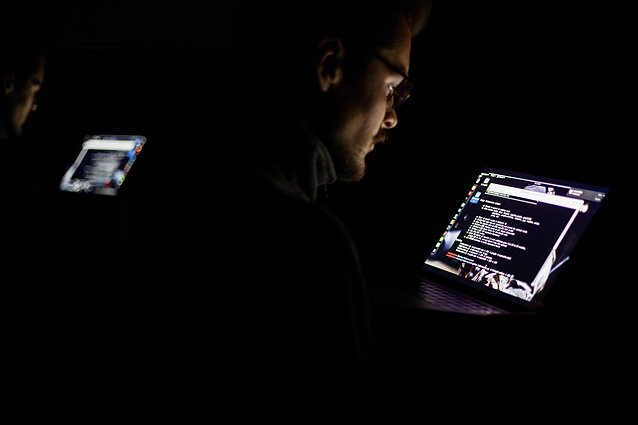
The mechanics of recruiting children and teenagers in the virtual space are psychological. At the same time, technological factors only deepen this problem. The tools of Artificial Intelligence enhance the potential for online psychological manipulation.
First, AI can be used as an assistant for psychological profiling and for more sophisticated manipulation techniques to achieve the goals of agents of the Russian secret services. It can be used for modelling activities with possible outcomes, creating invariants of recruiting scenarios, etc.
Second, AI is already being used to create some illusions in the virtual space. Here can be mentioned deep fakes. AI technologies allow the creation of fake voices or images of well-known people, especially influencers who are important to children and teenagers. Such influential "persons" can more quickly earn the trust of target children and teenagers and more quickly influence them to do tasks. In other words, the art of fraud in the era of AI is going to a much higher level.
The described phenomenon is a detail of the broader cognitive warfare puzzle. There is a mix of information manipulation, social engineering, and psychological and cognitive influence. The fact that a target of it is teenagers and even children proves that Russian cognitive warfare is cynical and has no moral borders. It shows that Moscow is ready to use any non-military measures in its hybrid confrontation against the West.
In this context, it is easier to understand why some countries restrict children and teenagers' access to social media until a certain age. For example, Australia now allows teenagers to have a social media account no earlier than they turn 16. At the level of the European Union, there is a discussion about setting the minimum age for social media users at 13. The newly proposed KIDS Act would base access to social media on a user's age; users aged 13-15 would be allowed to use only a limited account under parental control.
But age-based restrictions are only part of the solution. It does not solve the problem of hostile and recruiting activities, where victims are children and teenagers, automatically. As mentioned, this happens not only on social media but also on gaming platforms and in messenger apps.
We should also keep in mind that youngsters' vulnerability is linked to a lack of critical thinking and life experience in general.
At the moment, as a measure against the recruitment of children and teenagers on the internet, different countries often use the principle of informing and warning potential victims and their parents. For example, Lithuanian institutions published instructions on how to recognize recruitment activities on the internet (including the red flags: when strangers on the internet offered to pay for some strange tasks, when asked to tell no one about the conversation, when they are pressuring to do something or use blackmail, etc.) and what to do in this situation.
But the question of how to ensure the safety of children and teenagers online is more complex. It becomes clear that, from an early age, every individual should be prepared to act safely in the virtual sphere. The needful solution should be the integration of media literacy as a separate subject into the school curriculum, and even into kindergartens (in countries where it is not already done).
The countermeasures against different kinds of cognitive warfare should also include the identification and prosecution of "curators," including international arrest warrants. The actions of cognitive warfare should be subject to a clear legal evaluation and appropriate consequences.