Category

Skeleton article title placeholder text spanning two or three lines while the content loads from the CMS


Not all examples of Kremlin propaganda are difficult and sophisticated. At the same time, primitive narratives can also quite effectively find their own audience.
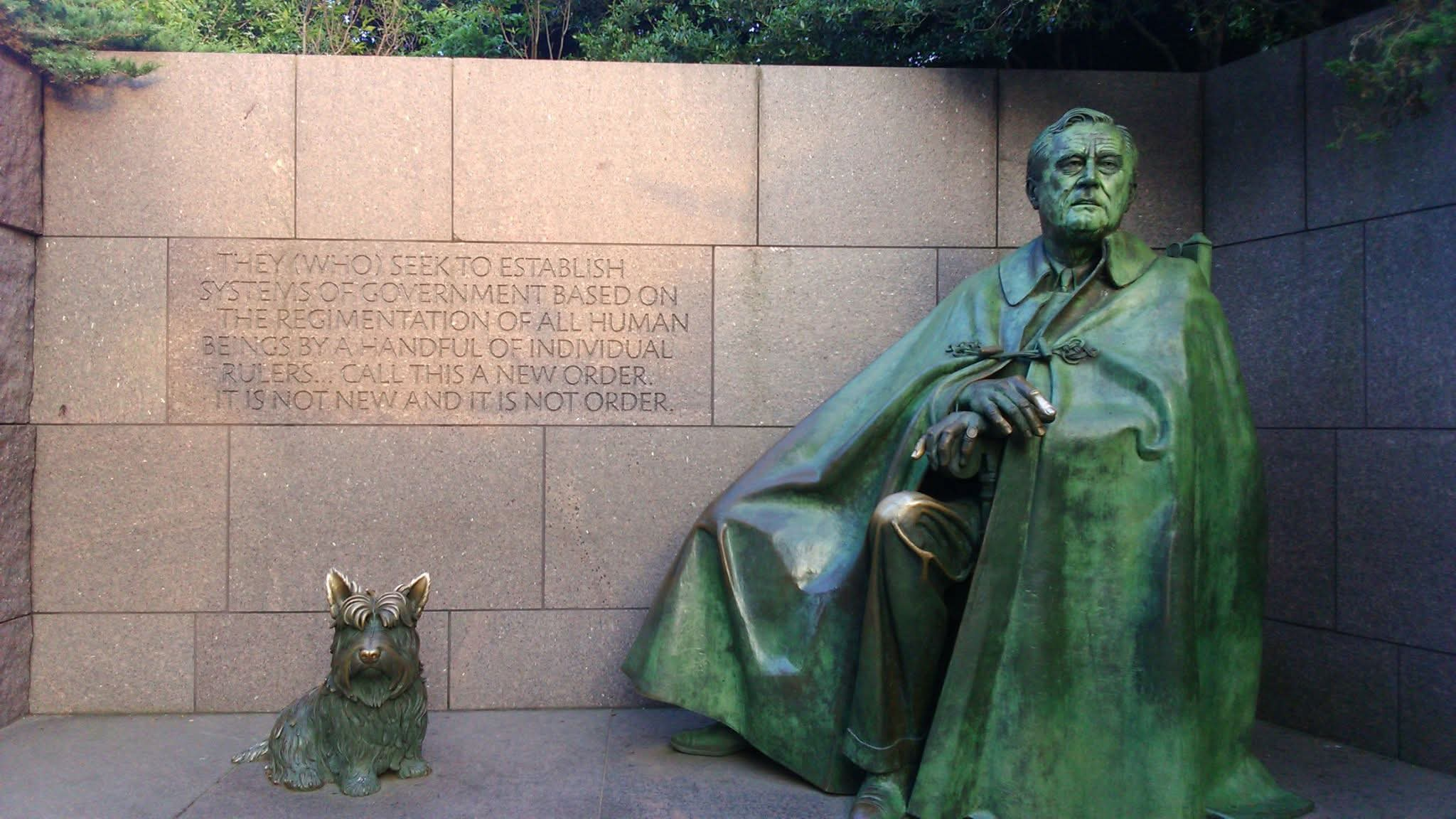

"People's voice" (or "vox populi" in Latin) is a powerful tool of propaganda. It is grounded on some predictions and popular stereotypes. One of them is that the majority can not be wrong, or at least that the minority should obey the will of the majority. The principle of "people's voice" is also linked to populist manipulations about the voice of "common people". According to this manipulation, the voice of the common person (or common people in plural), which does not belong to elites or other privileged groups, is the most authentic and represents the most trustworthy judgment.
There are more arguments why the masses trust the people's voice. For example, one of propaganda's techniques, based on this principle, is the so-called "Bandwagon". In his book "Techniques of Propaganda and Persuasion," Magedah E. Shabo explains: "People like to belong to the majority group and dislike being left out. The bandwagon technique manipulates people by appealing to these instincts." The name of the technique refers to some political tricks from the 19th century. Still, for this text, it is not significant. More important is the effect this technique enables. Potentially, we have all faced the bandwagon technique and its effects during our lives. As Shabo explained, "if you have ever been told to do something simply because 'everybody else is doing it,' you were being encouraged to follow the logical fallacy of the bandwagon appeal."
The psychological effect of paying attention to "people's voice" can be seen in another propaganda technique: the Plain Folk. According to Shabo, "you can recognize the plain folk approach by the propagandist's effort to appear to be just like everyone else." In fact, being like everyone else means belonging to the majority (and supporting the majority's judgments).
The plain folk principle was interestingly used in Soviet propaganda. A lot of decisions of the Communist Party were presented as the will of the plain folk, including repressions against so-called "people's enemies" during the Great Terror in the Soviet Union. Modern Russian propaganda, in some ways, inherits this tradition, but in the era of the internet, it has taken on strange forms.
This text is based on my own observations over many years of studying and analyzing Russian propaganda and information warfare. Some tendencies are hard not to see.
For example, there are some publication titles from the past year by one of the Kremlin-backed media outlets, InoSMI, but they illustrate the overall trend. The publications mentioned below are based on comments from readers of foreign media outlets. A February 2026 article, "Czechs are tired of Ukraine and aggressive conditioning," uses selected comments from internet users to suggest that Czechs are weary of support for Ukraine and of the way the conflict is discussed. In April, "When fuel prices skyrocket, we'll sell Ukraine too" framed comments under a Czech news article as evidence that Czechs wanted Russian oil; another article that month, about proposals to reduce driving speeds to save fuel, presented readers' comments as an alternative view of how Europe should address the issue. In December 2025, "Russia has already won. Europe should stop lying," invoked comments under a Czech publication to reinforce the claim that readers considered Russia victorious.
The same approach appears in articles about other countries and topics. A February 2026 article on "European attitudes towards renewing dialogue with Russia" quoted readers of Yahoo News Japan, while a June article on "Europe as a threat to peace" selected comments from "Le Figaro" readers critical of European policy towards Ukraine. In August, "The French are tired of Zelensky's begging" used reader comments to frame opposition to further assistance as a broader French sentiment. Other examples include articles about "Zelensky awarding Latvia's prime minister" and "Canada's cooperation with Ukraine on drone production," both of which drew on selected online reactions to imply public disapproval.
As I mentioned, there are just a few examples, but there are plenty more (not only on the InoSMI portal). In fact, in these examples, the messages of anonymous commentators under one article or another in Western media are presented as a "vox populi," meaning the people's voice. Quoted comments criticize the decision or position of the country's government. In general, it is decisions or positions that do not align with Russia's geopolitical interests. Based on the quoted comments, the text concludes that the majority of inhabitants do not support their countries' political decisions. It is quite obvious that such a conclusion is manipulative because the comments from anonymous readers of online media carry no sociological weight.
Moreover, it is well known that the system of Kremlin propaganda has paid internet trolls, who fill the internet sphere with messages and comments linked to standard narratives of Russian disinformation and propaganda. It is a very plausible possibility that Kremlin trolls were the authors of these comments (at least a significant part of them), which created discourse around the series of articles mentioned above.
Quite plausible can be a version that, in some cases, pro-Kremlin propaganda media coordinate efforts with troll factories. On the other hand, at the moment, there is no reliable evidence that trolls are receiving orders from the Kremlin's state media or synchronizing their own work in the other way. At the same time, we can remember the case of Yevgeny Prigozhin, Putin's former closest ally (before his attempted rebellion in June 2023). He was not only a master of Russian proxy known as a "Wagner" private military company. Still, he built a propagandistic media empire where, under one roof, were a troll factory and the large private media group, "Patriot". This media empire serves the interests of the Kremlin. So, trolls (and propagandistic bots) and pseudo-Journalistic media, in fact, are on the same page and have similar tasks.
Let's go back to the analysis of the propaganda strategy presented above. One of the main questions that may appear is: Why is such a primitive construction used, and can it be functional at all?
Functionally, such publications support a few traditional metanarratives of Kremlin propaganda. For example, one such narrative is that political elites in the Western world are hostile toward Russia. At the same time, common people understand that "truth is on Russia's side" and hope that their countries will cultivate friendship with Moscow. This is a construction of "Russophobic minority" in power and "(near) silent Russophilic majority" in society. In parallel, such manipulations are cultivating a narrative of a split in Western societies over the evaluation of Russia or support for Ukraine. It does not mean that such a split does not exist, but Kremlin propaganda presents it more radically and dramatically than it is in reality.
On the other hand, such publications create the illusion that Russia is not isolated in Europe. The narrative is that a majority of ordinary people in the Western World support Russia's worldview. This can be useful for the audience inside Russia, because no one wants to be outcast or be associated with a pariah state.
Of course, even a slightly deeper analysis of the propaganda publications mentioned above shows that everything in these texts is full of holes. But in the flood of information, sometimes it is enough to have titles with some statement. These publications are not oriented to a critical-thinking audience.
It means that even primitive propaganda measures can achieve some results, multiply narratives, and affect part of the audience (especially people who consume information very quickly and inattentively).
The present tendency of Kremlin propaganda can seem primitive and not worth a doit. On the other hand, if a primitive propaganda had no point, it would not exist. It means that from the Kremlin's perspective on information warfare, this kind of propaganda is worth it.
It is possible to say that Kremlin propaganda operates in a Post-Truth World, or even implements the principles of the postmodern view, when the comments of anonymous users become a legitimate "vox populi". On the other hand, I really do not think that actors in Kremlin propaganda think about the difficult philosophical categories mentioned above. Primitive propaganda exploits tendencies of the modern information sphere and users' habits. It includes an excess of information and the user's fatigue that it creates. Also, the tendency for fast information use, when attention quickly "jumps" from one bit of information to another. Finally, we should not forget that some people use information very superficially, for example, reading only the titles of media articles and ignoring the full text.
It is hard to say what can help the audience inside Russia to see all the truth and recognize at least the primitive manipulations of Kremlin propaganda. We should keep in mind that a significant part of Russia's population may not want to spot propaganda narratives. The truth can be too painful for them. On the other hand, we should discuss how to help audiences in third countries that Russia seeks to influence build resilience against Kremlin disinformation and propaganda.
I'm risking reinventing the wheel with my next conclusion. However, it seems that media literacy (including the development of critical thinking) is still one of the most effective measures against disinformation and propaganda. There is no need for special effort or deep knowledge to identify and debunk narratives grounded in overt manipulation. On the other hand, these small attempts can help to reduce the flow of propaganda and minimize its effect on the masses.
On the other hand, if a primitive propaganda had no point, it would not exist.