Category

Skeleton article title placeholder text spanning two or three lines while the content loads from the CMS


Kremlin propaganda is still dreaming about Nazis in the countries abroad, and it is not a coincidence, but a kind of measure of Russian policy (and always a hot topic for propaganda).
Kremlin propaganda is still dreaming about Nazis in the countries abroad, and it is not a coincidence, but a kind of measure of Russian policy (and always a hot topic for propaganda).
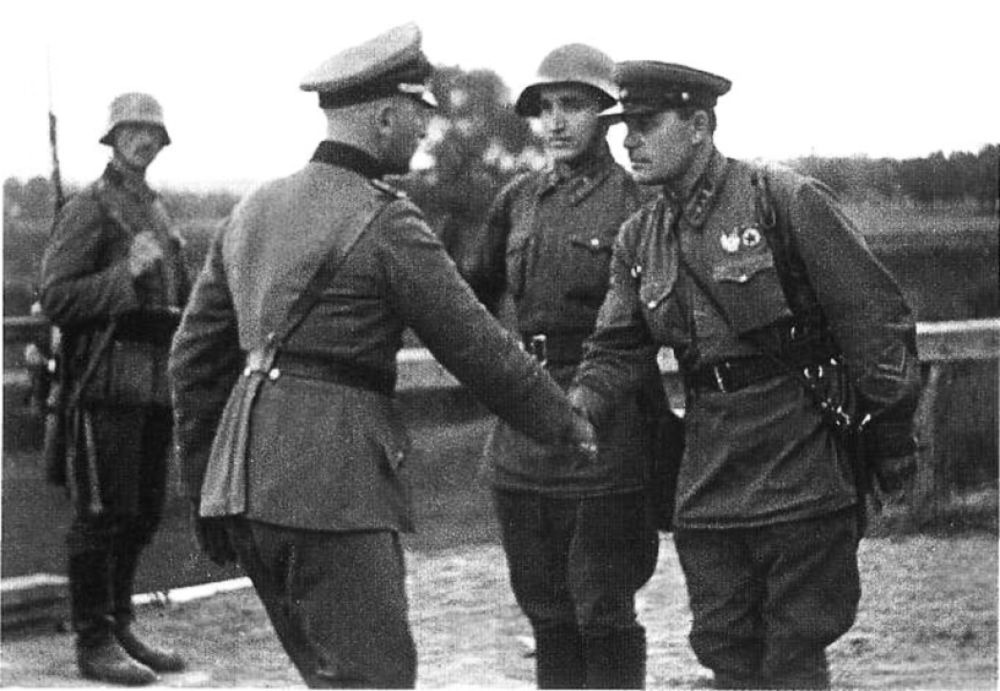
Nazi Germany was defeated in World War II in May 1945. Despite this, Kremlin propaganda pays great attention to topics of "Nazism, "" Fascism, "Neo-Nazism," etc. This tendency is visible not only in the information activities of modern Russia. Attention to the "problem of Nazism" can be found in other spheres, too.
The newest case of manipulation of the topic of "Nazism in the Baltics" is linked to the decision of Moscow's Tverskoy District court. In this decision, 13 people and 5 organizations from Lithuania, Latvia, and Estonia were named as collaborators with the Nazi regime and recognized guilty for war crimes against the Soviet people. The period during which, according to the Russian court, the crimes were committed is the so-called Great Patriotic War (in fact, the war of Nazi Germany against the Soviet Union in 1941-1945). On the other hand, in the information campaign linked to this decision, the modern Baltic States were accused of rewriting history and "distorting the role of the Soviet Union in fighting Fascism." In fact, the historical claim was extended into a political accusation against Lithuania, Latvia, and Estonia.
A few aspects should be discussed here first.
The Baltic States indeed have a complicated history. The Soviet Union occupied Lithuania, Latvia, and Estonia in the summer of 1940. Before it, Moscow hypocritically provided "security guarantees" for the Baltic States. During the Nazi occupation, after the beginning of Nazi Germany's war against the U.S.S.R. (the Great Patriotic War in the Soviet historiography), the tragedy of the Holocaust affected the Baltic States. Closer to the end of Nazi's occupation, some of the local Nazi collaborators in the Baltic States also joined the freedom fight against the new Soviet occupation of Lithuania, Latvia, and Estonia in 1944. Still, it was not a significant trend in the whole freedom movement.
Kremlin propaganda and the disinformation machine present these historical events in another way. Modern Russia, as well as the Soviet Union, did not want to recognize the fact of the occupation of the Baltic States. Moscow today is back to the Soviet narrative about voluntary and peaceful membership of Lithuania, Latvia, and Estonia in the U.S.S.R. In other words, the Kremlin fundamentally denies the freedom fight against Soviet rule in the Baltic States and tries to represent all the freedom movements in Lithuania, Latvia, and Estonia as Nazi-backed.
More examples show that for Russia, the old narratives about Nazis and their collaborators are not just the question of "historical truth", but the tool of modern policy.
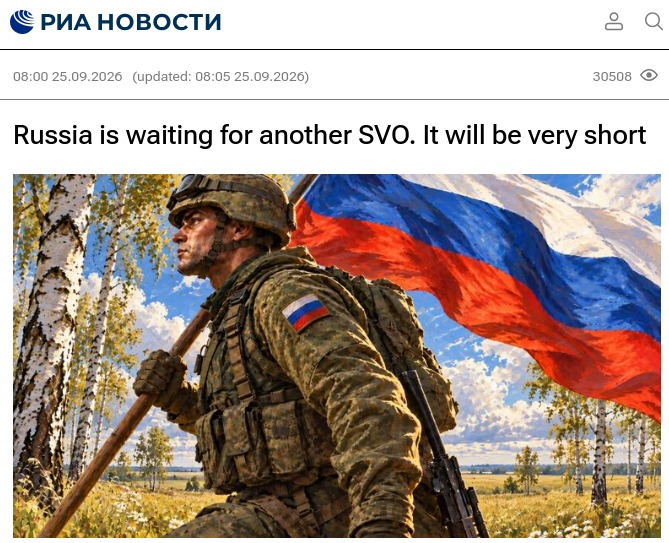
The systematic use of narratives about Nazis in the Baltic States is part of Russian information policy (including the political rhetoric, too). For example, Russia, and later a close ally of Moscow, Belarus, tried to accuse the former President of Lithuania, Valdas Adamkus, of collaboration with the Nazis. In 2021, Belarusian prosecutors sent a request to colleagues in Lithuania to interrogate the former President in the case of "the genocide of the Belarusian people" during WWII. Adamkus reacted to these accusations as "nonsensical." A similar reaction was in the official institutions of Lithuania, including the prosecutor's office. At the time, it was clear that it was one of the Belarusian regime's attempts to retaliate against Lithuania for its support for Belarusian protesters in 2020, following the "reelection" of Belarusian dictator Alexander Lukashenko.
In 2023, similar accusations were spread on different social media platforms. The funny fact is that at that time, similar accusations were made not only against Adamkus but also against the current Lithuanian President, Gitanas Nausėda.
Here, it is needful to mention some facts that are well known in Lithuania. There is no evidence that Valdas Adamkus participated in any Holocaust or genocide activities during World War II. At the beginning of the war, he was a teenager, and later emigrated with his family to the West. In 1944, he managed to take part in anti-Nazi and anti-Soviet resistance, but it was a short period of time. In the anti-Soviet Homeland Defence Forces, he served as a translator at the unit's headquarters. As far as Gitanas Nausėda is concerned, he was born in 1964, and any narrative of his "collaboration with Nazis" is simply absurd.
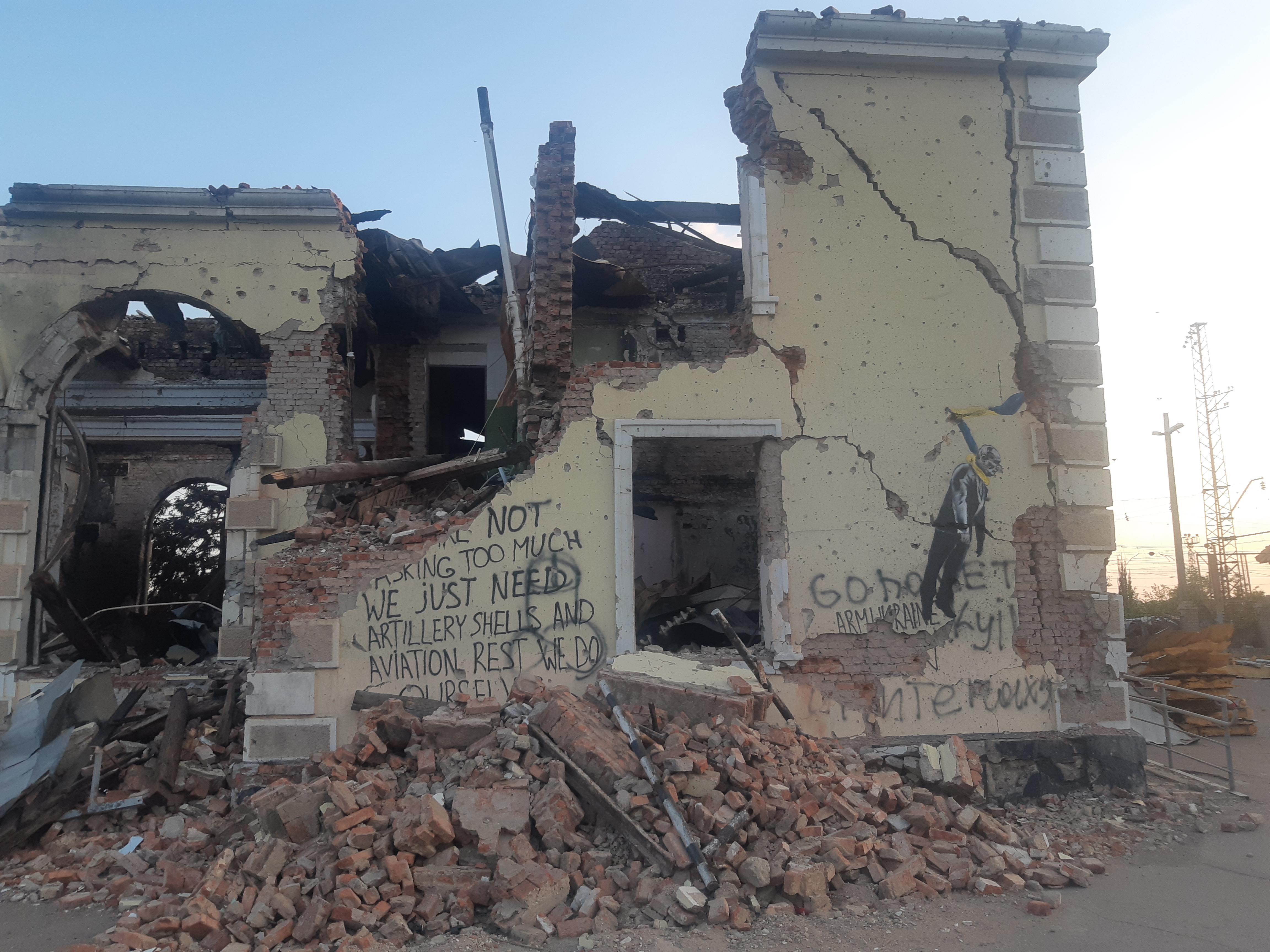
On the other hand, the Kremlin's game of "Nazism narratives" is not so funny and innocent. It should be remembered that Russian aggression against Ukraine was grounded and still is supported by a similar kind of accusations against Kyiv. In 2014, Moscow described the Ukrainian Revolution of Dignity as a nationalist (Nazi) coup d'état. According to these narratives, the Russian annexation of Crimea was represented as a crucial step to protect Russian-speaking inhabitants of the peninsula from "Nazi-Banderovtsy rebels." The following destabilization of the Donbas region was also explained as a local people's rebellion against the rise of nationalists in Kyiv (with the truth about Moscow's actions, use of proxies, etc., hidden behind this narrative).
Before the full-scale invasion in 2022, Russia was, in fact, manipulated through a similar narrative. It is possible to remind that "de-Nazification" of Ukraine was declared as a task of "special military operation" (the euphemism Russia uses not to call aggression against Ukraine as war).
Actualization of the same narrative in the context of the Baltic States does not mean automatically that Russia is planning an aggression against Lithuania, Latvia, or Estonia. In fact, the accusation against the Baltic States of "rewriting" history and "glorifying Nazism" appears in the discourse of modern Russian propaganda even earlier than similar accusations against Ukraine. On the other hand, these narratives support the broader discourse of "Russophobia" in the Baltics and help the Kremlin to represent for its own audience Lithuania, Latvia, and Estonia as extremely hostile countries.

There is no coincidence that Kremlin propaganda is still revitalizing narratives linked to the history of WWII. These narratives are, first of all, relevant and influential to Russian society. It is possible to find an explanation for why the audience inside Russia is quite strongly reacting to stories about "rebirth of Nazism" in the countries abroad and other similar fantasies in Kremlin-backed media, as well as in the official political communication of Russian authorities.
More than two decades ago, Russian sociologist Lev Gudkov found that the Victory in the Great Patriotic War became a central point in all of Soviet history and, in fact, was the only positive historical cornerstone in the mass consciousness of post-Soviet Russian society. It means that all related historical patterns (including "Nazism") work as a perfect trigger for Russian society. Kremlin propaganda likes to make historical parallels, representing the current conflict with the Western World (which is supporting the defence of Ukraine) as similar to the U.S.S.R.'s struggle against Nazi Germany. Of course, these historical parallels ignore the fact that during the so-called Great Patriotic War, a significant part of the Western World (including the U.K. and the U.S.) was an ally of the Soviet Union. But historical accuracy for Kremlin propaganda does not matter.
The disinformation narrative of the rebirth of Nazism in one or another European country helps the Russian propaganda machine to use the historical parallels mentioned above fully. As for Russian society, historical narratives become mixed with today's agenda, forming one monolithic story of never-ending confrontation with Russia's enemies. The generalized Western World becomes an incarnation of these enemies.
Narratives about Nazism can in some way resonate with audiences outside Russia, too. The history of World War II is an important part of the difficult history of the 20th century. Nazis' crimes are well known, especially in Europe. It means that the accusation of the re-establishment of Nazism or Fascism in Ukraine or the Baltic States can work for some audiences in different countries. Especially for those unfamiliar with the history of Russia's relations with its formerly occupied countries.
But historical accuracy for Kremlin propaganda does not matter.
The purpose of the instrumentalization of narratives about Nazism in Kremlin propaganda is quite clear. On the one hand, Russia, from its perspective, designates hostile countries in this way. On the other hand, these narratives support the state-established metaphorical cult of Victory in the Great Patriotic War (the Victory Day celebration on May 9 is a main state holiday in Russia). All these things play with the historical memory of Russian society.
Narratives about the "glorification of Nazism" in some countries help the Kremlin to grow hostile feelings towards these countries inside Russian society. Later, it can serve to legitimize and justify aggression against these states (as happened in the case of Ukraine).
Looking at these facts, it is possible to provide some recommendations to the Baltic States and other countries that are facing similar accusations. First of all, it shows that these countries are seen in Russia as enemies. It means Moscow can attempt various forms of aggression against these states. It is possible to presume that it will be a hybrid action rather than a conventional war (especially if we are talking about NATO countries, and in a situation where Russia still can not defeat Ukraine). The countries, accused by Russia of support of Nazism, should recognize it and be prepared to react to different kinds of direct or indirect Russian aggression.
Second, the strategic communication should be activated. Of course, it is hard to gain attention from the audience inside Russia. Moscow seeks to protect its information sphere and fill it with its propaganda narratives. On the other hand, the information spaces of third countries are also battlegrounds where Kremlin propaganda operates. It means that for the Baltic States, it is important to communicate the facts about what Lithuania, Latvia, and Estonia endured during Soviet and Nazi occupations. That should not be left to the Kremlin.