Category

Skeleton article title placeholder text spanning two or three lines while the content loads from the CMS


The consolidation of an authoritarian regime requires not only the control over political institutions, but also the reproduction of the principles through which its authority is legitimised.
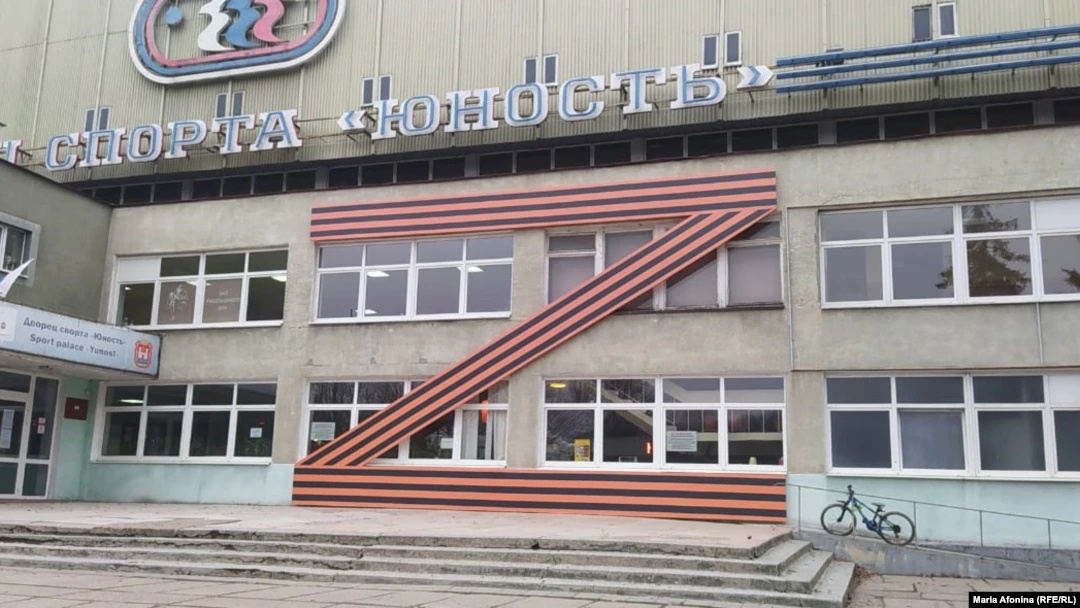
The consolidation of an authoritarian regime requires not only the control over political institutions, but also the reproduction of the principles through which its authority is legitimised. Education, encompassing the transmission of knowledge and the formation of individual worldviews, therefore, plays an essential role within Russia’s political system. We can narrow our focus and observe the mechanisms employed in the state’s exclave Kaliningrad. For as Valentina Matviyenko, the chairwoman of the Federation Council of Russia, has stated, despite it being an exclave, “in the cultural and spiritual senses, the region embodies the totality of Russia”. [1]
In 2026, with the start of the new school year, some curricula reforms were effected. The fifth graders now have a subject, called The Spiritual and Moral Culture of Russia. The law with which the changes have been legitimised, states that its aim is to “cultivate a sense of love for one’s family, respect for the Motherland and pride in one’s country; foster a worldview grounded in traditional Russian spiritual and moral values and respect for the country’s cultural and historical heritage; ensure continuity between generations and strengthen citizens’ sense of connection to the great history and culture of Russia and the Kaliningrad region”. [2]
Of course, the propagation of these values is not confined to the educational institutions — it’s now a part of the Russian Geist. The results of a query, conducted in January by a state-funded educational and political society, called The Knowledge (“Знание”), show that the majority of the 82% of respondents, who regard themselves as a united nation, credit this unity to common historical memory, particularly, to the events of the Great Patriotic War (as they call the Second World War). As Maxim Dreval, the society’s director general, concluded, “collective solidarity and mutual support are the defining characteristics of the Russian people, and an integral part of their cultural code”. [3]
Other changes were applied to a subject, called The Fundamentals of Security and Defence of the Motherland. Its curriculum was divided into two components - theoretical and practical, first one consisting of “the [theoretical] fundamentals of security”, the second one - of basic military training. In addition, military training camps for students in grades 8–10 were set to be conducted. [4]
The new laws also prohibited the use of mobile phones during class, so that the fully dedicated attention of students could be ensured. Maintaining the ubiquitous sense of national unity the schools have to proceed with the project Melodies instead of Bells and announce the beginning and end of every class by a musical piece. This can include songs or melodies made by contemporary artists, as well as those by the Soviet composers. Each month a new set of melodies has to be applied, in order to commemorate a particular historical date or occasion. These seemingly small changes highlight just how thoroughly monitored the environment is.
The militarisation of education extends beyond the school curricula. It is also implemented in state programmes, patriotic events, social advertising and so on. One of the examples is the nationwide physical fitness programme, called Ready for Labour and Defence or GTO (ГТО, “Готов к труду и обороне”). Originally it was established in the Soviet Union in 1931, and in 2014 revived. The programme promotes high-performance sport as an instrument of “heroic-patriotic education, intended to develop leadership, courage and perseverance among young people”. Following a new regional law, Kaliningrad is set to provide conditions for the implementation of this programme in the region. According to the authors of the law, its adoption should “ensure the purposeful cultivation of an active civic stance among citizens, encourage their participation in the pursuit of state objectives, the preservation of historical memory and the fight against the distortion of historical facts, as well as strengthen the position of the family as an institution of traditional values”. [5][6]
Since July of 2025 Kaliningrad Region governor Alexey Besprozvannykh has been working alongside Kirill Sutyka - a decorated veteran of Russia’s war against Ukraine, who now serves on special presidential and gubernatorial commissions, responsible for providing support to Russian military personnel, participating in the invasion. Their common aim is to develop the activities of the state-supported civic children’s and youth movement, called Movement of the First (“Движение первых”), as Sutyka has been appointed its chairman. The focus points of the organisation are the region's education, patriotic upbringing, physical training, broader youth participation and the cultivation of an active civic stance. The first branch of Movement of the First in the Kaliningrad region was established in late 2022 at a gymnasium in Chernyakhovsk. Currently, the organisation has 283 local branches across the region, with approximately 53 000 members. The numbers will only grow. [7][8]
The 1st of September opens the door not only to state schools, but to military-oriented ones as well. The opening ceremonies of the latter ones are rather exalted and closely supervised. For example, this year the opening ceremony of the Nakhimov Naval School (the Kaliningrad branch) was attended by Putin’s plenipotentiary representative in the Northwestern Federal District - Igor Rudenya, Kaliningrad Region governor Besprozvannykh and commander of the Baltic Fleet Sergey Lipilin. This branch was constructed on Putin’s orders and admitted its first students in 2020. The school provides education for students in grades 5–11. Andrei Pervozvanny Naval Cadet Corps and Secondary School No. 24 (“МАОУ СОШ № 24”) are the two other military-oriented schools in the region.
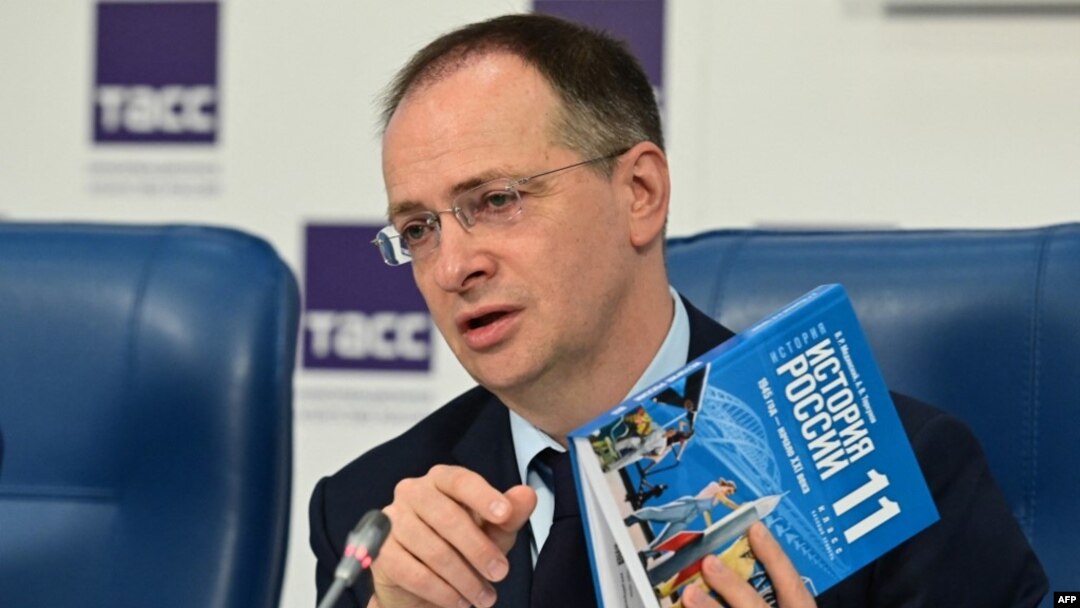
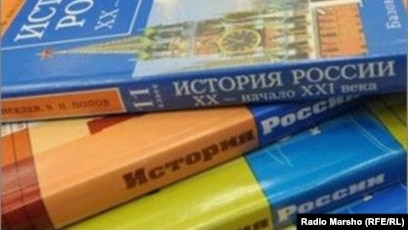
In regards to the preservation of historical memory, a new history textbook, nicknamed the “Medinsky textbook”, has been published. It integrates the narrative of Russian history with that of world history and is designed for upper-secondary school students. Vladimir Medinsky, Putin’s aide and chairman of the Russian Military Historical Society, explained his objectives in preparing the textbook: “I believe that the approach to history should be positivist. […] At present, we may feel that we are living through particularly difficult times, but in reality, this is a profoundly mistaken perception. If you are familiar with our history, you will know that our ancestors lived through far more difficult times and confronted problems that none of you could even imagine. Nevertheless, they managed to overcome them. […] Therefore, the second objective is to share positive experiences of how problems were resolved and what lessons must be learned from history. The fact that you are alive […] demonstrates that […] our history is unfolding as it should.” [9]
Conveniently, Medinsky goes on to say that history is subjective - inevitably so - and illustrates this statement by how the issue of Nagorno-Karabakh is taught in history lessons in Azerbaijan and how it is taught in Armenia: “The national perspectives are entirely different, diametrically opposed, and there is no common ground between them, nor will there ever be. […] Anyone who claims to present an objective historical account is not telling the truth; such a person is being disingenuous - or, perhaps, not particularly intelligent”.
Continuing with this notion, Medinsky highlights the subjectivity of the perceived moral principles: “What appears immoral today may, in three hundred years, be taken for granted-and vice versa. This is because morality, ethics and law are concepts conditioned by their historical period”.
With this case set, he concludes that, ideally, historical textbooks should strengthen and support the contemporary authorities in power. The move from an epistemological claim that historical interpretation is inevitably subjective to a political claim that state-sponsored historical narratives should support those in power doesn’t follow logically. And yet, the latter is presented as a natural consequence of the former. Thus, Medinsky essentially normalises the political instrumentalisation of history.
The textbook has been adopted at the beginning of this school year, with V. Medinsky himself visiting schools in Kaliningrad and delivering a special history lesson to students.
A glimpse into these developments in the region of Kaliningrad showed us that the reformed school curricula, militarised education and state-supported youth organisations introduce a dangerous notion of patriotism, in which the civic responsibility is inextricably linked to service to the state - the state, whose political authority is being legitimised by openly subjective historical interpretations, which, in their own right, are employed as an educational tool in the form of a school textbook. Naturally, the aim of this educational system is not only to shape children’s knowledge, but also their conceptions of national identity, historical continuity and the obligation towards their Motherland. And although the institutionalisation of these mechanisms does not irrevocably ensure their acceptance by students, it reveals the regime’s attempt to secure its ideological continuity by influencing the worldviews of future generations.
Sources