Category

Skeleton article title placeholder text spanning two or three lines while the content loads from the CMS


The Democratic takeover of Congress after the 2026 US midterms will not automatically change Washington’s Venezuela policy. But it may give Delcy Rodríguez something she needs even more than American support: time. And time is precisely what a genuine democratic transition in Venezuela cannot afford to lose.
The results of the November 3 US midterm elections will have consequences far beyond Washington. For Venezuela, they may prove particularly important. Democrats have won control of both the House of Representatives and the Senate, delivering a major political defeat to Donald Trump and creating divided government for the final two years of his presidency. The result will constrain his domestic agenda, intensify congressional scrutiny and make it harder for the White House to operate without institutional resistance.
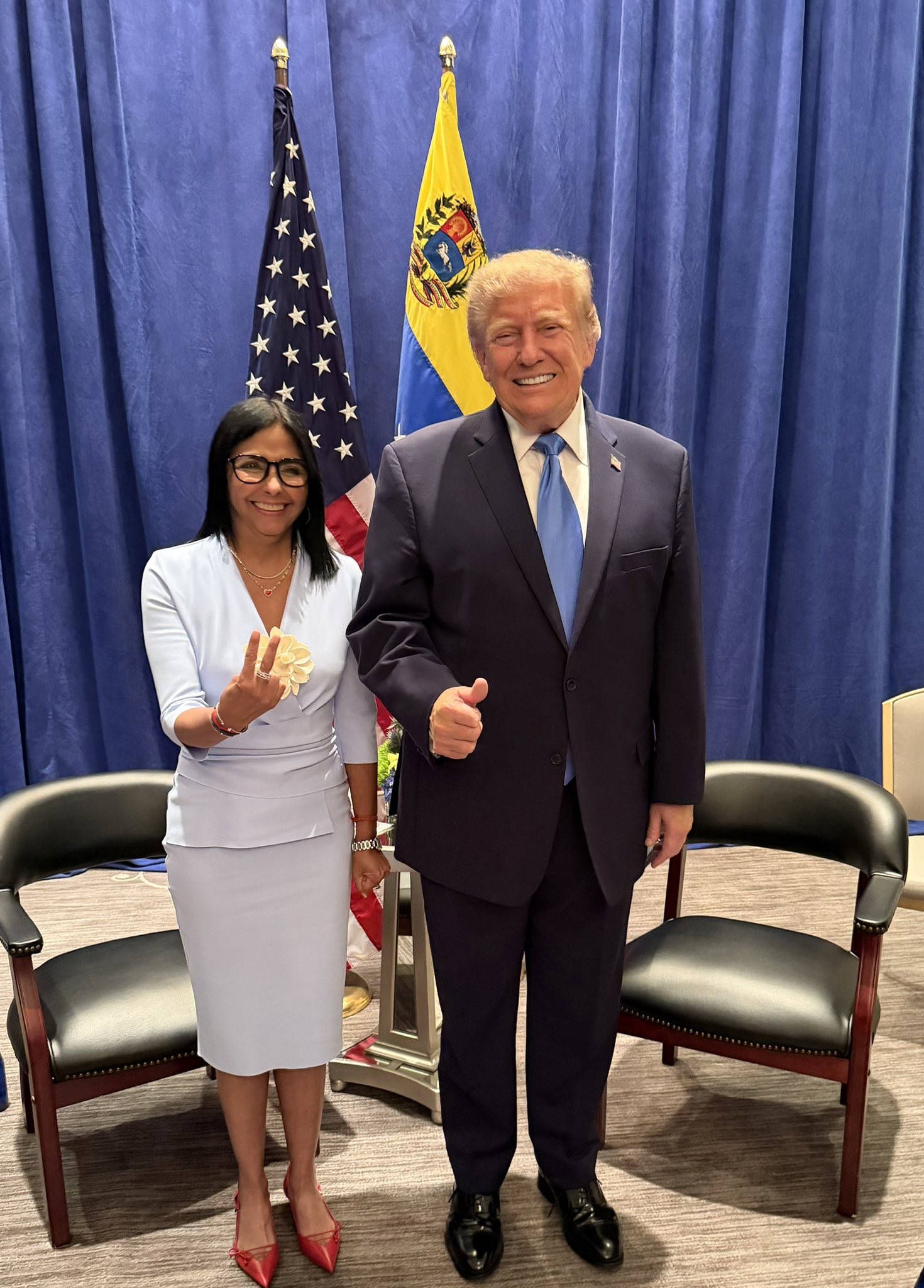
I suspect Delcy Rodríguez in Caracas was watching these elections very closely. She had every reason to hope for an outcome that weakened Trump politically. I cannot establish that she or her inner circle openly supported particular Democratic candidates, but it is difficult to imagine that the Venezuelan leadership was indifferent to the result. Rodríguez is too experienced a political operator not to understand what a Democratic victory could mean for her own room for manoeuvre.
She has already demonstrated an ability to manage Washington with considerable skill. After Nicolás Maduro was removed from power in January 2026, Rodríguez not only survived politically but remained at the centre of Venezuela’s governing system. She negotiated with the Trump administration, offered cooperation on energy and economic issues, and helped establish an arrangement in which Washington gained access to strategic opportunities without securing an immediate democratic transfer of power.
That is not the behaviour of a political figure simply waiting for instructions from Washington. Rodríguez has been adapting, calculating and protecting her position. The midterm results give her another reason to continue doing so.
My argument is straightforward: a weakened Trump may be less capable of forcing a political timetable on Rodríguez, while she has every incentive to use the remaining uncertainty in Washington to postpone elections for as long as possible.
The Democratic victory should not be interpreted as an immediate reversal of US policy towards Venezuela. Foreign policy remains primarily in the hands of the president and his administration. Trump retains considerable authority over diplomacy, sanctions implementation and the executive branch’s engagement with Caracas.
But the political environment in which he exercises that authority has changed substantially.
Democrats will control congressional committees, investigate the administration's decisions and use their legislative powers to challenge policies they consider insufficiently demanding towards Rodríguez. They can scrutinise sanctions relief, question the terms of energy agreements and demand explanations for the absence of meaningful democratic progress. The Senate majority also gives Democrats significant influence over confirmations and the broader legislative agenda.
This creates a more complicated environment for the White House. Trump will have to spend more political capital defending his decisions, while his opponents will have new opportunities to make Venezuela an issue of accountability.
Yet there is an important distinction between congressional pressure and the ability to deliver a democratic transition. Democrats can demand elections, expose concessions and make continued cooperation with Rodríguez politically costly. They cannot simply impose an electoral timetable on Caracas, nor can they assume that a divided Congress will produce a coherent alternative Venezuela policy.
In fact, this division may create an opportunity for Rodríguez. She can continue negotiating with the Trump administration while calculating that congressional pressure will be slower, more fragmented and less immediately enforceable than presidential demands.
The result may be an unusual political situation: Washington becomes more divided over Venezuela just as Caracas becomes more determined to control the pace of its transition.
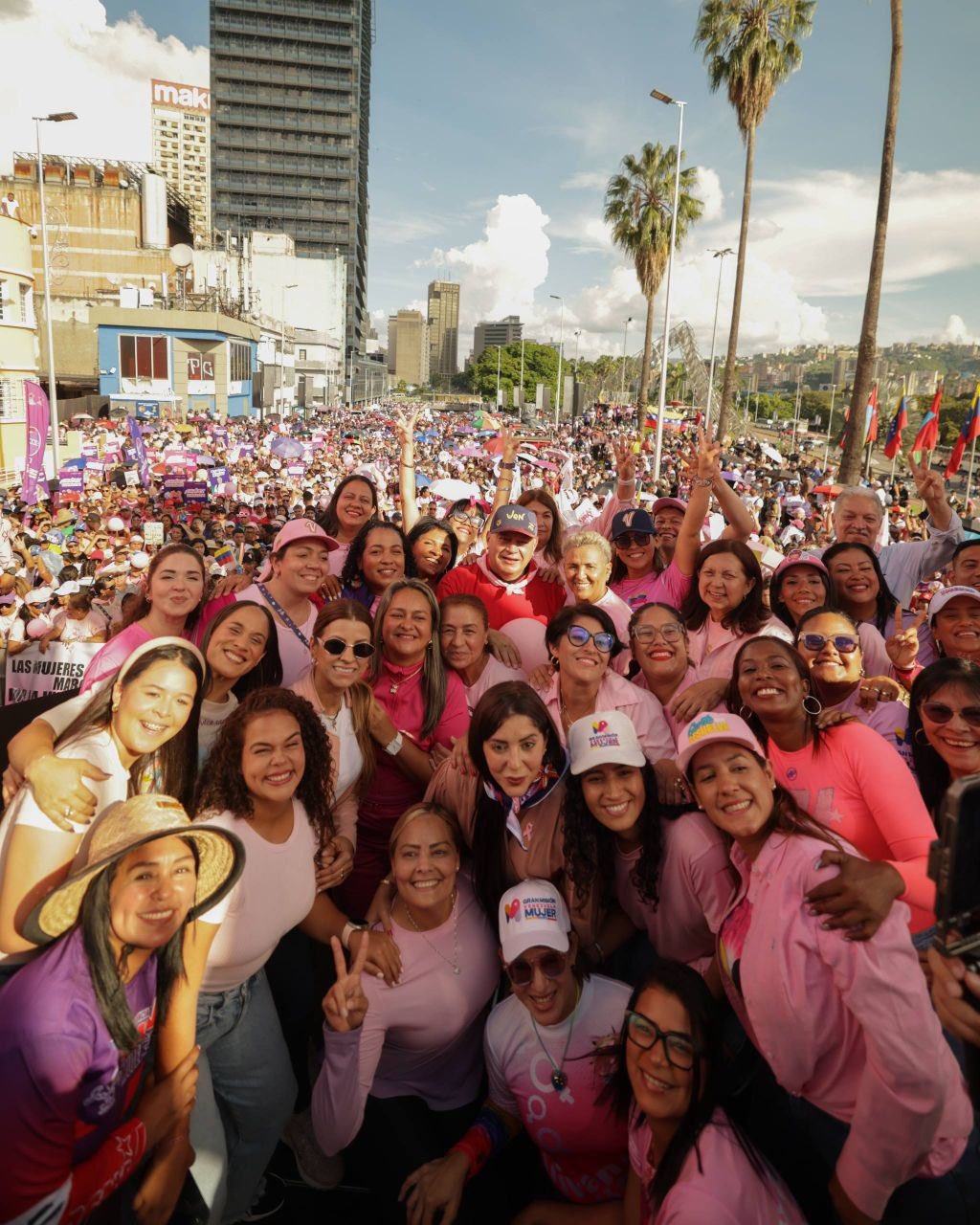
Rodríguez's most important political objective is not necessarily to defeat the opposition in a conventional electoral contest. It is to ensure that the conditions under which such a contest takes place remain uncertain for as long as possible.
There is already reason to be concerned about the timetable. In September, Rodríguez promised at the United Nations that Venezuela would hold elections as part of a transition to full democracy, but she did not announce a date. The institutional reforms required before a credible vote — including changes to the Supreme Court and the National Electoral Council — could take considerable time. Political sources and analysts have warned that elections may not take place before late 2027, with the possibility of further delays.
The opposition has pushed for a faster process. María Corina Machado has argued that elections should take place by July 2027. She has now returned to Venezuela after nearly a year abroad and has publicly supported the creation of new electoral and judicial institutions. But her return does not automatically give the opposition control over the transition, the electoral authorities or the timetable.
This is where Rodríguez's political calculation becomes particularly important. She does not need to reject elections outright. In fact, doing so would undermine her relationship with Washington and make it easier for Democrats to argue that the administration is tolerating an indefinite continuation of Chavismo.
A more effective strategy is to promise elections while insisting that the necessary conditions have not yet been met. Institutional reform takes time. Electoral registration needs to be updated. The economy must recover. Security and political stability must be guaranteed. Each of these arguments can sound reasonable in isolation. Together, however, they can become an instrument for delaying the transfer of power.
I would not be surprised if Rodríguez tries to prevent elections from taking place in 2027 and pushes the process into 2028 or even further. This is a prediction, but it follows from the incentives facing a leadership that has much more to lose from a genuinely competitive election than from another year of negotiations.
The timing of Venezuela's eventual election is not a technical detail. It is a question of political leverage.
An election in 2027 would require Rodríguez to accept a relatively short transition period, during which the opposition could build momentum, demand institutional guarantees and challenge the governing system while Washington still has the capacity to exert substantial pressure.
A process extending into 2028 would look very different. It would bring Venezuela closer to the end of Trump's presidency, when his attention would increasingly turn towards his political legacy and the approaching transfer of power in Washington. Rodríguez could use that period to negotiate from a position of greater security, having maintained control over the state apparatus while waiting for the next American political cycle.
There is already evidence that the possibility of a 2028 election has entered Washington's calculations. Reports in September described discussions in the administration about whether the summer or autumn of 2028 might provide a more realistic timetable, given Venezuela's economic and institutional problems. Officials also acknowledged that 2027 remained possible, although not necessarily the preferred option.
This matters because Rodríguez does not have to invent a delay strategy from scratch. She can work within arguments already being used by Washington itself. If American officials insist that economic recovery and institutional reconstruction must precede elections, the Venezuelan leadership can agree in principle while disputing how quickly those conditions can be achieved.
The danger is that a timetable designed to make elections credible becomes a timetable that makes them indefinitely postponable.
The Democratic victory will almost certainly create greater political pressure on the Trump administration to demonstrate that its Venezuela policy is producing more than oil agreements and short-term stability.
Some Democrats will argue that Washington has given Rodríguez too much room without extracting meaningful democratic concessions. They will have a stronger institutional platform from which to demand answers. The treatment of Machado, the independence of electoral authorities, the release of political prisoners and the conditions for opposition participation could all become subjects of congressional scrutiny.
But I would be cautious about assuming that a Democratic-controlled Congress automatically means a more effective democratic strategy.
Democrats are not a single foreign-policy bloc, and their ability to influence Venezuela will depend on whether they can agree on specific demands and sustain pressure. They may be united in criticising the absence of elections but divided over sanctions, economic engagement and the risks of destabilising the current arrangement.
Nor should Rodríguez assume that a weaker Trump means a weaker American state. Congressional scrutiny could make the administration more cautious, but it could also make concessions to Caracas politically more expensive. If Democrats successfully frame the relationship as a case of Trump trading democratic principles for commercial benefits, the White House may feel compelled to demonstrate tougher conditions.
Rodríguez therefore faces a more complicated calculation, not an automatic advantage. She must preserve cooperation with Trump while avoiding concessions that would undermine her position at home. At the same time, she must prepare for a Washington in which the political cost of accommodating her may rise.
Her likely response will be adaptation rather than confrontation: continue negotiations, offer selective cooperation, promise eventual elections and avoid committing to a date that could force her to surrender control.
Machado's return changes the political picture. It gives the opposition leader a physical presence in the country and an opportunity to rebuild political organisation. Her decision to support negotiations over institutional reform, while maintaining demands for a credible election, suggests that the opposition understands the importance of remaining engaged in the process.
But the challenge is now more difficult than simply securing her return. The opposition must prevent the transition from becoming a permanent negotiating framework in which it is consulted but has little power to determine outcomes.
The most important question is whether Machado and her allies can turn their electoral legitimacy into institutional influence. Can they secure genuinely independent electoral authorities? Can they obtain clear guarantees for political participation? Can they ensure that voter registration, especially for Venezuelans abroad, is addressed? And can they establish a timetable that cannot be repeatedly postponed under the pretext of technical or economic preparations?
Without progress on these questions, Machado's return could become symbolically important but politically insufficient. Rodríguez could tolerate a more visible opposition while retaining control over the mechanisms that determine when and how elections take place.
That would be a particularly effective form of managed transition: allowing political competition to reappear without allowing it to threaten the governing structure.
The 2026 US midterms do not guarantee that Rodríguez will remain in power indefinitely. Nor do they mean that Trump has lost the ability to shape Venezuela's future. But they have changed the political environment in which the next phase of the transition will unfold.
Rodríguez has already shown that she can negotiate with Washington without surrendering control of the political process. The Democratic takeover of Congress gives her another variable to exploit. She can calculate that Trump will face more domestic constraints, that Democrats will need time to turn their electoral victory into a coherent foreign-policy strategy, and that the United States may remain divided over how much instability it is willing to risk in Venezuela.
My expectation is that Rodríguez will use this period to delay any election that could genuinely threaten her position. She may continue promising a democratic transition, but I would not assume that a 2027 election will take place simply because Washington or the opposition demands one. A postponement into 2028 — and potentially beyond — looks increasingly plausible.
The decisive issue is not whether Democrats will call for elections. They almost certainly will. It is whether they can turn that demand into sustained pressure, and whether Trump is willing to make democratic progress a condition of the economic and political arrangements he has built with Caracas.
The danger is that Venezuela's transition will not be formally cancelled. It will simply be postponed until the political moment for delivering it has passed.