Category

Skeleton article title placeholder text spanning two or three lines while the content loads from the CMS


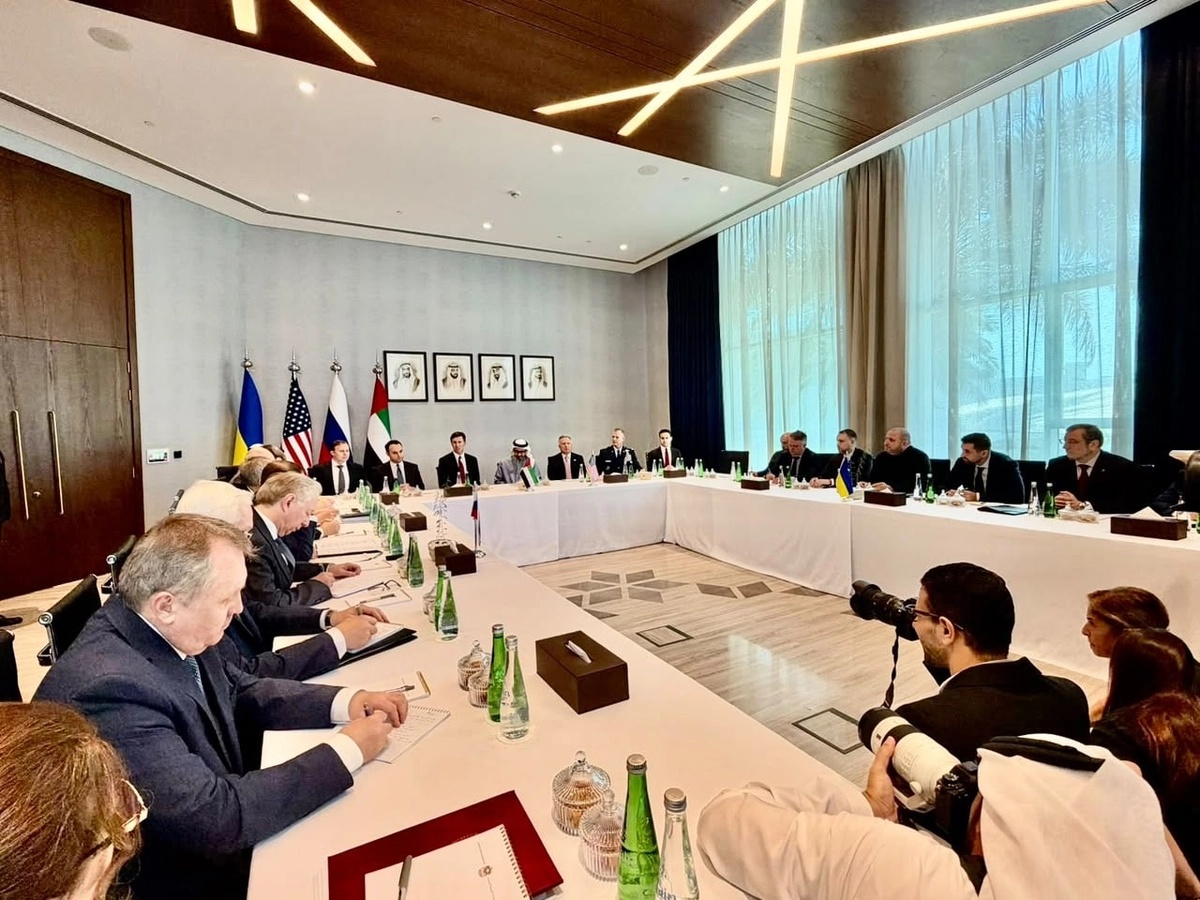
The talks in the United Arab Emirates' capital were billed as a major diplomatic milestone. Trump and his administration once again promised a breakthrough — a “great deal” that would satisfy all sides and matter not just to Ukraine and Russia, but to Europe as well.
Whatever the terms of this deal were supposed to be, Abu Dhabi once again failed to deliver. If reports circulating among well-informed sources are to be believed, one of the more “innovative” proposals put forward by the American delegation amounted to a brazen attempt to rewrite political geography: Ukraine was apparently expected to redraw its regional administrative boundaries so that the Kremlin could at least claim some bogus legal basis for declaring full control over the territories of Donetsk and Luhansk regions.
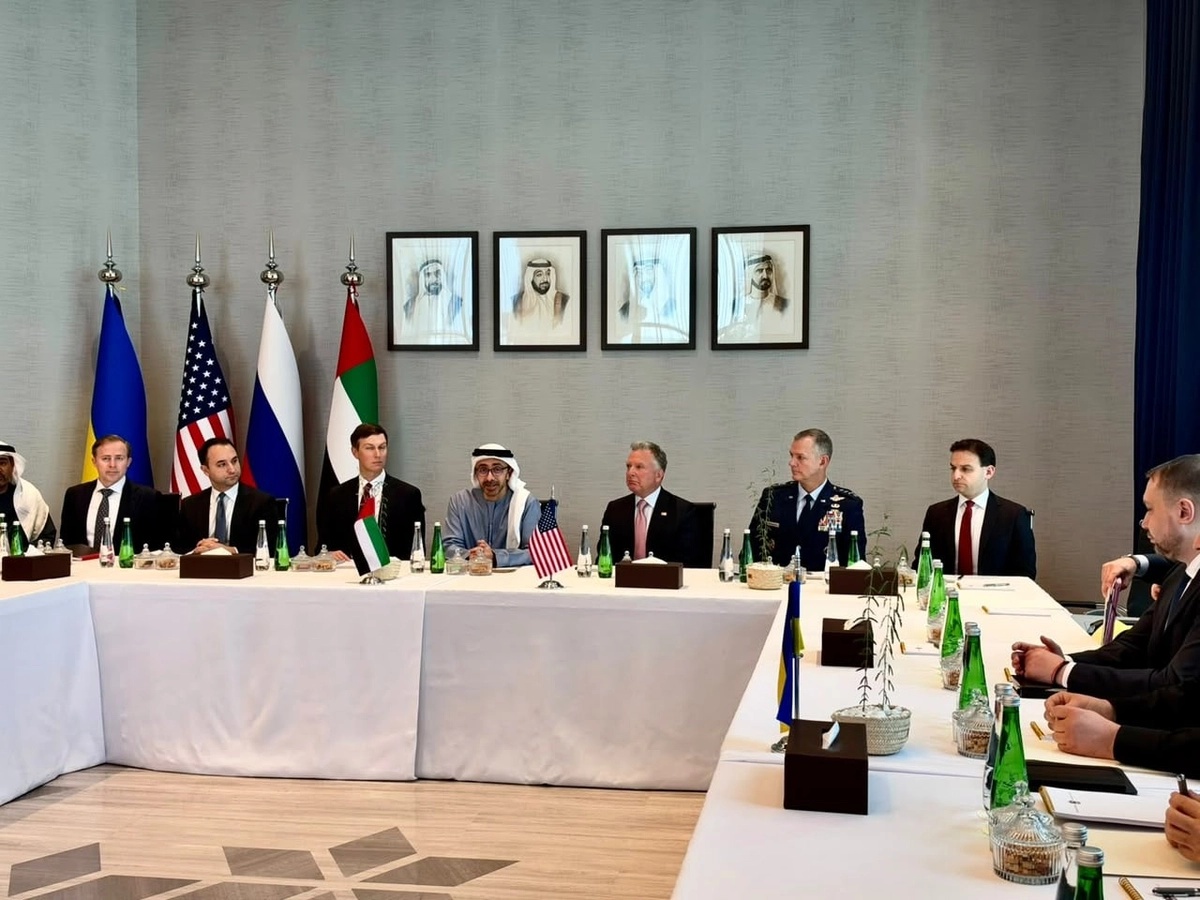
On the one hand, this initiative fits perfectly with Russia's way of waging war, in which claiming control over pretty much anything that moves has become standard practice. On the other hand, the Kremlin is hardly likely to accept such a blatant bit of window dressing. The proposal may have come from the Americans, presumably with the best of intentions, but it would still require Putin to publicly swallow a humiliating loss of face.
For all its well-documented enthusiasm for cheating, the Kremlin has very little tolerance for being made to look like the sucker. A Potemkin victory of this kind, if the proposal was indeed made, would mean Putin agreeing to be publicly conned out of a piece of territory he habitually describes as his own. That's simply not how things are done in his world. More importantly, it is not what he is actually after.
If the Kremlin were happy with a fabricated victory, it could have staged one long ago. Putin could simply have announced that “all the objectives of the special military operation have been achieved” and treated his subjects to footage of a triumphant Russian military parade down Kyiv's Khreshchatyk Street — generated by AI or staged at Mosfilm by some Oscar-winning director personally loyal to him.
Of course, this would work best with total control over the information environment, North Korean-style. But even without that, such a fantasy would find a substantial and grateful audience in Russia. The fact that it has not happened suggests that Putin has not yet given up hope of achieving a genuine victory over Ukraine.
The same proposal — let me stress again, assuming it was actually made — also says quite a lot about the American negotiating team's understanding of the situation.
If Steve Witkoff and Jared Kushner really suggested that Putin, a crime boss in all but name, put on a fool's cap for Trump's benefit and temporarily pretend to give up something he considers his property, the whole episode belongs in a decent Monty Python sketch.
In any case, Putin responded to the White House's creative ideas through his representative at the talks. Vladimir Medinsky made Russia's position abundantly clear: Moscow intends to take everything it considers its own.
Still, it would be unfair to say that Abu Dhabi produced absolutely nothing.
One important humanitarian result did emerge: Ukraine and Russia agreed in principle on a major prisoner exchange. US negotiator Jared Kushner described it as the largest humanitarian release of the war. Rustem Umerov and Vladimir Medinsky both confirmed that an understanding had been reached. The precise arrangements still need to be finalized, but the fundamental decision has been made.
And this is no minor achievement. For Ukraine, it is not merely a “humanitarian episode” or a consolation prize for yet another round of predictably unsuccessful negotiations. Saving lives is an independent, measurable objective — and a perfectly good reason to keep diplomatic channels open.
This is precisely where the line between a humanitarian achievement and a political compromise lies. It proved possible to agree on bringing people home. It did not prove possible to agree on ending the war on terms that would guarantee Ukraine's security.
There was another important political outcome: a joint statement by Ukraine, the United States, and its European partners.
On November 10, representatives of the European Union, France, Germany, Italy, the United Kingdom, Ukraine, the United States, and NATO issued a joint statement. It reaffirmed principles the Kremlin would much rather keep off the negotiating table: respect for Ukraine's sovereignty and territorial integrity, its right to make its own decisions about its future, and the need for reliable security guarantees.
The participants also agreed to continue coordinating their positions and work toward a broader multilateral negotiating format that would include European partners. The statement separately emphasized that NATO would remain the central pillar of Euro-Atlantic collective defense.
Of course, the statement is neither a security guarantee agreement nor, by any stretch of the imagination, a commitment to go to war on Ukraine's side in the event of another Russian attack.
Its political significance lies elsewhere. Washington and European capitals have publicly put on record that Ukraine's future cannot be decided without respecting its sovereignty, and that Europe's security architecture cannot be shaped without Europe's participation.
That is already a rather different proposition from the Kremlin's vision of a new “European security architecture,” in which Moscow claims the final say and Ukraine is effectively stripped of any agency.
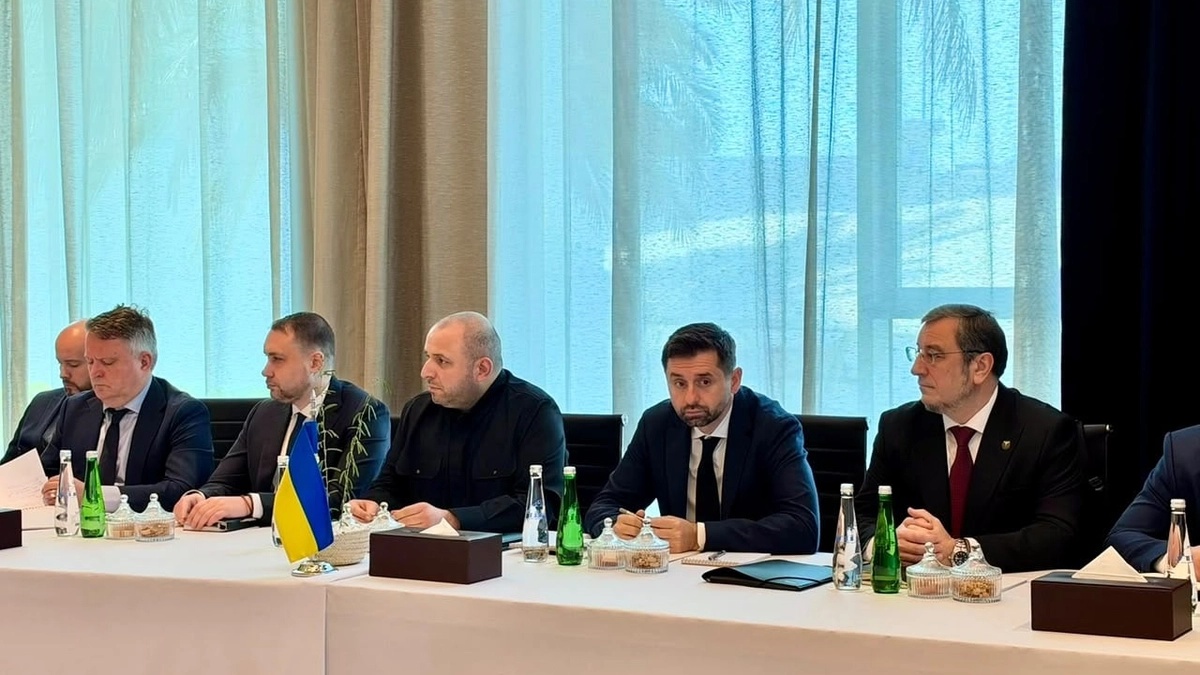
This, in fact, was the central issue Ukraine's delegation brought to Abu Dhabi. Kyiv's negotiating objective was not simply to fend off demands for territorial concessions. Just as importantly, it was to prevent Ukraine from becoming a bargaining chip in some grand deal between Washington and Moscow.
Ukraine's position was perfectly rational. Kyiv did not obstruct the talks. It took part in discussions on humanitarian issues, secured agreement on a major prisoner exchange, and remained ready to continue the diplomatic process. But it refused to treat territorial capitulation as an acceptable price for American mediation.
Another outcome of Abu Dhabi is that the European dimension is no longer merely background scenery in the Ukraine-Russia negotiations.
For now, Europeans have not taken their seats at the negotiating table, and Moscow has managed to preserve its preferred arrangement: talking to the Americans without Europe in the room.
But Trump is becoming increasingly frustrated with the lack of results from his “friendship” with Putin, and he would clearly like to dump the failure on someone he can afford to blame — Europe, for example.
The joint statement, together with continued pressure on the Kremlin to broaden the negotiating format, suggests that the process is moving in precisely that direction.
There are, however, plenty of unresolved questions here as well. Europe needs to agree on who exactly will represent it in any expanded format and what concrete commitments it is prepared to make. Otherwise, all those fine declarations risk remaining just that: declarations.
So I would describe the outcome of Abu Dhabi as an interim tactical success for Ukraine. It has value in its own right, but it leaves a great many questions unanswered.
Ukraine prevented the talks from becoming a vehicle for formalizing a separate deal behind its back. But peace has not moved any closer. Russia's territorial claims remain firmly in place, and Moscow is unwilling to abandon its demands not only on Ukraine but also on NATO.
The result was a rather murky diplomatic cocktail.
Russia did not get recognition of its territorial claims. The United States did not get the breakthrough it had promised. Europe has not yet secured a proper seat at the table. And Ukraine has not received security guarantees.
The parties did agree on a major prisoner exchange — an outcome that can ultimately be measured in the number of lives saved.
What matters is that Ukraine managed not to undermine its own negotiating position, even though some of the American proposals seemed designed to push it in precisely that direction.
If this was not a victory, it was at least a dignified response to yet another attempt to strike a “grand bargain” at Ukraine's expense.
And if Russia was counting on such a deal, what it got in return was, shall we say, a middle finger in the colors of the Ukrainian national flag.
The main thing now is to make sure the Kremlin gets the message.
Putin has meetings with Trump and Xi Jinping ahead of him. And unless he interprets this diplomatic gesture correctly, those encounters may turn out rather differently from the way Moscow is hoping.