Category

Skeleton article title placeholder text spanning two or three lines while the content loads from the CMS


In essence, texts like this one are, to a considerable extent, harmful.
A political populist lives in the media. It is their main lifeline — even when they are not being praised, but criticized, exposed, and taken apart piece by piece. Simply being present in the information space already works in their favor. Good publicity or bad publicity — to a populist, that is very much beside the point.
So every populist I mention here gets a little bonus. I am not happy about that: political parasites generally should not be fed unless absolutely necessary. On the other hand, it is rather difficult to describe a phenomenon without naming it or providing recognizable examples.
All I can do is hope that, whatever harm this article may cause, it will ultimately do more good than damage.
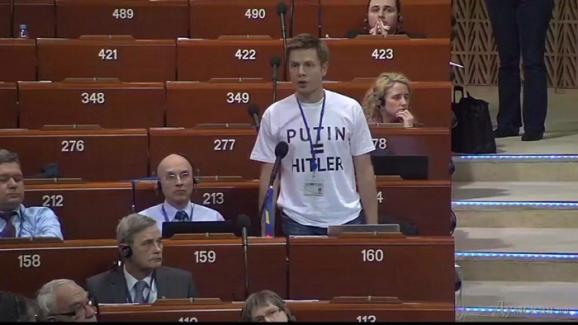
And now it is time to put the name that most obviously belongs in the shop window today: Oleksii Honcharenko.
But before we get to him as a political character, it is worth setting the stage and arranging the scenery.
In the 2010s, political populism became a global trend. One of the reasons was the deep erosion of the old information environment.
Blogging platforms, followed by social media, increased by several orders of magnitude the number of people able to broadcast their own thoughts, impressions, and beliefs in public. At the same time, the attention market changed. A complicated explanation suddenly had to compete with a message that could be understood in ten seconds and repeated in five.
Demographics, economics, cultural convergence, and global social dynamics require at least some mental effort. "It's all the immigrants' fault" does not. Neither does "Make the hamburger great again."
For a populist, this environment is a shortcut to easy success. Instead of explaining a problem, he offers a simplified package — and the package sells much better than the contents.
Ukraine's public sphere was no exception.
Both presidents who have held office since the Revolution of Dignity used, to varying degrees, essentially the same populist model for coming to power.
Petro Poroshenko sold himself as an experienced statesman, an international politician, and, at the same time, a successful businessman. That particular packaging was in high demand at the time. Respectability itself offered a certain hope that the promised reforms might actually succeed.
Volodymyr Zelenskyy went in precisely the opposite direction: the anti-establishment candidate, the "man of the people," who had come to throw the old elites out of politics and finally "make things work properly."
The difference between the two images was enormous. The mechanism, however, was largely the same: identify the society's sore spots with maximum precision, name them in simple language, and offer the voter simple solutions.
Corruption. War. Bureaucracy. Low living standards. Reform.
The question comes later: how exactly is a newly elected leader supposed to deal with all of this if he has neither the necessary expertise nor a clear strategy?
The populist may genuinely believe that his promises are achievable. He simply does not always have much of an idea of how to make them happen. That is not something he is particularly good at. And, frankly, it is not quite his profession.
He is more about politics than about actually running things.
This line of reasoning, incidentally, leads to a rather unpleasant forecast for Volodymyr Zelenskyy when it comes to postwar elections. If he sticks with the populist model, winning will be extremely difficult.
That does not mean his wartime leadership will be forgotten. Quite the opposite: it will probably become the central element of his political legacy. But he is no longer the anti-establishment candidate of 2019. He has become part of the very system he failed to reform — and, moreover, its central figure.
The campaign promises of 2019 have not disappeared, but a substantial portion of them remains unfulfilled. Meanwhile, corruption scandals involving government officials and people close to them are creating something more serious than a mere image problem. A September 2026 poll by the Kyiv International Institute of Sociology (KIIS) found that 72% of Ukrainians consider Zelenskyy responsible for corrupt actions by members of his inner circle. KIIS specifically clarified that this refers primarily to political, rather than legal, responsibility.
And there is another factor: voters eventually get tired of watching the same performer. After years of war, crises, promises, scandals, and an endless political soap opera, the audience may simply want to see something new. Who exactly will seize the stage when that happens is anyone's guess.
And this is where Oleksii Honcharenko enters the picture.
It would be a mistake to underestimate his political skills. He has an impressive record of changing political identities.
He began in the youth wing of the Green Party, then headed the Odesa organization of the Soyuz party. At the end of 2005, that organization merged into the Party of Regions. In 2012, Honcharenko ran for the Verkhovna Rada on the Party of Regions ticket. In February 2014, following the Euromaidan, he left the party. That autumn, he was elected to parliament on the Petro Poroshenko Bloc ticket. In the 2019 election, he won a seat in parliament not through a party list but by taking single-member constituency No. 137 in the Odesa region, and joined the European Solidarity faction.
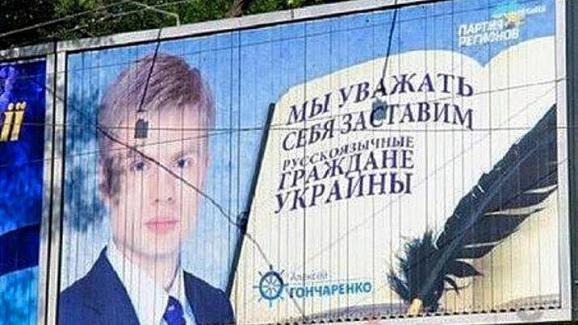
Even more interesting is the way Honcharenko operates in the information environment.
Respectability, tellingly, has never been his strong suit. Staying loud has mattered much more to him.
A television scandal? Sure. Shock value? No problem. A sharp change of political emphasis? Also available.
At times, it has seemed as though he has deliberately left himself a foothold on every ideological platform — from unrestrained libertarianism to hard-line conservatism, and from boundless patriotism to what looked suspiciously like playing along with the enemy.
To discuss political consistency in Honcharenko's case would therefore be almost comically naïve.
He has a different specialty: omnivorousness.
And, by the way, that is a perfectly rational strategy in a society that is poorly structured — both politically and ideologically.
If a society has failed to produce stable ideological groups, if political institutions are weak, and if parties exist mainly as vehicles for individual leaders and election campaigns, political principle becomes a rather expensive luxury. It reduces the number of political subjects available for exploitation.
A populist does not need convictions and principles. He needs pressure points.
He watches for where a social boil is beginning to swell, waits for the right moment, presses it — and gets a sharp reaction.
Principle is not particularly useful for that purpose. It drastically reduces the number of boils a populist can press.
A populist does not need convictions and principles. He needs pressure points.
The latest episode involving Honcharenko illustrates this rather well.
On October 2, he said that Ukraine was supposedly "losing the war," that Russia was strong while Ukraine was weak, and called for seeking agreements with the aggressor "wherever possible." Among the possible subjects for negotiation, he listed an end to long-range strikes, reopening the Black Sea, sanctions against Russia, the question of neutrality, Donbas, language policy, and other issues. He went on to propose moving from small-scale agreements toward a broader peace deal.
There is, of course, nothing criminal or even particularly exotic about calling for negotiations. What is noteworthy is the timing.
Honcharenko fired his shot precisely when Russia had intensified its terror campaign against civilians, apparently hoping to push Ukrainian public opinion toward greater willingness to make concessions, while war fatigue had become one of the most painful pressure points in Ukrainian society.
And that was exactly the pressure point Honcharenko chose to hit.
He saw an opening — and took it.
It is also significant that Honcharenko was, at the time, a member of the European Solidarity faction, which has traditionally taken a very hard line against concessions to the aggressor. His public intervention therefore directly contradicted the faction's position and, in effect, undermined it.
The faction naturally announced that it did not share or endorse his views and that it had agreed with Honcharenko on a political separation.
In practice, however, anyone who wanted to see Honcharenko's boot print on Poroshenko's political face could see it perfectly well — and that, too, generated plenty of commentary.
A strong reaction means attention. Attention is a media resource. A media resource is political capital. The arithmetic is pretty simple.
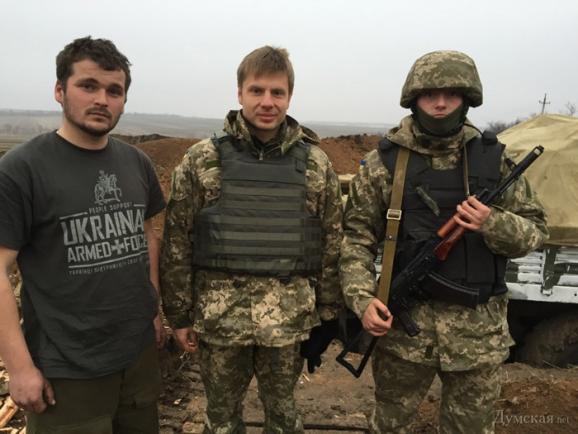
So what does all this tell us about Honcharenko's own plans?
Judging by his behavior, he may well be preparing for an independent political career.
First, the very fact that Honcharenko has started putting on a series of solo political performances is telling. His political gut may be telling him that the war could end sooner than most of his competitors expect. Otherwise, he would probably still be riding along with Poroshenko rather than striking out on his own and risking a false start.
Political instinct is interesting in itself. But so far, there are no clear signs pointing decisively toward one particular way the war might end. That makes the prospect of elections — and of Honcharenko taking part in them — painfully uncertain.
Second, elections will happen eventually, and Honcharenko will have a certain chance of winning a seat.
Of course, neither he nor his likely political project is going to win the election outright. His personal negative rating accumulated over two decades makes that highly unlikely — much as it makes a return of Petro Poroshenko to the presidency highly unlikely.
But Honcharenko could certainly hope to build a small parliamentary faction.
And that faction will be larger the louder he gets on television, the more he demands that politicians "listen to ordinary people," and the more he throws around wild-eyed proposals that he is guaranteed never to have to implement himself.
What ultimately comes of this will depend to a great extent on what the end of the war does to an exhausted and battered Ukrainian society.
If society emerges more mature, more demanding, and less susceptible to political circus, Honcharenko will have to settle for the role of a noisy parliamentary loner.
But the war will almost certainly leave behind enormous numbers of traumas, economic problems, social conflicts, and a pervasive sense of injustice.
And if that happens, the field for populism could be virtually limitless.
If we take the conservative scenario — the war ends, while Ukrainian society remains broadly as it is today — we can make the following prediction.
On the one hand, Oleksii Honcharenko is unlikely to earn the title of "Ukraine's Zhirinovsky." Even if he manages to hit his stride, Ukrainian civil society, deeply imperfect though it is, is still not as politically debauched as Russia's.
On the other hand, there is little stopping him from repeating the success of Oleh Liashko.
In the 2014 election, Liashko's Radical Party won 22 parliamentary seats, becoming a sizeable faction with considerable bargaining power. For a time, it was even part of the majority coalition.
I suspect that is about the maximum Honcharenko can realistically hope for.
And this is NOT one of those cases where I would be happy to be wrong.
Because if I am wrong, it will mean that this column has done more harm than good.