Category

Skeleton article title placeholder text spanning two or three lines while the content loads from the CMS


Cognitive warfare has a huge variety of tools. Some of them are unusual, or better to say, not obvious or expected. For example, things such as "humour", "laugh", "internet trolling", or "prankster's activities" can be seen as not serious, but in some cases, the use of these tools can have very serious consequences.
The significant study of the NATO Strategic Communication Centre of Excellence, published in 2017, examined the role of humour in strategic communication. It was found out that "the entire [Russian] 'official humour industry' (that — as the studies show — has huge impact in the Russian-speaking world) is directly Kremlin-controlled." It means that Russia quite clearly sees the entertainment industry as one of the tools of influence. The quoted study also concludes that Russia strategically used humour to simplify messages and adapt them for propaganda purposes.
Humour activities, if such a definition is possible, have different forms today. The focus of this article will be on different "practical joke" activities, better known as pranks, leaving aside, at the moment, another phenomenon in the world of humour.
The word "prank" is not new. The Oxford Dictionary defines it as "a trick that is played on somebody as a joke" and states that its origin is unknown, but the word appears in the language as early as the 16th century. On the other hand, in the era of the internet, the possibilities for pranking have grown. Also, a little bit changes the nature of the prank, including new technical possibilities.
There is still a question whether the prank can be used as a synonym for trolling (especially as a tool of information influence). Quite often, a prank is still viewed as an unharmful joke. On the other hand, intentionally harmful pranks can be part of covert hostile activities, with some countries and their secret services behind them. Let's look at some practical examples of these activities.

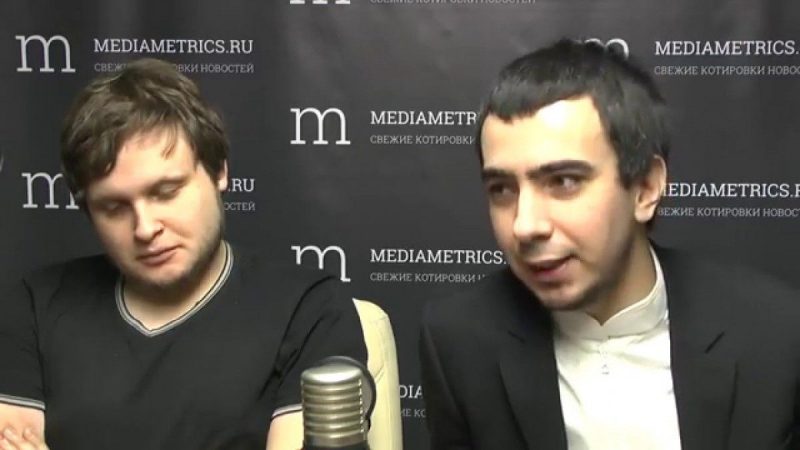
The example of the Russian pranksters Vovan and Lexus can illustrate the weaponization of a prank. The real names of the actors mentioned above are Vladimir Kuznetsov and Alexei Stoliarov. As is known, they began their pranks in the late 2000s. Their first targets were Russian pop stars and some random Russians. Later, the focus of Vovan's and Lexus' pranks changed. Their targets become mostly high political figures.
First, they played more on the domestic stage. In 2012, they many times called the Russian opposition politician Boris Nemtsov (later, he was assassinated in 2015). In 2014, the victim of a Vovan prank became the Belarusian authoritarian leader Alexander Lukashenko, who thought he had spoken with the son of former Ukrainian president Yanukovich.
A few years later, Vovan and Lexus stepped up to the international level. In 2016, they called the Turkish President Recep Tayyip Erdoğan. During this call, Vovan and Lexus impersonated Ukrainian President Petro Poroshenko and Prime Minister Arseniy Yatseniuk. Later, they constantly impersonate Ukrainian authorities in their pranks. For example, posing as a high-ranking Ukrainian politician, they called and spoke with the U.S. representative Maxine Waters (2017), French President Emanuel Macron (2019), U.K. Defence Secretary Ben Wallace (2022), and U.K. Prime Minister David Cameron (2024). In these calls, they discussed Western support for Ukraine, NATO's position on Russia, Donald Trump, etc.
Vovan and Lexus even invented a new definition for their activities: "prank journalism." In 2017, in an interview for the Russian weekly "Argumenty i Fakty," Vovan explained the mechanism of "prank journalism" as "obtaining socially important information through phone calls." On the other hand, it should be viewed as their own attempt at legitimizing their activities.
Vovan and Lexus deny any connection to Russian secret services, but there is a strong suspicion that such a link may exist. Anyway, their pranks often concur with positions and narratives of Kremlin propaganda. As mentioned in the public report of Dutch intelligence, "The Russian attack on Ukraine: a turning point in history": "Vovan and Lexus subsequently publish the recorded fragments online or in their own talk show. These revelations are then embellished, mainly by Russian state media, for the benefit of their domestic audience."
Vovan and Lexus are also officially integrated into the Russian entertainment system (which has many connections to the state propaganda system). They have official shows on Russian state-controlled TV channels.
There are more questions for Vovan and Lexus (or similar kind pranksters). For example, how are they getting in contact with high-ranking politicians? Vovan and Lexus himself explain it by a long process of establishing a chain of contacts that finally allows them to call a high-level person posing as another political leader. They are denying the help from the Russian secret services, but it does not eliminate all suspicions.
Vovan and Lexus deny any connection to Russian secret services, but there is a strong suspicion that such a link may exist.
Russian pranksters are targeting not only the leaders of the big countries. The Baltic States, including Lithuania, also faced this challenge a few times in the past years.
For example, in 2021, a member of the Lithuanian parliament (Seimas), Žygintas Pavilionis, had a video call with what he believed was one of the Russian opposition activists now living in Lithuania, Leonid Volkov. Later, some recorded fragments of the conversation were publicly shared on the Russian internet. For example, in one of the fragments, Pavilionis criticized Lithuanian President Gitanas Nausėda, saying his role is only "symbolic." This prank was also attributed to Vovan and Lexus, mentioned above. Publication of the fragments of conversation was made on the source linked to them. However, it remains unclear which technology was used to imitate Volkov's face during the video call: a deepfake or just a mask?
In 2026, the victim of the Vovan and Lexus prank became Deividas Matulionis, the chief adviser to Lithuanian President Gitanas Nausėda. He got a fake call from "Rustem Umerov," then Ukraine's defence minister. The conversation was addressed to sensitive topics. During the call, Matulionis said that Lithuania supports Ukrainian strikes on legitimate targets in Russia. He also expressed concerns about stray Ukrainian drones in Lithuanian airspace.
A similar call from "Umerov" also had Madis Roll, a security advisor to the Estonian President. Vovan and Lexus published both conversations on July 1, 2026.
As mentioned, there is no direct evidence that Vovan and Lexus, or other Russian pranksters, work with Russian secret services. On the other hand, it is a fact that their activities are useful to the Kremlin propaganda machine.
For example, well-known Russian propagandist Vladimir Solovjov used a conversation between Roll and "Umerov" to prove the narrative that "Estonia plans to help Ukraine attack Sankt-Peterburg." It should be noted that this statement is a very loose interpretation of what Roll said.
It is possible to say that using pranks to convey messages and narratives is a tradition in modern Kremlin propaganda. Earlier, in 2023, the prank against Italian Prime Minister Giorgia Meloni, in which she spoke with a fake president of the African Union Commission, was used by Kremlin-controlled media. The fake conversation was re-published by the Russian state-owned information agency RIA-Novosti. Special attention was paid to Meloni's words that "the counteroffensive of Ukraine is maybe not going as they were expecting." Kremlin propaganda used it to prove that Ukraine is not so successful on the battlefield. This narrative supports Moscow's metanarrative that "Ukraine can not win the war."
In general, Vovan and Lexus are integrated into the Kremlin propaganda system. As stated in the analysis of EUvsDISINFO, their activities are not just pranks or comedy: "Each call, carefully crafted and selectively edited, promotes multiple pro-Kremlin narratives, from undermining pro-Western opposition movements to amplifying geopolitical messaging favourable to Moscow." So, every case of their prank is useful for Moscow and its "strategic communication."
Mark Galeotti, when he wrote about Russia's modus operandi, used the term "weaponization of everything." The Russian pranks topic meets this formula perfectly. We see how practical-joke-related phenomena become a kind of weapon against high-ranking authorities in different countries.
Vovan and Lexus can be evaluated as phenomena in their own right. Their ability to connect with politicians in high positions across different countries seems incredible. On the other hand, it looks like they manage to use "gaps in the system." It means that, according to their own confession, they are establishing contact with lower-ranking officials who are responsible for liaising with high-ranking authorities. It seems that if you overcome this filter (which is sometimes imprecise), the call to the President or Prime Minister of the country seems less like an impossible opportunity, especially when high-ranking authorities believe that on the other end of the line is an equal interlocutor.
We should also keep in mind the challenges of new technologies. The technological progress can help make pranks more sophisticated. Various video filters and deepfake-related solutions create more opportunities for pranksters to impersonate others. As well as voice-changing technical solutions. It means that even a video call, when the interlocutor is on camera, is no guarantee that the person on the screen is real.
Finding a solution to this challenge is not so easy. First of all, it is needful to recognize that pranks have become one of the tools of cognitive warfare. They're already weaponized.
Potentially, there is a need for new, stricter security protocols for communication by high-ranking authorities when it is not face-to-face. The question of the interlocutor's verification is most important here.
During such a conversation, politicians and other officials should keep in mind that today, everything that they say can, in one way or another, become public (and it is not only about pranks). So, wording and messages matter anyway.
Finally, when the topic of conversation is very sensitive, it is possible to remember an old, good sentence: "not on the phone." There are other ways of communication, too.