Category

Skeleton article title placeholder text spanning two or three lines while the content loads from the CMS


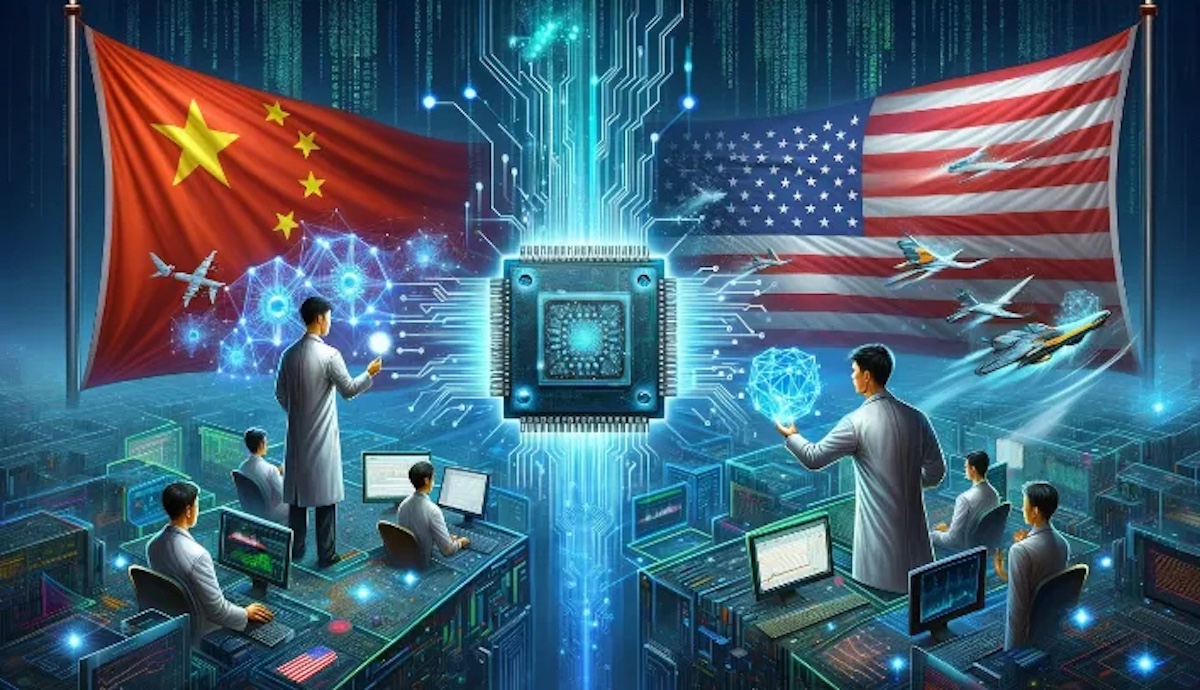
The next phase of the U.S.-China AI competition will not be determined by chips alone. It will increasingly be determined by something more fundamental: the ability to generate and deliver enough electricity to power them.
The United States currently holds major advantages in advanced semiconductors, AI research, cloud infrastructure and frontier models. But these advantages are becoming increasingly dependent on access to reliable and affordable energy. As computing demand expands, the constraint on AI deployment may shift from the availability of processors to the availability of power.
This is where Venezuela becomes strategically important.
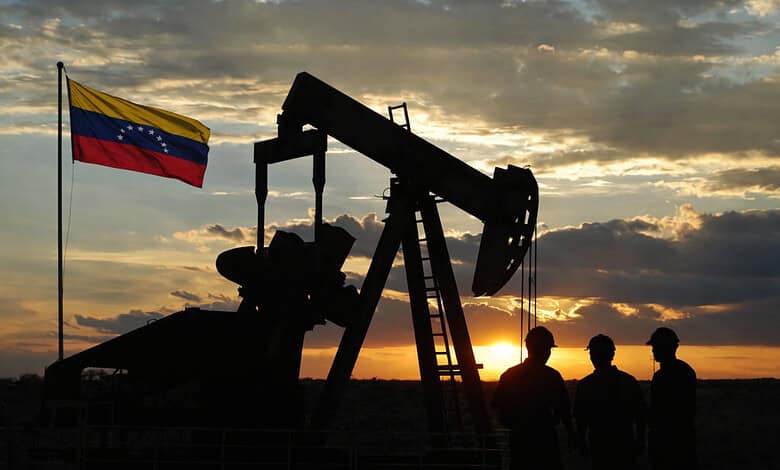
Venezuela is not an AI power and is unlikely to become one in the foreseeable future. Its importance lies in its energy base. The country possesses approximately 303 billion barrels of reported proven oil reserves, around 70 percent of Latin America's natural-gas reserves, major hydroelectric capacity and significant quantities of stranded or wasted energy. These resources could become increasingly valuable as AI transforms electricity from a conventional economic input into a strategic technology resource.
China appears to understand this emerging relationship between energy, infrastructure and AI. In July, Venezuela became one of 29 founding members of the World Artificial Intelligence Cooperation Organization, or WAICO, a Chinese-backed intergovernmental initiative focused on AI standards, infrastructure and development. Venezuela's participation does not make it an AI competitor to the United States. It does, however, illustrate China's broader effort to build institutional and infrastructure relationships around the next generation of computing.
For Washington, the strategic question is therefore no longer simply how to bring Venezuelan energy back to global markets. It is whether Venezuelan energy can be connected to an American-led technology and infrastructure ecosystem.
That opportunity is particularly important because Venezuela combines three assets that are rarely found together: enormous energy potential, geographic proximity to the United States and an economic and geopolitical orientation that remains open to influence. If American capital, technology and infrastructure are integrated into Venezuela's energy sector, the country could become more than an energy supplier. It could become a strategic platform for energy-intensive computing and other advanced industries in the Western Hemisphere.
Washington should therefore incorporate Venezuela into its broader AI and energy strategy. This should include developing a Venezuela energy-and-compute strategy within the Pax Silica framework, establishing clear safeguards for U.S. companies deploying advanced processors and computing infrastructure, and creating a predictable Treasury framework for investment in energy and compute projects.
The objective should not be to make Venezuela an American technological dependency or to treat it simply as an oil supplier. It should be to connect Venezuelan energy abundance with American technology, capital and infrastructure before competing powers establish those connections first.
The emerging AI competition is ultimately a competition over more than algorithms and chips. It is a competition over the physical infrastructure required to turn computing capacity into economic and strategic power.
China is already building relationships around that emerging reality. Washington should start doing the same.
The first phase of the AI revolution was dominated by access to computing hardware.
The central strategic question was who could obtain the most advanced processors and assemble them into sufficiently large clusters. This is why semiconductor manufacturing and export controls have become central elements of U.S.-China competition.
That competition will remain important.
But hardware is only one layer of the AI economy.
A processor has little strategic value if it cannot be operated. A data center cannot function without electricity. And a national AI ecosystem cannot expand indefinitely if the power grid cannot accommodate the resulting demand.
This is the emerging contradiction at the heart of the AI boom.
The technological capacity to produce increasingly powerful computing systems is developing at extraordinary speed. Electrical infrastructure, by contrast, is slow to build. Power plants take years to finance, permit and construct. Transmission lines can face even longer delays. Grid upgrades require coordination across utilities, regulators and governments.
AI infrastructure does not wait for that process.
Large-scale data centers can require enormous amounts of continuous electricity. As companies deploy increasingly sophisticated models, demand grows not only during training but also during inference — the process of actually running AI systems for millions or eventually billions of users.
This distinction is strategically important.
Training a model is an event. Operating an AI economy is continuous.
Every search query, software agent, automated decision, generated image, scientific simulation and industrial application consumes computing resources. As AI becomes embedded into everyday economic activity, electricity demand will increasingly reflect the scale of AI deployment itself.
This is why Elon Musk has repeatedly argued that electricity is becoming a fundamental constraint on AI deployment.
The broader point is not about any individual prediction. It is about the structure of the industry.
If semiconductor capacity expands faster than power-generation and grid capacity, the world could eventually experience a situation in which there are more processors than available electricity to run them.
At that point, energy-rich countries acquire a new form of strategic value.
They are no longer simply commodity exporters.
They become potential platforms for computation.
This changes the traditional way Washington should think about energy security.
For much of the twentieth century, energy security meant ensuring access to oil and natural gas for transportation, manufacturing and electricity generation.
The twenty-first-century version is becoming broader.
Energy security increasingly means ensuring that the United States and its partners have enough power to support the industries that determine technological and military competitiveness.
AI is one of them.
Advanced manufacturing is another. Semiconductor fabrication itself is extraordinarily energy-intensive. So are data centers, cloud infrastructure and many of the industrial systems increasingly associated with autonomous technologies.
The result is a convergence between energy policy and technology policy.
A country that controls abundant energy can attract capital-intensive industries. A country that lacks energy can find itself technologically dependent even if it has access to advanced hardware.
This is precisely why Venezuela deserves greater attention.
The country possesses one of the largest hydrocarbon resource bases in the world. Its reported proven oil reserves are approximately 303 billion barrels. It also possesses enormous natural-gas resources, significant hydroelectric potential and substantial quantities of energy that are currently stranded, underutilized or wasted.
These resources have obvious value for conventional energy markets.
But their strategic value may be even greater in an economy increasingly organized around electricity-intensive computing.
The question for Washington should therefore not simply be how much Venezuelan oil can reach international markets.
It should be:
How much reliable energy can Venezuela ultimately contribute to a Western Hemisphere computing ecosystem?
That is a fundamentally different policy question.
One mistake Washington could make is evaluating Venezuela according to traditional measures of technological competitiveness.
By those measures, Venezuela would rank poorly.
It lacks a world-class semiconductor industry. It does not host the world's leading AI companies. It has limited domestic capacity to develop frontier models or manufacture advanced computing hardware.
But this misses the point.
Strategic ecosystems are rarely built by every participant possessing every capability.
The United States does not need Venezuela to become another Silicon Valley.
It needs Venezuela to potentially become an energy platform connected to American technology, finance and industrial infrastructure.
That distinction creates an opportunity.
Imagine an ecosystem in which American companies provide advanced processors, data-center technologies, software, cloud expertise and capital, while Venezuelan energy resources provide part of the electricity required to operate the resulting infrastructure.
Such an arrangement would not make Venezuela technologically independent.
It would make Venezuela economically integrated into an American-led technological system.
That integration could be strategically valuable for both sides.
For Venezuela, it would create a path toward monetizing energy resources that are currently underutilized while attracting investment into power generation, transmission, telecommunications and industrial infrastructure.
For the United States, it could provide access to an additional source of energy at a time when electricity is becoming a strategic constraint on technological expansion.
The opportunity is therefore not simply about Venezuela selling more oil.
It is about transforming energy into computing capacity.
This is where Venezuela's participation in WAICO becomes more significant.
The immediate temptation is to dismiss the organization because Venezuela is not an AI leader and because China's ability to compete with the United States in every dimension of advanced AI remains uncertain.
That would be a mistake.
China's strategy does not require every partner to become an AI superpower.
It requires countries to become connected to Chinese technological, financial and infrastructure ecosystems.
Institutions such as WAICO can help create that connectivity.
AI standards matter because standards influence which technologies become interoperable. Infrastructure matters because infrastructure creates long-term dependencies. Development partnerships matter because countries that receive capital, expertise and equipment from a particular ecosystem have incentives to remain connected to it.
This is how technological influence can expand without requiring direct political control.
China has used similar logic across other infrastructure sectors. AI provides another opportunity to apply it.
The strategic question for Washington is therefore not whether Venezuela can contribute sophisticated AI research to China.
It is whether Venezuela's energy resources could eventually become connected to a Chinese-led technology ecosystem.
That possibility should matter to U.S. policymakers.
If Chinese companies or institutions become involved in financing energy infrastructure, data centers, telecommunications networks or AI-related industrial projects in Venezuela, Beijing could gain influence over infrastructure that has strategic relevance far beyond Venezuela itself.
The issue would no longer be simply China's relationship with Caracas.
It would be China's relationship with the physical foundations of computing in the Western Hemisphere.
Geography gives this issue an additional dimension.
The United States has historically treated the Western Hemisphere as a strategically distinct environment. That logic becomes more important as competition with China expands from trade and manufacturing into technology and infrastructure.
The hemisphere contains enormous quantities of energy and natural resources. It also possesses geographic proximity to the United States, established trade relationships and access to American financial markets.
If Washington can connect these resources to American technological capabilities, the hemisphere could become one of the world's most important platforms for energy-intensive industries.
If it does not, another power will attempt to fill the gap.
This does not mean that China will automatically dominate Latin America's AI infrastructure. Nor does Venezuela's membership in WAICO mean that Caracas has made an irreversible geopolitical choice.
The point is precisely the opposite.
The strategic alignment of infrastructure is still being decided.
That makes this a window of opportunity for Washington.
The United States can offer Venezuela something China cannot easily replicate: direct access to the world's largest technology ecosystem, deep capital markets, advanced computing companies and an enormous consumer and industrial market.
But Washington must provide the regulatory conditions necessary for those advantages to matter.
This is where Venezuela's political and economic history becomes relevant.
It is not enough for Washington to recognize Venezuela's energy potential. American policy must also create a mechanism through which U.S. companies can participate in developing that potential without creating unacceptable national-security or sanctions risks.
Regulatory uncertainty can be as powerful a deterrent to investment as formal prohibition.
A company may be willing to accept geopolitical risk. It is far less likely to commit billions of dollars to infrastructure if it cannot determine whether the legal framework will remain stable long enough for the investment to become commercially viable.
That is particularly important for AI infrastructure because data centers and energy facilities are not short-term investments.
They require enormous upfront capital and long operating horizons.
Washington therefore needs a clearer framework.
The Department of State should develop a Venezuela energy-and-compute strategy within the broader Pax Silica framework, examining how Venezuelan energy resources could be connected to American technology and capital.
The Department of Commerce should establish clear safeguards governing the deployment of advanced processors, servers and other controlled technologies in Venezuela.
The Treasury Department should consider a general-license framework that provides a predictable pathway for investment in computing infrastructure and associated power projects, while preserving appropriate restrictions where national-security risks remain.
The purpose would not be to remove all restrictions.
It would be to distinguish between activities that strengthen U.S. strategic interests and activities that do not.
That distinction is becoming increasingly important.
There is another reason to rethink Venezuela's role.
Oil exports are valuable, but they are ultimately a commodity business.
Computing infrastructure creates a different type of economic relationship.
If Venezuela simply exports crude oil, value is generated elsewhere. Refineries, petrochemical facilities, technology companies and consumers capture much of the downstream economic activity.
If Venezuela instead uses part of its energy resources to power industrial and computing infrastructure domestically, more of that value can remain inside the country.
This creates the possibility of a more diversified economic model.
Energy could support data centers.
Data centers could support cloud services.
Cloud services could support software companies, financial technology, scientific computing and industrial automation.
Those industries could create demand for telecommunications infrastructure, engineering, construction and skilled labor.
In other words, energy could become the foundation for an entirely new industrial ecosystem.
This would not happen automatically.
Venezuela would need substantial investment, institutional reform, reliable electricity infrastructure, telecommunications improvements, security and predictable commercial rules.
But the strategic objective should be to make that transition possible.
For Washington, this could produce a powerful alignment of interests.
The more Venezuela benefits economically from integration with American technology and capital, the stronger the incentives become for Caracas to remain connected to U.S.-aligned infrastructure.
This is influence through economic architecture rather than coercion.
The implications also extend beyond commercial competition.
AI is becoming increasingly important to national defense.
Military applications include intelligence analysis, autonomous systems, logistics, cyber operations, surveillance, targeting support, simulation and command-and-control systems.
All of these capabilities depend on computing infrastructure.
As military AI systems become more sophisticated, access to electricity and data-center capacity will become increasingly relevant to defense planning.
This means that energy infrastructure supporting AI is not purely civilian infrastructure.
A country capable of generating large quantities of reliable electricity can support both economic and strategic computing capacity.
For Washington, ensuring that critical AI infrastructure in the Western Hemisphere is connected to trusted supply chains could therefore become a national-security objective.
That does not mean every Venezuelan data center should be treated as a military facility.
It means policymakers should recognize that the boundaries between civilian technology and strategic infrastructure are becoming less distinct.
The same power systems, semiconductor supply chains and cloud infrastructure that support commercial AI can also support national-security applications.
The alternative is not hypothetical.
If American capital and technology do not enter the market, Chinese capital and technology have an opportunity to do so.
China can offer infrastructure financing, construction capabilities, telecommunications equipment and technological partnerships.
For countries that need investment, that can be attractive.
The strategic danger for Washington is not necessarily that China will control Venezuela's entire economy.
It is that individual infrastructure projects can create cumulative dependence.
A telecommunications network here.
A power project there.
A data center somewhere else.
A financial relationship connecting them all.
Over time, these individual projects can become an ecosystem.
Once established, ecosystems are difficult to displace.
This is why Washington should not wait until Venezuela has fully integrated into a Chinese-led technology infrastructure before responding.
By then, the cost of strategic realignment could be significantly higher.
The United States should therefore approach Venezuela with a broader concept of strategic integration.
Energy policy, technology policy, trade policy and financial policy should be coordinated rather than managed independently.
The goal should be to build a pathway through which Venezuelan energy resources can connect to American technological capabilities.
That could include:
Such a strategy would be considerably more ambitious than a conventional energy policy.
It would effectively treat Venezuela as part of America's emerging technology-industrial base.
That does not require Washington to abandon concerns about governance, corruption, sanctions or security.
It requires Washington to recognize that geopolitical competition is rarely won by focusing on a single policy objective at a time.
The United States can pursue economic opening while maintaining safeguards.
It can support political reform while encouraging investment.
It can expand energy production while strengthening American technological influence.
These objectives do not necessarily contradict one another.
The greatest strategic mistake may not be choosing the wrong Venezuelan policy.
It may be failing to recognize the opportunity at all.
Washington could continue viewing Venezuela primarily through three traditional lenses: democracy, sanctions and oil.
All three remain relevant.
But none fully captures the emerging strategic environment.
The AI revolution is changing the value of physical resources.
Energy that was previously considered simply a commodity can become a prerequisite for technological power.
Natural gas can become electricity.
Electricity can become compute.
Compute can become AI capability.
AI capability can become economic and military power.
That chain is increasingly difficult to ignore.
Venezuela sits near the beginning of it.
China's participation in Venezuela's emerging AI relationships should therefore be interpreted as a signal that Beijing understands the strategic value of infrastructure beyond the technology itself.
Washington should reach the same conclusion.
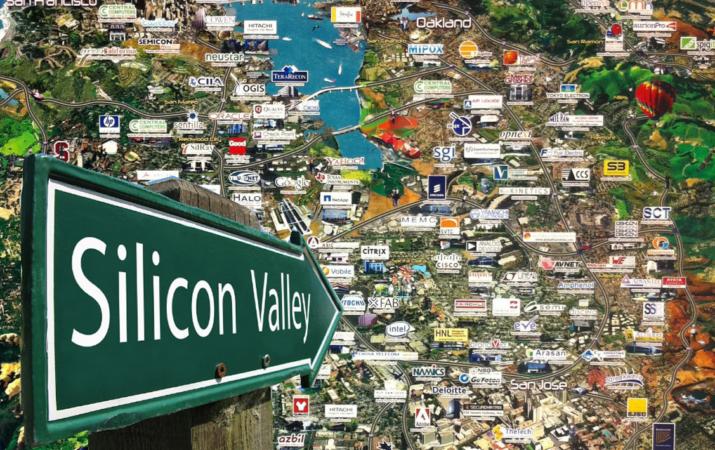
The United States does not need Venezuela because Venezuela can compete with Silicon Valley.
It needs Venezuela because the future of Silicon Valley may depend increasingly on access to energy.
That is the strategic shift Washington needs to internalize.
It needs Venezuela because the future of Silicon Valley may depend increasingly on access to energy.
The AI race will still be fought in semiconductor fabs, research laboratories and corporate campuses. Export controls will remain important. American leadership in advanced models will remain essential. Investment in domestic power generation will be indispensable.
But domestic capacity alone may not be enough.
The United States will increasingly need an international network of trusted energy and infrastructure partners capable of supporting the expansion of computing.
The Western Hemisphere is uniquely positioned to provide that network.
Venezuela could become part of it.
Its enormous energy resources, geographic position and potential for economic reconstruction give Washington an opportunity to align energy abundance with technological power.
But that opportunity is not permanent.
If Venezuela's energy resources become integrated into Chinese-led infrastructure first, Washington may find itself competing against an established ecosystem rather than shaping a new one.
That is why WAICO matters.
Its importance is not that Venezuela suddenly became an AI power.
Its importance is that China is signaling its intention to participate in shaping the institutions, standards and infrastructure of the global AI economy — and Venezuela is already inside that conversation.
Washington should respond accordingly.
The United States should develop a dedicated Venezuela energy-and-compute strategy, establish clear regulatory pathways for American technology and investment, and integrate Venezuela into a broader Western Hemisphere strategy centered on energy abundance, trusted infrastructure and technological competitiveness.
The objective should be neither dependency nor political patronage.
It should be strategic integration.
The next generation of technological competition will not be determined only by who controls the most advanced chips.
It will be determined by who has the electricity to run them, the infrastructure to deploy them and the alliances to secure that infrastructure.
China is already competing for those relationships.
The United States should be doing the same.
Venezuela should not be viewed merely as an oil producer waiting to return to global markets.
It should be viewed as a potential energy platform for the next era of American technological power.
If Washington wants to win the AI race with China, it needs to start thinking beyond AI itself.
The real competition may be over something much more basic:
who controls the energy required to power the future.