Category

Skeleton article title placeholder text spanning two or three lines while the content loads from the CMS


How does Russia try to make sure that temporarily occupied territories (TOT) of Ukraine are never becoming parts of Ukrainian state again? The main way is straight and simple — genocide.
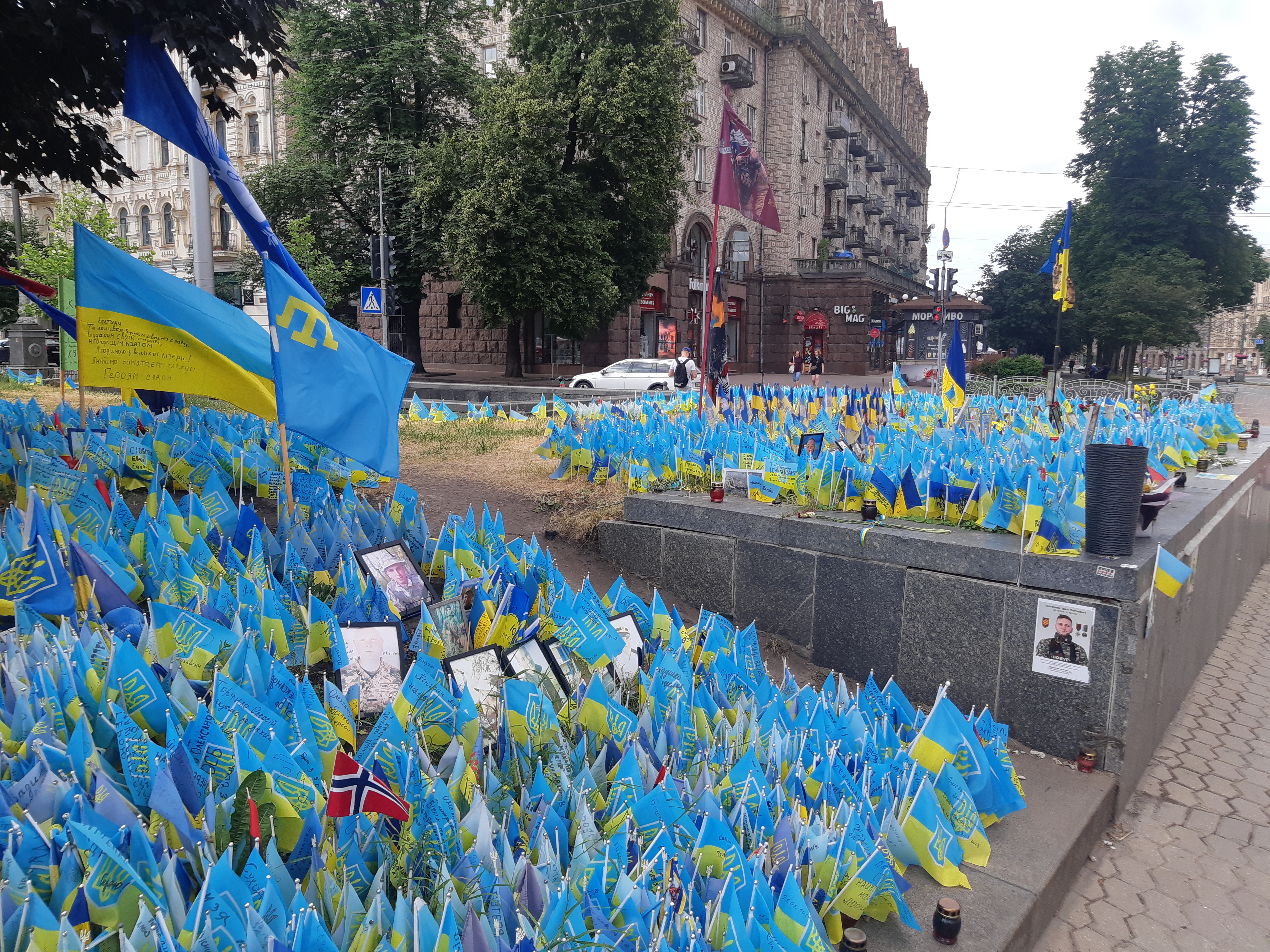
How does Russia try to make sure that temporarily occupied territories (TOT) of Ukraine are never becoming parts of Ukrainian state again? The main way is straight and simple — genocide.
But wiping out any trace, footprint or hint of Ukraine requires complex, consistent and relentless policy, aiming for future generations — and Russia is implementing it since 2014 capture of Crimea.
This is the main bottom line of the study "Ideological influence of the Russian Federation in the temporarily occupied territories of Ukraine". The study was prepared by NGO "Eastern human rights defense group", which documents and registers Russian occupation crimes since 2014.
The study recently was presented in Kyiv, "Ukrinform" news agency. "Arch Frontline" was present at the event and publishing summarizing part of the fundamental study of the matter.
Cultural-language policy (Chapter 6) is only one dimension of a broader project best analyzed through the lens of classical colonialism adapted to the 21st century: subordination of territory to a metropole, appropriation of resources, replacement of the local elite, and, above all, the cultural and linguistic assimilation of the colonized. Its direct historical predecessor is Soviet and imperial Russification, from which it has inherited both rhetoric and methods. The key distinction of the Russian case is that colonization is combined with the denial of the very existence of the colonized people: Russia does not recognize Ukrainians as a separate nation and declares Ukrainian statehood a "mistake," turning colonization into an existential operation to eliminate Ukrainian identity as such.
The available data allow these processes to be characterized as settler colonialism, which, unlike classical exploitative colonialism, involves the gradual transformation of the human environment through the displacement of the local population and the formation of a new social base for power. This explains the interconnection between the deportation of Ukrainians, the resettlement of Russian citizens, housing programs for settlers, forced passportization, and the integration of the occupied territories into the Russian legal space: all these measures are interrelated elements of a single policy, not disparate episodes.
The central instrument of demographic colonization is forced passportization. In Crimea it was carried out immediately after the 2014 occupation; in ORDLO (Occupied regions of Donetsk and Luhansk oblasts) a simplified procedure has applied since 2019; and in the territories occupied after 2022, passportization is overtly coercive in character. A Russian passport is tied to pensions and medical care, employment, retention of housing and freedom of movement, and residents without one are treated as "foreigners" at risk of expulsion.
As of 2024, according to Russian leadership statements, about 3.2 million Russian passports have been issued, not counting 2.5 million in Crimea. Along with the passport, men receive a military enlistment office summons, closing the cycle of colonial coercion. This should be characterized not as "granting citizenship" but as coercing the civilian population of occupied territory to change citizenship, directly violating the Fourth Geneva Convention.
At the same time, the local population is being displaced from governing bodies: research into the composition of the occupation administrations shows a steady increase in the share of Russian citizens, displacing even loyal collaborators.
Russians have fully monopolized the strategic sectors where financial and power resources are concentrated — the economy, industry, energy and security — while local personnel face an effectively impassable barrier to advancement, left with secondary roles in the social sphere, where the most discontent accumulates.
Incoming officials are given significantly higher salaries and preferences, artificially creating social inequality and a sense of inferiority; whereas propaganda previously used the concept of a "unique Donbas," regional identity is now consistently being erased, equated with an ordinary Russian province.
The displacement of elites is part of a broader policy of demographic replacement moving in two opposite directions: on the one hand, the displacement of the dissenting Ukrainian population through repression, filtration, deportation and forced evacuation; on the other, the encouragement of Russian citizens' resettlement through housing, subsidized mortgages and jobs, and the rotation of Russian officials and security personnel. According to Ukrainian intelligence, a deliberate settlement of the occupied territories by Russian citizens is underway; the scale is illustrated by the fact that, as of April 2024 alone, over 14,000 Russian police officers and over 35,000 Rosgvardia personnel had been deployed. The resettlement by the occupying state of its own population into seized territory, and the alteration of its demographic composition, directly violate Article 49 of the Fourth Geneva Convention and are characterized as a war crime.
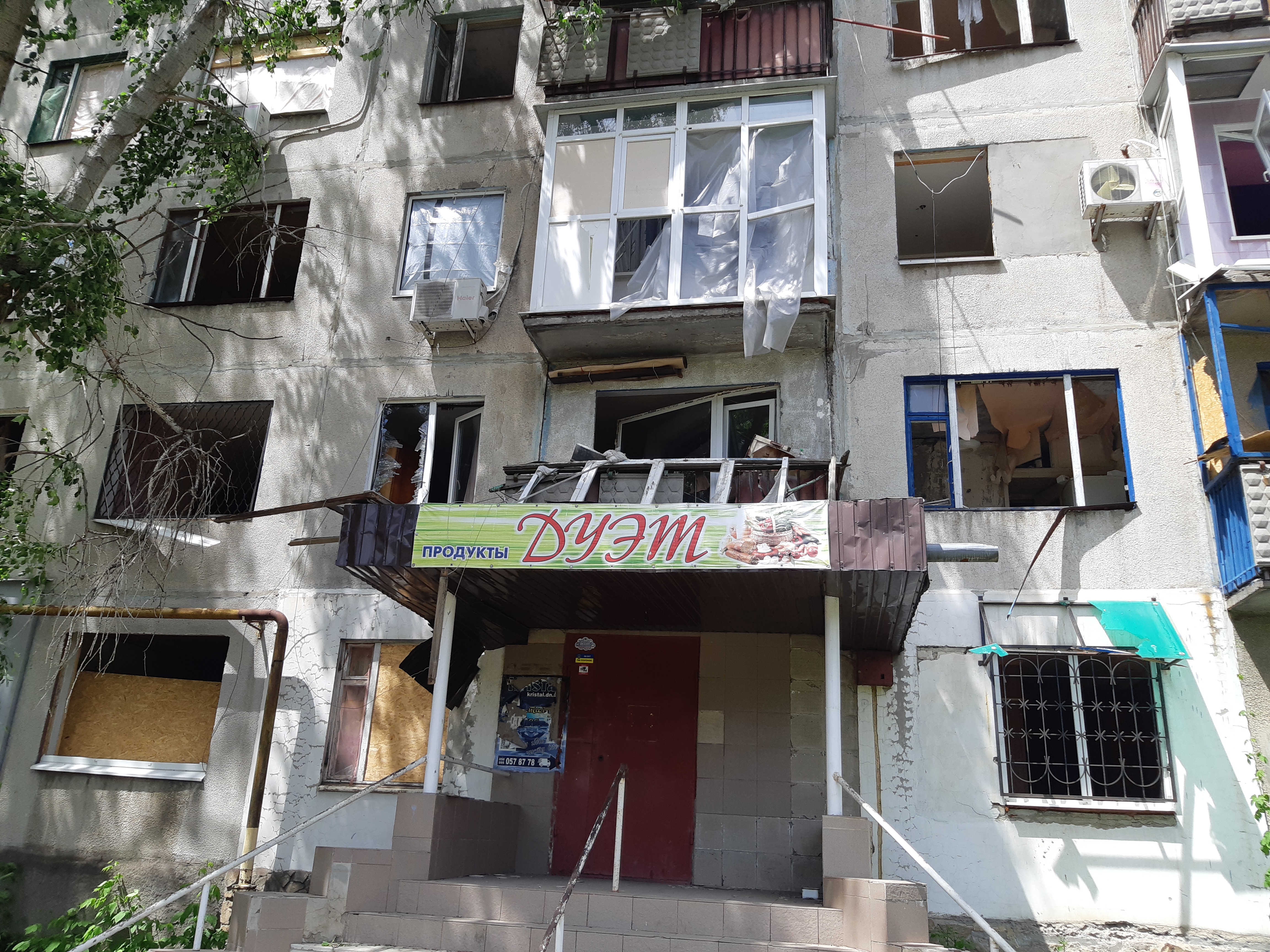
The economic dimension of colonization consists in the forced integration of the occupied territories into Russia's economic space and the appropriation of local resources. The hryvnia has been displaced by the ruble, Ukrainian banks replaced with Russian ones, and the economy reoriented toward Russia. The most important instrument of both plunder and demographic change has been the legalization of the confiscation of real estate: since 2021 in the "DPR" and "LPR," and extended to the newly occupied regions in 2024, laws on the confiscation of "ownerless property" have been adopted — any housing whose owners evacuated or lack Russian documents can be "nationalized" without judicial procedures. The mechanism violates Article 46 of the Hague Regulations and Articles 53 and 147 of the Fourth Geneva Convention, and is characterized under the Rome Statute as a war crime (a category "A 3.6" has been opened to record housing loss in the international Register of Damage in The Hague), and the confiscated apartments are handed over to tens of thousands of Russian settlers, for whom free housing is the main incentive to resettle. In parallel, grain, metal and other resources are being exported, and the incorporation of the territories into Russia's fiscal vertical is ensured by a system of Russian regions' "patronage" over occupied cities.
The occupation policy places a strategic bet on children who will grow up under occupation; to this end, a system of ideological processing and militarization of youth, transferred from Russia, has been deployed.
The pervasive logic of all the measures described is to achieve the irreversibility of the occupation. Passportization, demographic replacement, the Russification of education and culture, economic integration, and the upbringing of a new generation are all subordinated to a single goal: to make the return of the territories to Ukraine as difficult as possible, and, from Russia's standpoint, impossible. The September 2022 "referendums" and the subsequent declaration of the territories' "accession" to Russia are legally void, but perform the function of symbolically "stitching together" and publicly entrenching the annexation. A comparison of the regimes in the "old" (since 2014) and "new" (since 2022) territories shows that the newly occupied regions go through the same sequence of measures, but in an accelerated and more radical form.
The 2014 Crimean model effectively became a testing ground, whose developed mechanisms were transferred to the territories seized after 2022. The logic of colonial transformation can be summarized as a sequence of eight interconnected stages, in which Russification (Chapter 6) is only one link in a broader strategy.
These stages are:
Seizure of territory and establishment of forceful control.
Removal and intimidation of bearers of Ukrainian identity.
Coercion into Russian citizenship, pressure through access to services.
Displacement of Ukrainians, importation of population from Russia, deportation of children.
Displacement of the language, destruction of books, replacement of cultural production.
The ruble, appropriation of property and resources, "patronage" by Russian regions.
Indoctrination of children, militarized youth movements.
"Referendums," "stitching" the territory into Russia's space.
The combination of documented actions — forced passportization and change of citizenship, demographic replacement, the deportation of children, expropriation of property, persecution on national grounds, and public calls to destroy Ukrainian identity — goes beyond isolated violations and points to a deliberate policy of destroying the Ukrainian national group in the occupied territories as such, requiring consideration not only in terms of war crimes but also of genocide and crimes against humanity.
The study of the ideological dimension of the Russian occupation makes it possible to draw a number of generalizations about the character, scale and consequences of the cultural-language policy and colonial transformation of the occupied territories.
A single coordinated strategy, not a set of situational measures. Russia's cultural-language and colonial policy in the TOT is subordinated to a shared goal — the irreversible embedding of the territories into Russia's space and the destruction of the Ukrainian national presence. The linguistic, educational, cultural, demographic and economic components are interconnected elements of a single project, not disparate episodes.
Linguicide bears the hallmarks of a deliberate systemic policy. The displacement of the Ukrainian language from education, record-keeping, judicial proceedings, visual space and media is not a natural change in the linguistic environment but an administratively imposed process resting on a centuries-old imperial tradition — from the 1863 Valuev Circular to the 1876 Ems Ukaz — and entrenched by contemporary legal acts, in particular Russian Federal Law No. 168-FZ, which from 1 March 2026 requires the total Russification of public and commercial space.
The destruction and appropriation of cultural heritage has become systemic. The removal of Ukrainian books (a list of at least 365 titles, the destruction and removal of collections, the import of about 2.5 million Russian books), the plunder of museums (over 10,000 paintings stolen from the Kherson Art Museum alone), and the destruction and appropriation of cultural institutions (the Mariupol Drama Theater) together form an operation of cultural erasure directed against a protected national group.
Colonization is carried out simultaneously across demographic, economic and identity dimensions. Forced passportization (about 3.2 million passports, not counting 2.5 million in Crimea), demographic replacement and the displacement of local elites (the share of Russian citizens in the "DPR" executive branch growing to 48%), the expropriation of property ("ownerless property"), and the rewriting of history together form a model of settler colonialism whose goal is to change the very bearer of political loyalty.
A strategic bet is placed on children. The militarization of youth ("Movement of the First" — over 344,600 children), the deportation of Ukrainian children (at least around 19,500 documented cases), and their "re-education" are aimed at forming a generation whose socialization will take place exclusively within Russian institutions.
The 2014 Crimean model became a testing ground. The mechanisms of Russification and colonization developed in Crimea have been transferred to the territories occupied after 2022 in an accelerated and more radical form — in months rather than years.
Irreversibility is growing with every year of occupation. The pervasive logic of all the measures is to make it impossible for the territories to return to Ukraine. Every year of occupation increases the share of the non-Ukrainian population, deepens assimilation, and complicates future reintegration, and the September 2022 "referendums," despite being legally void, perform the function of symbolically entrenching the annexation.
The threat of losing an entire generation. The situation of children has the most lasting consequences: the combination of deportation, forced assimilation, the militarization of education, and the imposition of Russian identity creates conditions for the loss of a generation whose connection to Ukrainian identity will be substantially weakened.
The irreversibility of cultural losses. Unlike demographic processes, part of the cultural damage is irreparable: burned books, destroyed libraries and theaters, and removed and appropriated museum collections cannot be restored, and the erasure of communities' cultural memory breaks generational continuity.
Hallmarks of crimes of the most serious category. The documented practices go beyond isolated violations: forced change of citizenship, the deportation of children (for which the ICC issued arrest warrants on 17 March 2023), the expropriation of property, persecution on national grounds, and public calls to destroy Ukrainian identity (including Timofei Sergeytsev's article of 3 April 2022) point to a deliberate policy requiring consideration in terms of genocide and crimes against humanity.
Limited access and verification. Access for independent observers, journalists and human rights defenders to the TOT is extremely limited, so the available quantitative indicators mostly reflect the documented minimum rather than the full picture; the actual scale of Russification, heritage destruction and deportations is likely greater.
Deepening assimilation, primarily of children. If the occupation continues, the Russification of education and cultural space will intensify, and the generation growing up under occupation will increasingly lose its connection to Ukrainian identity.
Legal and administrative entrenchment of irreversibility. The entry into force of new legal acts — including the full implementation of Law No. 168-FZ from March 2026 — indicates a transition from de facto Russification to its formal legal entrenchment; further expansion of the repressive toolkit on linguistic-cultural grounds should be expected.
De-occupation will not guarantee automatic recovery. Even if the territories are returned, Ukraine will face not only the consequences of hostilities but a deformed identity structure, destroyed cultural infrastructure, decimated collections, and an entire generation that has undergone Russian indoctrination; cultural and identity reintegration will require sustained, targeted effort.
A dangerous international precedent. The model tested in the TOT, combining military force with cultural erasure, demographic engineering, and the institutional absorption of territories, may be viewed as a precedent: in the absence of an effective international response, similar practices could spread to other territories that revisionist states regard as within their sphere of interest.
Irreversibility is growing with every year of occupation.