Category

Skeleton article title placeholder text spanning two or three lines while the content loads from the CMS


Liberal democracies have grown unaccustomed not only to the reality of war, but also to the reality of the nuclear threat. I get the impression that, in Europe, nuclear warheads are now seen more as a symbol of security than as a source of danger.
And that is understandable — as long as nuclear weapons remain exclusively a tool of deterrence. But for them to remain such a tool, every party to a potential conflict must see them that way.
Russia abandoned that understanding long ago. For the Kremlin, nuclear weapons — and the possibility of using them — are a universal guarantee that its imperial project will succeed.
I got a vivid illustration of this back in 2014, during a conversation with a Russian acquaintance, a former career military officer who was working as a middle manager at the time. Russia was already under sanctions for occupying Crimea, and we were discussing what the consequences might be. My interlocutor was convinced there would be none because, to quote him, “a country's success is guaranteed by its nuclear weapons.”
I asked him how nuclear weapons could help a country and its citizens plow fields, harvest crops, build roads, manufacture households and pay pensions. He replied that all Russia had to do was threaten Europe with a nuclear strike on Warsaw to get the money needed to take care of all those things.
In his worldview, this kind of racketeering was perfectly normal. And if you look at how the Kremlin's nuclear rhetoric evolved over the following years, you can conclude that Putin's inner circle holds much the same view, if not an identical one. They see no fundamental problem with threatening their adversaries with the ultima ratio regis — the last argument of kings — and cannot understand why they should not play their trump cards when they have entire arsenals of them.
One thing they are counting on is that people in Western democracies have grown accustomed to a very different picture of the world.
My generation remembers Ray Bradbury's classic short story There Will Come Soft Rains, in which, after a nuclear catastrophe, a smart home's automated systems carry on working as if its inhabitants were still alive.
In the 1950s and 1960s, the prospect of nuclear war with the Soviet Union was taken with extreme seriousness in the West. Inevitably, that anxiety found its way into popular culture. Nuclear war became the subject of countless films and books, many of them treating the subject with remarkable gravity. One memorable example is the film adaptation of the political thriller Fail Safe. In it, the US president, played by Henry Fonda, orders a nuclear bomb dropped on New York City in an attempt to prove his commitment to peace and prevent a full-scale Soviet nuclear attack on America. It was perhaps one of the most extreme demonstrations of peaceful intentions that popular culture has ever offered.
The peaceful resolution of the Cuban Missile Crisis and the subsequent easing of tensions between Western democracies and the Soviet bloc created the impression that the immediate danger of a nuclear confrontation had receded. That impression, among other things, prompted a reassessment of society's earlier fears. Stanley Kubrick's Dr. Strangelove, released just a year after Fail Safe, offered an entirely different perspective: with intelligence and biting satire, it mocked the political paranoia prevailing among the elites.
In the 1980s, after détente collapsed, the cycle nearly repeated itself. The Soviet invasion of Afghanistan sharply reduced trust between NATO and the USSR, and a frighteningly realistic vision of nuclear war returned to the public imagination in the television film The Day After. Fortunately, the crisis of the Soviet system and the subsequent collapse of the USSR toward the end of that decade went a long way toward easing those fears.
Over the next three decades, the West acquired enough new anxieties for the Russian nuclear threat to gradually slip from the immediate agenda into the background. Russia remained a nuclear power, but the prospect of a direct confrontation with it seemed too remote to warrant a permanent place at the center of public attention.
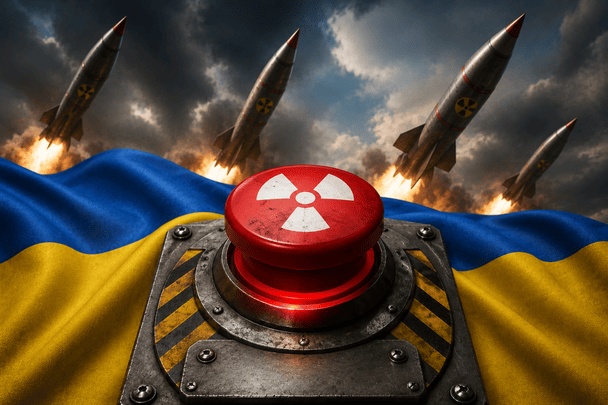
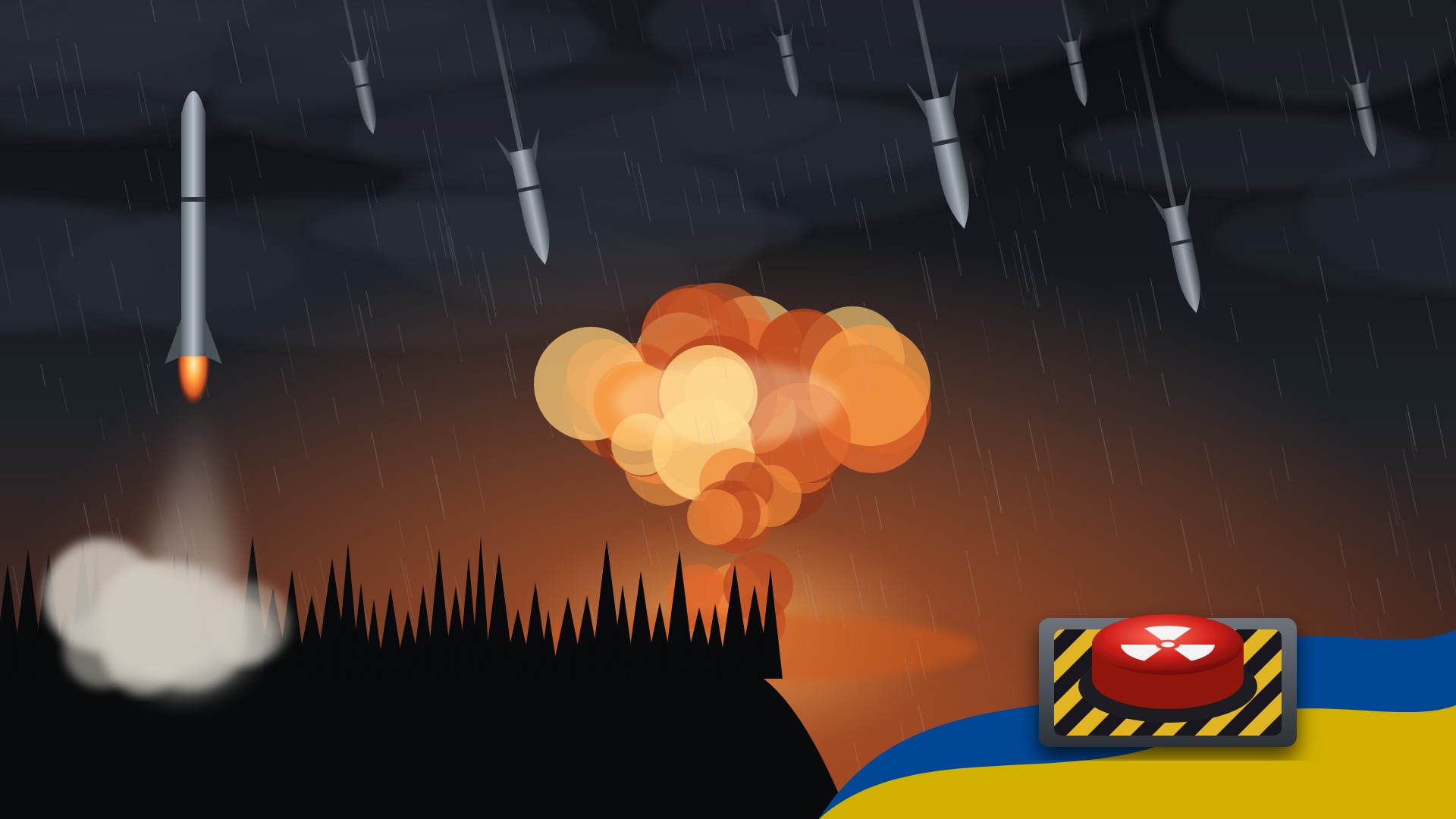
The Soviet Union's collapse in 1991 left Ukraine with the third-largest nuclear arsenal in the world. Ukraine, however, did not control the entire command-and-control system for the Soviet nuclear weapons it had inherited. The launch codes and the key elements of the command structure remained in Moscow. Given that reality — and under intense pressure from its Western partners — Ukraine agreed to give up its nuclear weapons and transfer the entire arsenal to Russia.
In return, Ukraine received, among other things, security assurances under the 1994 Budapest Memorandum. As it turned out, these were promises of security without concrete enforcement commitments. Under the memorandum, Russia, the United States, and the United Kingdom undertook to respect Ukraine's independence, sovereignty, and existing borders, and to refrain from the use of force against its territorial integrity or political independence. In 2014, Russia demonstrated the value of those assurances in practice. In 2022, it escalated its cynically labeled “hybrid” war into a full-scale invasion.
Ukrainians were thus able to see for themselves that nuclear blackmail was not merely an archaic relic of Cold War rhetoric. It was a tool the Kremlin was prepared to use quite deliberately.
The public reaction was paradoxical. Despite the seriousness of the threat, it added relatively little to the shock caused by the full-scale invasion itself and the horrors Russia inflicted on occupied cities. Instead, a kind of psychological defense mechanism took hold: Ukrainians began openly mocking nuclear threats and the nuclear paranoia relentlessly promoted by Kremlin propaganda.
One example was the meme “When are we finally going to Shchekavytsia?” It emerged from a joking suggestion that, in the event of a nuclear strike on Kyiv, people should gather on the city's Shchekavytsia Hill for a massive orgy.
Jokes aside, the ability to make fun of threats under such circumstances, while simultaneously recognizing that they are entirely real, is a phenomenon worth noting.
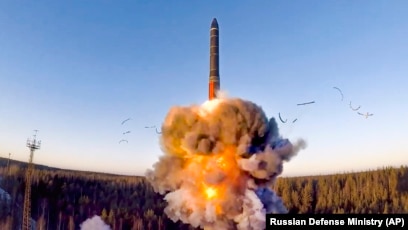
From the first months of Russia's occupation of Crimea, it became clear that Moscow was using its nuclear arsenal as a political shield. Once the war escalated into full-scale military aggression, the threat to “cover Europe in nuclear ash” acquired a tangible dimension. Russian officials repeatedly reminded the world of this scenario, while Kremlin propagandists tirelessly insisted that the West had better limit its support for Ukraine if it wanted to avoid provoking World War III.
The West, unaccustomed to this level of confrontation, responded in two minds. On the one hand, nuclear threats did not stop weapons deliveries to Ukraine, the expansion of sanctions, or the strengthening of NATO's eastern flank. On the other, fears of escalation repeatedly translated into self-imposed restrictions and, at times, outright delays in strengthening defensive capabilities.
The Kremlin made full use of its ability to influence its adversaries' decisions through threats alone, without actually using nuclear weapons.
The main success of nuclear blackmail lay in the fact that NATO had to take into account not only Russia's actual capabilities, but also the unpredictable consequences of Moscow deciding to cross yet another “red line.”
In such circumstances, there was no need to be certain that the threat would be carried out. It was enough to doubt that the Kremlin was bluffing.
But once nuclear blackmail proves so effective, the temptation to keep raising the stakes becomes hard to resist. Every concession encourages the next threat.
This is an especially dangerous game because, if a concession cannot be extracted, the Kremlin faces a direct temptation to prove that its threats are more than words.
In November 2024, Russia revised its nuclear doctrine, expanding the range of circumstances under which the use of nuclear weapons could be permitted. The nuclear threat effectively became part of its official strategy for coercing adversaries into making concessions.
But a doctrine on paper is one thing. Putting it into practice would be a far more convincing demonstration.
Every concession encourages the next threat.
For example, the Kremlin could have used tactical nuclear weapons directly on the battlefield. At the very least, Russian propagandists repeatedly argued that a demonstrative strike against a military target would force Ukraine and its allies to agree to stop resisting and accept Russian terms. One such “decisive action,” they claimed, could change the political logic of the conflict.
Yet even a limited nuclear strike would have been difficult to reconcile with the Kremlin's usual strategy of gradually escalating its threats. There would be no room left for gradualism. It would cross a genuine red line, potentially leaving Russia internationally isolated even among countries that had so far preferred to keep their distance from the conflict. It could also trigger an escalation that Moscow could no longer control. According to reports, the West warned Russia quite seriously about these consequences.
But there were — and still are — other scenarios, considerably more “hybrid” in nature. After all, you do not necessarily have to detonate a nuclear warhead to cause a radiological disaster and use it as an instrument of political blackmail.
Consider, for example, an engineered “incident” in occupied Crimea or near the Zaporizhzhia Nuclear Power Plant. It would have to look like an event that the International Atomic Energy Agency could not immediately and conclusively identify as deliberate. Meanwhile, as investigators tried to establish what had happened, radioactive releases would continue and contamination would spread as far beyond Russian-controlled territory as possible.
For the Kremlin, it would be particularly convenient to create a new Chernobyl in territory it would have to abandon sooner or later anyway. Why not “return” that territory by making it categorically uninhabitable for the foreseeable future?
In such a scenario, radiation would not be the only destructive force at work. There would also be a crisis of trust and accountability. Who was responsible? What exactly had happened? Could military operations continue near a contaminated area? How would the international community respond?
If responsibility could not be established immediately — or if the perpetrator proved impossible to hold accountable (we all understand that no one is going to strip Russia of its veto in the UN Security Council) — the uncertainty itself would become a weapon.
Russia could blame Ukraine, demand an end to hostilities, and use the resulting crisis to press its political demands. It could also portray itself as a victim. Radioactive contamination respects neither occupation lines nor ceasefire agreements.
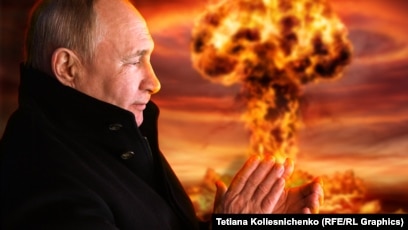
Another version of the same scenario would involve a radiological “incident” near the border of a NATO member state.
Here, radiation would be just one of the factors causing harm. The credibility of the defensive alliance itself would immediately come into question.
Would the incident be classified as an attack on a NATO member and grounds for invoking Article 5? What form would the response take? Would the Alliance risk escalation if the evidence of Russian responsibility appeared incomplete or contradictory?
Even if Moscow's involvement were conclusively established, another question would arise: how should NATO respond to an act whose consequences could be devastating but whose form did not constitute a direct nuclear attack?
In short, the situation would remain at precisely the level of “hybridity” that suits the Kremlin so well. The threat would have become real, and Russia's ability to raise the level of escalation would have been demonstrated in the clearest possible terms.
Moscow would retain the option of exploiting the consequences without accepting political responsibility. And its ability to deepen divisions among allies might prove far more effective than the crude threat of a nuclear strike.
Of course, carrying out such a scenario would be extremely risky for the Russian leadership. But who can be sure that the Kremlin assesses risks according to the same scale used by liberal democracies?
Bradbury wrote a story about a world in which, after humanity has perished, automated systems continue pointlessly to provide comforts and eliminate threats for people who are no longer there.
Today's reality is considerably more grotesque. Russia's state machinery deliberately generates threats and creates hardships for everyone, including its own creators — who may already have lost the ability to control it.
Today, all it takes to set a nuclear apocalypse in motion is for someone to decide to use the threat of catastrophe as a political instrument, while everyone else clings to the hope, right up to the last moment, that it is all just bluff and bluster.
And what we know about Russia's actual nuclear arsenal does little to justify that hope.