Category

Skeleton article title placeholder text spanning two or three lines while the content loads from the CMS


For years, Nicaragua has been one of the most overlooked political crises in the Western Hemisphere.
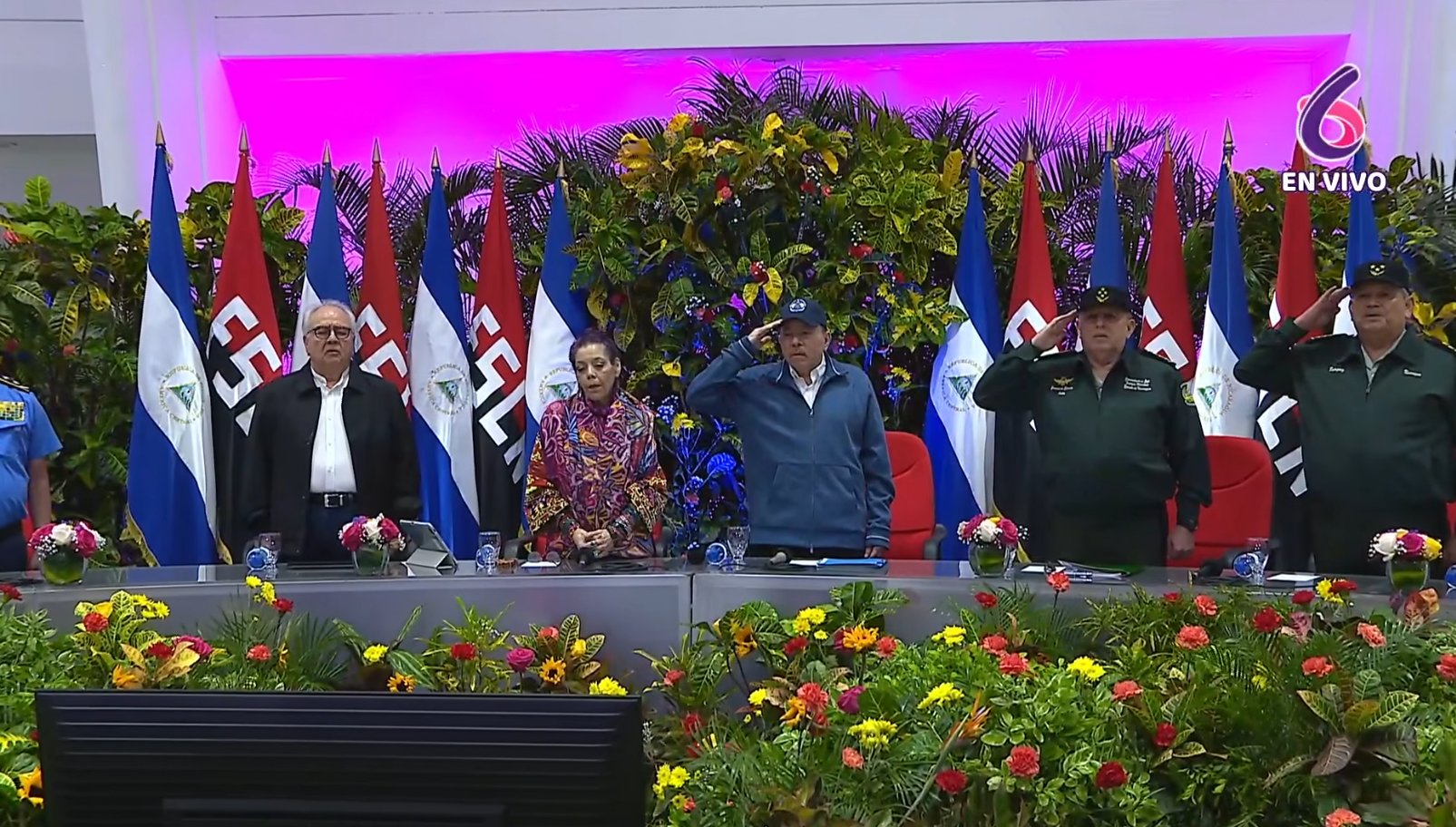
For years, Nicaragua has been one of the most overlooked political crises in the Western Hemisphere. While Washington's attention was concentrated on Venezuela, Cuba, migration, Russia, China and the wider security challenges facing the region, Daniel Ortega and Rosario Murillo steadily transformed Nicaragua into one of Latin America's most entrenched authoritarian systems. The regime dismantled political competition, weakened independent institutions, imprisoned and exiled opponents, and gradually removed the remaining constraints on executive power. Yet Nicaragua rarely received the sustained strategic attention afforded to Caracas or Havana.
That may now be changing.
On August 19 in Washington, the Organization of American States approved a resolution calling for an urgent Meeting of Consultation of Ministers of Foreign Affairs to address Nicaragua's deteriorating democratic situation and determine an appropriate regional response. Twenty-nine governments supported the initiative, with Brazil voting against and Mexico abstaining. The scale of that vote is significant not because an OAS resolution will, by itself, change Ortega's behavior, but because it demonstrates that Nicaragua is increasingly being treated as a hemispheric problem rather than simply an internal Nicaraguan one.
The timing is particularly important. In July, Ortega declared that Nicaragua would no longer hold elections in order to prevent the opposition from returning to power, effectively signaling that the regime no longer considered electoral competition an acceptable mechanism for political change. Although the Nicaraguan legislature subsequently attempted to qualify the statement by suggesting that elections could continue under a new framework that excludes so-called "traitors," the underlying message remained clear: the Ortega-Murillo government intends to prevent any genuine possibility of political alternation.
What is changing, however, is not only Nicaragua. The broader political environment of the Americas is changing with it.
The OAS decision is the product of a process that has been developing across the hemisphere for months. U.S. pressure on Venezuela earlier this year, the increasingly assertive approach toward Cuba, stronger American action against transnational criminal organizations and drug cartels, and renewed diplomatic engagement across Latin America have gradually altered the strategic expectations of governments throughout the region. Washington has demonstrated that it is once again prepared to devote significant political capital to the Western Hemisphere, and regional governments are beginning to respond accordingly.
This matters because authoritarianism often survives not only through repression but through the expectation that external actors will eventually lose interest. Nicaragua's rulers benefited from precisely that assumption.
That assumption may no longer be safe.
Nicaragua's strategic importance has never been limited to its domestic politics. Its position in Central America gives it significance for regional security, migration, trade and the broader competition for influence in the Western Hemisphere. Yet for much of the last decade, those considerations were overshadowed by larger crises.
Venezuela became the central focus of U.S. policy toward authoritarianism in Latin America. Cuba remained a persistent national-security concern because of its geographic proximity to the United States and its relationships with Russia and China. Nicaragua, by comparison, appeared to be a problem that Washington could contain through targeted sanctions and diplomatic pressure without making it a major foreign-policy priority.
The Ortega regime benefited from that calculation.
Over time, however, the distinction between a contained authoritarian government and a strategically consequential one has become increasingly difficult to maintain. Nicaragua's deepening relationships with external powers, its geographic position in Central America and its role within a broader network of authoritarian governments have given Managua greater geopolitical relevance than its size would suggest.
More importantly, the regime's internal evolution has reached a new stage.
The Ortega government did not suddenly become authoritarian in 2026. It spent years eliminating the institutional mechanisms that could challenge its authority. The crackdown following the 2018 protests, the imprisonment and exile of opponents, restrictions on civil society and independent media, and constitutional changes consolidating power around Ortega and Murillo steadily narrowed the space for political competition. Last year's constitutional reforms further strengthened their control, including the creation of the co-presidency for Murillo.
Ortega's July declaration therefore matters because it represents the culmination of that process. A regime that once relied on controlled elections to legitimize its rule increasingly appears willing to remove even that mechanism if it creates a risk of political change.
That is a fundamentally different political situation from ordinary electoral authoritarianism.
The significance of yesterday's decision lies partly in the institution that made it.
The OAS has often struggled to respond decisively to democratic deterioration among its members. The organization must balance competing interpretations of sovereignty, non-intervention and collective responsibility, while governments with very different political interests often disagree about how far the inter-American system should go in confronting authoritarian regimes.
That makes broad support for an urgent ministerial consultation notable.
The current action is also unusual in historical terms. Major consultations of foreign ministers have been used sparingly in recent decades, including during the escalating Venezuelan crisis. In 2017, the OAS Permanent Council moved toward a Meeting of Consultation of Ministers of Foreign Affairs over Venezuela's deteriorating political situation. The current decision on Nicaragua therefore represents more than another statement of concern. It suggests that the organization is willing to revive one of its more consequential diplomatic mechanisms when a member state's political trajectory is judged to have implications for the wider hemisphere.
The 29-1 vote is perhaps even more important than the formal mechanism itself.
Brazil's opposition and Mexico's abstention demonstrate that consensus does not exist. But that is precisely why the result matters. The fact that nearly the entire membership supported moving forward indicates that Managua is losing one of the most valuable assets authoritarian governments traditionally possess: the ability to turn regional disagreement into diplomatic paralysis.
For Ortega, criticism from Washington can easily be portrayed as an expression of American hostility. A collective hemispheric response is considerably harder to dismiss in those terms.
Nicaragua's new prominence cannot be separated from what has happened in Venezuela.
For years, Caracas, Havana and Managua formed the core of the Western Hemisphere's remaining authoritarian bloc. Their political systems differed, but they shared strategic interests, maintained close relationships and benefited from one another's survival. Venezuela provided economic and geopolitical support; Cuba offered institutional and intelligence expertise; Nicaragua provided another political foothold in Central America.
The balance has changed significantly.
Washington's actions toward Venezuela earlier this year demonstrated that the United States was willing to accept greater political and strategic risks in pursuit of objectives in the hemisphere. Whatever the long-term outcome of Venezuela's political transition, the immediate consequence was psychological: governments across Latin America received a signal that Washington's policy toward authoritarian regimes was becoming more consequential.
That signal matters because foreign policy is partly about expectations.
Governments make decisions based not only on what another state is doing today but on what they believe it will be willing to do tomorrow. For years, authoritarian governments in Latin America could reasonably assume that Washington's attention would eventually move elsewhere. Venezuela, Cuba and Nicaragua could therefore absorb criticism, sanctions and diplomatic pressure while waiting for the political environment to change.
The calculation may now be different.
If Washington is prepared to devote political capital to Venezuela, maintain pressure on Cuba and mobilize the OAS around Nicaragua, authoritarian governments have greater reason to believe that regional developments will remain on the American strategic agenda.
At the same time, democratic governments have a greater incentive to cooperate with Washington rather than remain passive observers.
That is one of the most important effects of American leadership: it can change the calculations of countries that are not themselves American allies.
It is also important to recognize that Nicaragua has not received the same level of U.S. attention as Venezuela or Cuba.
There have been sanctions against members and supporters of the Ortega-Murillo regime, diplomatic criticism and restrictions directed at officials associated with repression. But compared with Venezuela, the pressure has remained relatively limited in strategic terms.
There were understandable reasons for that.
Nicaragua is smaller, less economically significant and less central to global energy markets than Venezuela. It does not possess Cuba's geographic proximity to the continental United States or the same historical significance in American foreign policy. Washington could therefore treat Nicaragua as a secondary authoritarian challenge.
But that logic becomes less convincing as the broader regional environment changes.
A hemisphere strategy cannot focus exclusively on the largest authoritarian states. If Venezuela becomes more democratic while Cuba and Nicaragua remain entrenched authoritarian systems, the United States would still face a regional political problem. More importantly, leaving Nicaragua outside a broader hemispheric strategy would create space for external powers to deepen their relationships with Managua.
This is where Nicaragua's strategic importance becomes greater than its size.
The deeper story behind Nicaragua is therefore the changing role of the United States in the Western Hemisphere.
For much of the post-Cold War period, Washington could afford to treat Latin America as a relatively stable strategic environment. Most governments had adopted democratic institutions, economic ties with the United States remained strong, and the major geopolitical competition associated with the Cold War appeared to have disappeared.
That environment no longer exists.
China has expanded its economic and infrastructure presence across the region. Russia has maintained relationships with governments willing to cooperate with Moscow. Transnational criminal organizations have become increasingly sophisticated. Migration and border security have become central political issues in the United States. At the same time, authoritarian governments have demonstrated that democratic backsliding can be gradual, persistent and difficult to reverse once institutions have been weakened.
The result is that Washington increasingly has to view the hemisphere not as a secondary theater but as a strategic environment in its own right.
This does not mean returning to the interventionist policies associated with earlier periods of U.S. history. Nor does it mean that every political dispute in Latin America should become an American responsibility.
It means recognizing that disengagement also has consequences.
When Washington steps back, other actors do not necessarily step back with it.
China continues to invest. Russia continues to cultivate relationships. Criminal networks continue to expand. Authoritarian governments continue to consolidate power.
The choice is therefore not between American involvement and a neutral hemisphere.
The real choice is often between American engagement and someone else's influence.
The increasingly assertive U.S. approach to drug cartels and transnational criminal organizations should be understood within this larger framework rather than as a separate issue.
Washington's willingness to treat organized crime as a national-security problem has changed the broader security conversation in Latin America. Governments that have struggled to contain increasingly powerful criminal networks now have greater incentives to deepen intelligence, law-enforcement and security cooperation with the United States.
That matters for Nicaragua as well.
The Ortega-Murillo regime operates in a region where political instability, illicit trafficking, migration and weak institutions can reinforce one another. The more seriously Washington treats the security architecture of Central America, the harder it becomes to separate democratic governance from regional stability.
This is why security policy and democracy policy should not be treated as unrelated agendas.
Stable institutions make it easier to combat criminal organizations. Effective security institutions are more difficult to build in countries where political power is concentrated and accountability has collapsed. And authoritarian governments can exploit insecurity to justify further restrictions on political freedoms.
The strategic answer is therefore not simply more pressure.
It is stronger regional institutions, better intelligence cooperation, greater economic integration and a clearer distinction between governments that are willing to cooperate with the hemisphere and regimes that increasingly challenge its basic political principles.
Perhaps the most encouraging development is that Washington is no longer acting alone.
The 29 votes in favor of the Nicaragua initiative suggest that regional governments themselves are becoming more willing to confront authoritarianism. That is strategically more important than any individual U.S. sanction.
For decades, Latin American governments have often been reluctant to support strong measures against authoritarian neighbors because of concerns about sovereignty, intervention or political precedent. Those concerns have not disappeared.
But the regional calculation appears to be changing.
The reason is simple: authoritarianism in one country rarely remains entirely domestic.
It can produce migration. It can create security problems. It can provide opportunities for external powers. It can weaken regional institutions. And it can demonstrate to other political leaders that democratic constraints can be dismantled without serious consequences.
From this perspective, defending democracy is not merely a normative project.
It is a form of regional security policy.
That is why Washington should welcome the fact that the response to Nicaragua is increasingly being regionalized.
The United States should not have to carry the entire burden.
Its most successful strategy would be one in which Latin American governments increasingly see the defense of democratic institutions as serving their own interests.
There is an obvious historical sensitivity whenever American leadership in Latin America is discussed. The United States has intervened in the region in ways that created deep distrust and, in some cases, produced consequences that lasted for generations.
That history should not be ignored.
But it should not prevent a more pragmatic conclusion either.
A Western Hemisphere in which dictators can eliminate meaningful elections, suppress civil society and remain insulated from regional pressure is not necessarily a more sovereign hemisphere. Nor is a hemisphere in which criminal organizations expand while democratic governments are left to confront them alone.
American leadership can be excessive.
American disengagement can also be dangerous.
The more constructive objective is therefore neither American domination nor American withdrawal, but strategic engagement that gives regional democracies greater capacity to defend themselves.
This is where the current moment is different from previous periods.
Washington appears increasingly interested not simply in pressuring individual regimes but in rebuilding a broader hemispheric strategic environment in which democratic governments, economic integration and security cooperation reinforce one another.
Venezuela was an important test of that approach.
Cuba remains another.
Nicaragua may become the next.
The immediate objective should not be to force a rapid political transition in Nicaragua at any cost. Such an approach would risk creating precisely the instability Washington is attempting to prevent.
Instead, the United States should work with the OAS and regional partners to maintain sustained pressure on the Ortega-Murillo government while keeping open a pathway toward eventual political transition.
That means:
Rather than relying on unilateral American action.
Against officials directly responsible for repression, rather than imposing indiscriminate economic costs.
And independent political actors.
On migration, security and intelligence.
Washington should also make clear that Nicaragua's future relationship with the United States and the broader Western Hemisphere will depend substantially on the behavior of its government.
A democratic opening should produce incentives for economic integration and cooperation.
Continued repression should produce greater diplomatic and economic isolation.
The message should be predictable rather than theatrical.
That is particularly important because authoritarian regimes often survive periods of pressure by waiting for the political attention of democratic governments to shift elsewhere.
Washington should make clear that this time may be different.
The real choice is often between American engagement and someone else's influence.
The significance of the 29-1-1 vote is therefore not that the OAS has solved Nicaragua's crisis. It has not. Its significance is that the hemisphere has demonstrated a willingness to treat Nicaragua's authoritarian consolidation as a shared strategic problem rather than a domestic one.
For Washington, that may be the most important development of all. American power is most effective when it does not require America to act alone. If U.S. engagement can persuade other governments to defend democratic institutions, regional security and political stability themselves, Washington does not need to dominate the hemisphere to shape its strategic direction.
Nicaragua was once the forgotten dictatorship of the Americas. The 29-1-1 vote suggests that it is no longer forgotten — and that the Americas themselves may finally be waking up.