Category

Skeleton article title placeholder text spanning two or three lines while the content loads from the CMS


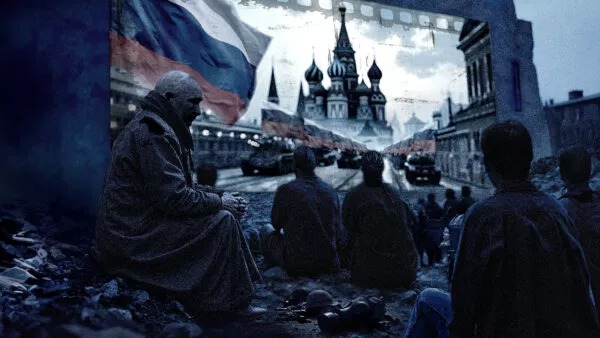
Security is one of the basic needs of any country, which is why this topic attracts Kremlin propaganda so badly.
Kremlin propaganda pays enormous attention to "security discourse." It is quite an ironic situation, keeping in mind that Russia, more than a decade ago, began aggression against Ukraine. Moscow has affected the security situation in Europe with its own hands. But facts for propaganda do not matter.
Russia traditionally represents its own view on the war against Ukraine through the prism of "security of the Russian Federation." There is no need to stress that the optic of this kind of narratives is strongly distorted, or, in other words, calibrated according to the Kremlin interests.
Ukraine was mentioned many times in messages of Kremlin propaganda and disinformation, and presented as "outpost against Russia", a Russophobic and Nazis' state, or even "anti-Russia". It allows Russia to represent a neighbouring state as the source of insecurity for the Russian Federation. Playing with this narrative, Moscow explains all its aggressive steps toward Ukraine in the discourse of "defence" or protection of so-called compatriots (Russian-speaking inhabitants of Ukraine).
Kremlin propaganda is adopting similar optics for narratives about the Baltic states, too. At the same time, it is not 100 percent identical. The Baltic States have some similarities to Ukraine. Lithuania, Latvia, and Estonia are states from the Post-Soviet area; they spent half of the 20th century under Soviet occupation. Earlier stages in the history of the states mentioned above also have a painful connection to the history of the Russian Empire. Moscow today is still looking to the Post-Soviet area as an area of its own special interests and thinks it has an exclusive right to interfere in the affairs of former Soviet republics.
On the other hand, the Baltic States are a visible Post-Soviet success story. Lithuania, Latvia, and Estonia proved that it is not necessary to keep close ties with Russia. The Baltic States became members of the European Union and NATO in 2004. They are fully integrated into the geopolitical architecture of Western Europe (talking about Europe here more politically than geographically).
At the same time, in the predictions about possible Russia's provocation against NATO or enlargement of aggression against Ukraine to the global level, the Baltic States are often mentioned as the first possible target.
But facts for propaganda do not matter.
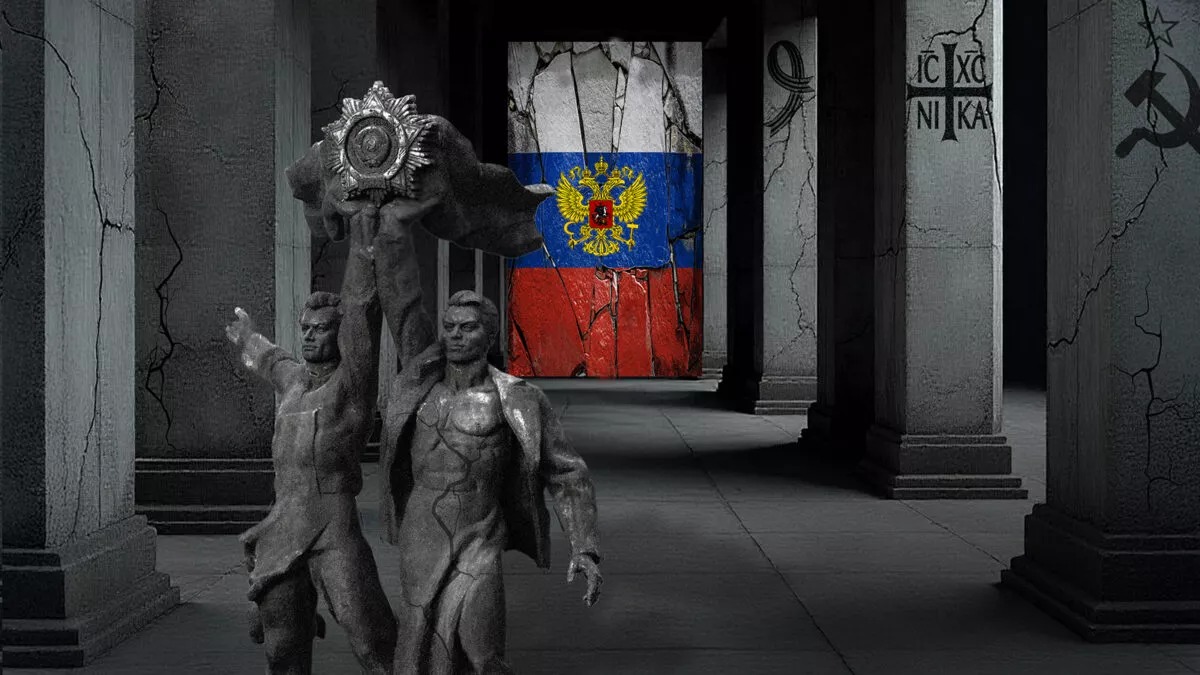
The information attacks against the Baltic States are ambivalent. Russia usually is not denying the statehood of Lithuania, Latvia, and Estonia directly (as in the case of Ukraine) but is trying to deny the success story of the Baltic States. The main principle that is implemented in the different narratives is "to prove" that Lithuania, Latvia, and Estonia are "failed states" — poor, economically stagnating, totally dependent on the European Union or NATO (the "puppet states" in other words). In the context of security narratives, this strategy is implemented in a quite interesting way.
Of course, Moscow is not looking at the Baltic States as a real military threat. On the contrary, Kremlin propaganda loves to stress that Lithuania, Latvia, and Estonia are small countries with small armed forces. Some narratives of Kremlin propaganda are extremely strange, i.e., a statement that soldiers in the Lithuanian army are supplied with marijuana. This and other similar narratives show a more "humorous" view of Kremlin propaganda to military threat from the side of the Baltic States.
At the same time, Lithuania, Latvia, and Estonia occupy a position between the most hostile countries in Kremlin propaganda discourse. Moscow explains it through the "deep Russophobia" of the Baltic States. Political leaders of Lithuania, Latvia, and Estonia are continuously accused of pushing NATO into conflict with Russia. The Baltic States' support for Ukraine is also presented in this way.
In the context of narratives about the Baltic States and security discourse in Kremlin propaganda, more dominating narratives about allied forces that are dislocated on the territory of Lithuania, Latvia, and Estonia. Here, Lithuania, Latvia, and Estonia are presented merely as territory (not sovereign states), the outpost against Russia for hostile NATO forces.
Kremlin propaganda is trying to put a slur upon the allies of the Baltic States. There were a lot of fakes blaming, for example, that German soldiers in Lithuania are drinking a lot and are in conflict with local inhabitants. The popular narrative of Kremlin propaganda is that allied forces are behaving in the Baltic States "like in occupied territory," etc.
Quite often, the activation of Kremlin propaganda forces and the intensity of information attacks are visible before and during remarkable NATO military exercises in the region.
The watchful reader can notice that the narratives of Kremlin propaganda are contradictory and inconsistent. That is true. We should keep in mind that one of the goals of Kremlin propaganda is to create a kind of information chaos where the potential victim is losing orientation. At the same time, it is possible to assert that the machine of Kremlin propaganda looks like the hydra with many heads. It plays with different audiences. Accordingly, it told different stories for different audiences.
The Baltic States are recognizing that Kremlin propaganda seeks to influence local audiences. The main goal here is to affect trust in authorities and the state in general. The logic of Kremlin propaganda is quite simple: if people think that they are living in a failed state, which can not take care of them, they will not be ready to protect their own country from potential aggression. The lack of trust in authorities also makes it difficult to organize defence activities or other forms of collaboration between authorities and society in a crisis situation. All these factors are weakening the state, especially making it vulnerable to military aggression.
Disinformation attacks against allied forces also seek to sow distrust among Baltic societies toward NATO, especially toward the forces deployed on the ground in Lithuania, Latvia, and Estonia. The Kremlin tries to "prove" that allies will not help the Baltic States in the event of aggression, and even now treats the Baltics as second-rate countries (and behaves accordingly).
But societies in the Baltic States are not the only audience for narratives about them. Looking at the narratives presented, we can identify at least two additional target audiences.
Kremlin propaganda tries to act globally. It seeks to attract the attention of the Baltic allies' societies, too. In this case, the main goal of Kremlin propaganda is to persuade people in other EU and NATO countries that the Baltic States are not worthy of defence. Kremlin propaganda is using narratives that Lithuania, Latvia, and Estonia are provoking Russia for aggression; that the Baltic States are not defendable at all; that the Baltic States are not worthy of defence because it will begin a big war with Russia (possible, World War III), etc. In other words, the Kremlin seeks to ensure that in a situation where Lithuania, Latvia, and Estonia would need military support from the allies, there would be no public support for it in the allied societies.
The third audience for Kremlin narratives about the Baltic States is Russia's society. Moscow widely uses propaganda on the domestic level, too. First of all, the Russian audience is accustomed to the idea that the Baltic States are the most unfriendly countries in the neighbourhood. It helps Russia to achieve public support for all political, economic, and hybrid actions against Lithuania, Latvia, and Estonia. The narratives about the Baltic States as "an outpost of NATO against Russia" also support the Moscow narrative that "war in Ukraine" is part of a global conflict between the Russian Federation and the Western world.
How can the audiences (at least, in the Baltic States and allied countries) deal with such Kremlin propaganda? The answer is to have some value-based positions that allow us to see what is "black" and what is "white".
Of course, I'm not urged to see a World only in the two mentioned colours. But we really need some fulcrums facing narratives of Kremlin propaganda. Ironically, Moscow likes to claim that "vsio ne tak odnoznachno" ("everything is not so simple"). On the other hand, to resist Kremlin propaganda, we should first find some simple truths that will serve as our fulcrums, as I mentioned above. I offer to concentrate on these points:
These facts allow us to deal with narratives of Kremlin propaganda and disinformation the better way, especially when Moscow tries to manipulate topics of stability and security.