Category

Skeleton article title placeholder text spanning two or three lines while the content loads from the CMS


For much of the post-Cold War period, U.S. engagement with Latin America rested on an assumption that is now increasingly difficult to find at the center of Washington’s hemispheric policy: security depends not only on the capacity of states to use force, but also on their ability to enforce the law, maintain legitimacy, and prevent criminal organizations from filling the space left by weak governance.
Human rights, democracy, rule of law, and development assistance were never implemented consistently in U.S. policy. Yet they formed part of a broader architecture through which Washington sought to strengthen the institutional foundations of stability. U.S. assistance supported judicial reform, anti-corruption efforts, civil society, independent media, and democratic governance alongside security cooperation. The logic was not purely normative. Stronger institutions were also expected to make partner states more capable of confronting transnational threats.
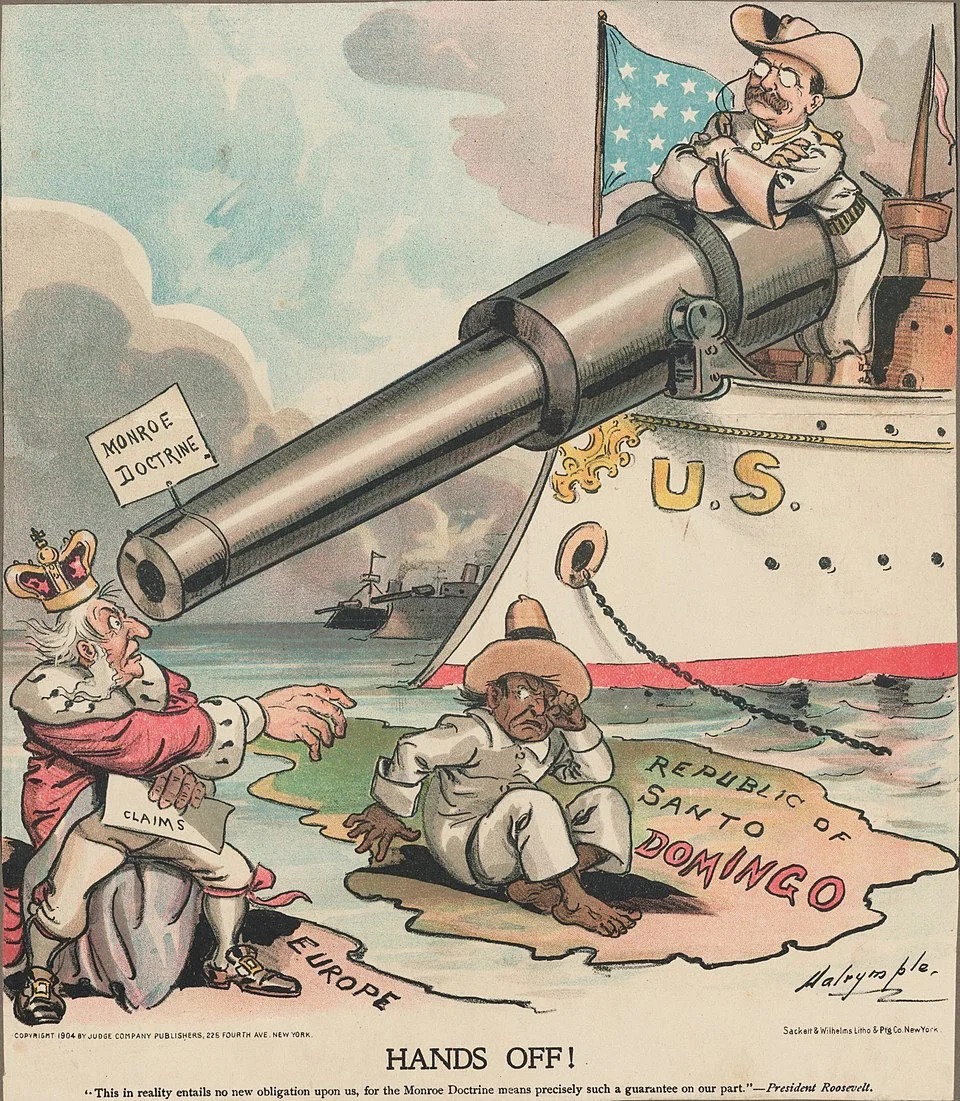
That architecture has weakened considerably under the Trump administration, just as Washington has moved toward a more coercive conception of hemispheric security. The creation of the Shield of the Americas, combined with expanding military operations against suspected drug-trafficking networks, represents the clearest expression of this shift.
The central question is not whether the United States should use military power against organized crime. It should when circumstances require it. The more consequential question is whether Washington is expanding coercive capabilities at the same time that the civilian institutions needed to convert tactical disruption into durable security are becoming weaker.
That is the missing half of America's hemispheric security strategy.
The Trump administration's emphasis on organized crime responds to a genuine security challenge. Criminal organizations across the hemisphere have become more sophisticated, transnational, and deeply embedded in legitimate economies and political systems. Drug trafficking is only one part of a broader ecosystem involving weapons, human trafficking, illegal mining, money laundering, corruption, and territorial control.
Washington therefore has strong reasons to improve intelligence sharing, maritime surveillance, financial investigations, law-enforcement cooperation, and military capabilities where necessary.
But organized crime is not a conventional military adversary. A cartel does not need to defeat the United States; it needs to survive, adapt, recruit, corrupt, and regenerate. A destroyed vessel can be replaced. A removed commander can be succeeded. A closed trafficking route can move elsewhere.
This makes the distinction between tactical disruption and strategic success essential.
A military operation can destroy a target without changing the institutional environment that allowed the criminal network to operate in the first place. The measure of success should therefore extend beyond what an operation removes to whether it makes criminal organizations less capable of rebuilding, recruiting, financing themselves, and penetrating state institutions.
This is particularly relevant as Washington expands the military component of its counternarcotics policy. The U.S. campaign against suspected drug-smuggling vessels has produced dozens of lethal strikes and raised significant legal and strategic questions about the use of military force in counternarcotics operations.
None of this means that military force is ineffective.
It means that force is a tool within a strategy, not a substitute for one.

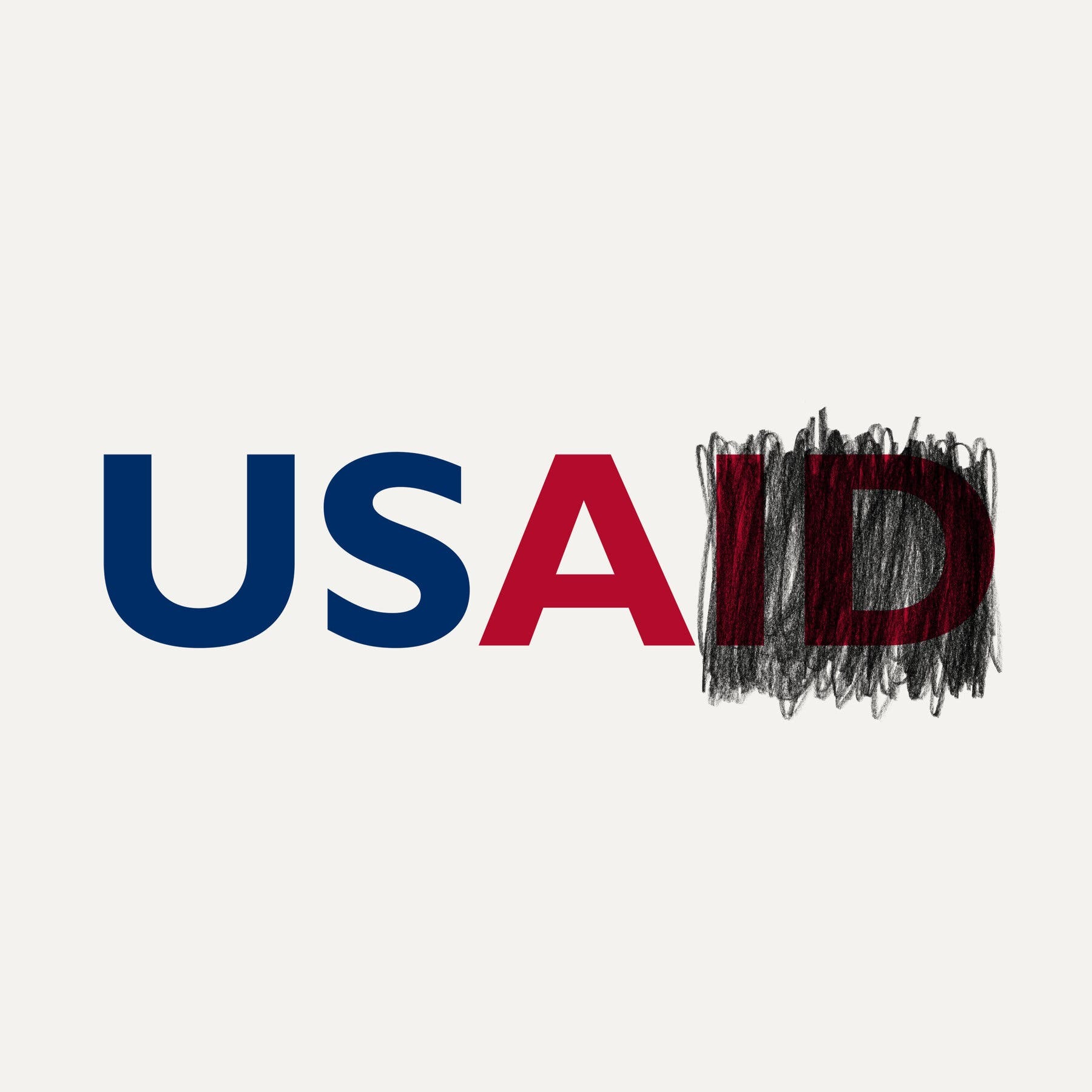
The decline of U.S. democracy and governance assistance therefore matters beyond the future of USAID.
Washington did not support judicial systems, civil society, anti-corruption institutions, and accountable governance simply because these were desirable development objectives. They also affected the environment in which criminal organizations operated.
A professional police force generates better intelligence. A functioning judiciary makes arrests consequential. Financial investigators can attack criminal organizations without using military force. Independent institutions can expose corruption. Communities that trust the state are more likely to cooperate with law enforcement.
These are security capabilities.
The problem is that Washington increasingly treats them as separate from security policy.
The contraction of U.S. foreign assistance has already disrupted parts of the institutional architecture built around democracy and governance programs. A 2026 Government Accountability Office review found significant disruption to U.S. democracy assistance following the reorganization of foreign assistance, including the closure of USAID's Bureau for Democracy, Human Rights, and Governance.
This does not mean every previous USAID program deserved to survive, nor that Washington should simply recreate the pre-2025 assistance model. The strategic problem is different: civilian capacity is being reduced at a moment when expectations placed on military power are expanding.
That creates an imbalance.
This is where the human-rights debate needs to be reconsidered.
For years, arguments about human rights in Latin America were often framed as a tension between values and security: Washington either had to impose legal and ethical constraints on security forces or allow them greater freedom to confront criminal threats.
That is the wrong choice.
Human rights and rule of law can directly affect the effectiveness of security policy because legitimacy influences intelligence, cooperation, and institutional resilience.
A community that trusts the police is more likely to report criminal activity. A witness who believes the judicial system will protect him is more likely to cooperate with prosecutors. Independent investigators can expose corruption. Accountable security forces are more likely to retain public cooperation during prolonged campaigns.
The reverse is also true. When citizens believe that security forces operate without meaningful accountability, cooperation becomes harder. When detention or targeting decisions lack transparency, governments lose credibility. When abuses remain uninvestigated, criminal organizations gain an opportunity to portray the state itself as operating outside the rules it claims to enforce.
Human rights are therefore not simply the moral boundary around security policy.
They can be part of the machinery that makes security policy work.
That distinction should be central to Washington's current debate.
The most important historical counterexample to a purely coercive approach comes from Colombia.
Plan Colombia is often remembered primarily as a major U.S. security and counternarcotics effort. That description is incomplete. Its evolution combined military and police assistance with judicial reform, economic development, institutional strengthening, humanitarian programs, human rights protections, and efforts to expand state presence into areas where it had historically been weak.
Congressional assessments of the program explicitly described the need for a multitrack strategy combining military assistance with institutional reform, alternative development, humanitarian assistance, economic opportunity, and human rights conditions. Later U.S.-Colombian programs increasingly integrated security, development, justice, and state presence.
Plan Colombia was far from perfect. It generated serious controversy, including over human rights, militarization, displacement, and the distribution of U.S. assistance. Nor can Colombia's subsequent progress be attributed to Washington alone; Colombian political decisions, economic changes, and domestic security reforms were indispensable.
But its broader lesson remains important.
The United States did not simply provide Colombia with more firepower and wait for the problem to disappear. Over time, security assistance became embedded in a broader effort to increase the state's capacity to govern territory, strengthen institutions, expand economic opportunity, and eventually transfer more responsibility to Colombian authorities.
That is a more useful lesson for today's debate than either romanticizing or dismissing Plan Colombia.
Military power became more strategically useful because it operated alongside civilian state-building rather than instead of it.
The institutional evolution of U.S. Southern Command illustrates how quickly the military component of Washington's hemispheric policy is changing.
Admiral Alvin Holsey's early departure as SOUTHCOM commander in December 2025 occurred amid growing tensions over the administration's military operations against suspected drug-trafficking vessels. Reuters reported disagreements within the administration over Southern Command's operational posture, although Holsey himself publicly attributed his retirement to personal reasons.
More revealing than the episode itself is what followed.
On April 21, 2026, Gen. Francis L. Donovan established the SOUTHCOM Autonomous Warfare Command, the command's first dedicated organization for autonomous, semi-autonomous, and uncrewed systems. Its stated mission includes disrupting cartel and narcoterrorist networks as well as responding to major natural disasters.
This is strategically significant.
The United States is not merely increasing the quantity of military activity in the hemisphere. It is beginning to redesign the way military power is applied there. Distributed intelligence, surveillance and reconnaissance, autonomous systems, and relatively inexpensive uncrewed platforms are increasingly being incorporated into SOUTHCOM's force posture. CSIS has argued that such capabilities may be better suited to the region's geography and counter-cartel mission than traditional high-end platforms.
That evolution may make U.S. military operations more persistent, less manpower-intensive, and more capable.
But it does not solve the underlying institutional problem.
Better sensors can identify a trafficking network. Autonomous systems can monitor maritime routes. Military assets can disrupt operations.
None of them can prosecute the financial structure behind a cartel, reform a corrupt customs service, protect witnesses, or build public trust.
The more technologically capable the military component becomes, the more important it is to ask what civilian capabilities will operate alongside it.
This is ultimately the test facing the Shield of the Americas.
The initiative has the potential to improve intelligence sharing, operational coordination, maritime security, and law-enforcement cooperation across the hemisphere. Its military dimension may prove valuable precisely because many partner states lack the resources to monitor vast territories and trafficking routes on their own.
But the initiative should not be evaluated primarily through the number of participating governments, operations conducted, or criminal suspects removed.
Its strategic value will depend on what remains after those operations.
Does a partner government have greater capacity to investigate the network?
Can prosecutors convert intelligence into convictions?
Can financial authorities seize criminal assets?
Can local institutions withstand retaliation and corruption?
Can communities become less dependent on criminal organizations for income, protection, or governance?
These are slower and less visible measures of success, but they are more closely connected to whether criminal networks can regenerate.
The Shield therefore does not need less military capability.
It needs a civilian architecture capable of making military capability consequential.
There is also a broader strategic constraint.
Criminal networks do not organize themselves according to Washington's ideological alliances. Trafficking routes cross borders regardless of whether governments are conservative, progressive, or politically aligned with President Trump. Financial networks operate through jurisdictions with very different foreign policies.
A hemispheric security architecture therefore needs to distinguish between political alignment and operational cooperation.
Washington can disagree profoundly with a government while still cooperating with it against money laundering, weapons trafficking, maritime smuggling, or organized crime. Indeed, the scale of the challenge makes such selective cooperation unavoidable.
A coalition based too heavily on political conformity may be easier to manage diplomatically, but it will not necessarily be more effective operationally.
For Washington, the objective should be to create networks of cooperation capable of functioning across political differences where interests overlap.
That would make the Shield a security architecture rather than simply another expression of hemispheric alignment.
The final missing component is prevention.
Prevention is often treated as a development concept rather than a security instrument. In practice, it determines whether criminal organizations have a steady supply of recruits and whether communities have legitimate alternatives to criminal governance.
A police officer whose institution is professional and accountable is harder for a cartel to corrupt. A prosecutor capable of tracing shell companies can attack a criminal network without a military operation. A functioning school system can reduce the pool of young people vulnerable to recruitment. A legitimate local government can provide services that criminal organizations otherwise use to establish influence.
These outcomes are difficult to measure against the dramatic visibility of a military strike.
They are nevertheless strategically important because they affect the ability of criminal organizations to regenerate.
This is also why the old separation between development and security policy has become increasingly artificial. Washington does not need to revive every program of the past. It needs to recognize that institutional capacity is itself a security asset.
The Trump administration has made “peace through strength” a defining principle of its foreign policy. In the Western Hemisphere, strength is increasingly expressed through military superiority, border enforcement, deterrence, and willingness to use force.
For long-term hemispheric security, that definition is incomplete.
A strong partner state is not merely one that can deploy force. It is one capable of investigating crime, securing its borders, regulating ports, prosecuting offenders, resisting corruption, protecting witnesses, and maintaining public trust.
This does not diminish the value of American military power. It increases it.
The stronger a partner's civilian institutions become, the less frequently Washington needs to use its own coercive capabilities. The better the intelligence produced by local institutions, the more precisely U.S. military assets can be employed. The more legitimate a government is, the greater the likelihood that military disruption will produce a lasting rather than temporary effect.
The strategic objective should therefore not be to choose between hard power and civilian capacity.
It should be to make them mutually reinforcing.
It needs a civilian architecture capable of making military capability consequential.
The United States has legitimate reasons to confront organized crime more forcefully. Criminal networks have become a major hemispheric security challenge, and previous approaches have often failed to produce durable results.
But the lesson of those failures should not be that civilian tools were unnecessary. It should be that neither civilian programs nor military force are sufficient on their own.
The more important development in current U.S. policy is the emerging imbalance between the two. Washington is expanding its coercive capabilities in the hemisphere, including new autonomous and uncrewed military capabilities, while much of the institutional infrastructure traditionally used to strengthen governance, rule of law, and civil society has weakened.
That imbalance matters because organized crime is ultimately a problem of state capacity as much as firepower.
Plan Colombia offers one imperfect but important lesson: military pressure can contribute to strategic success when it is embedded in a broader effort to strengthen institutions, expand legitimate state presence, and increase the capacity of local governments to assume responsibility for their own security. The objective was not simply to make Colombia better at fighting its enemies. It was to make the Colombian state progressively more capable of governing the areas in which those enemies operated.
That is the standard by which the next phase of U.S. hemispheric security policy should be judged.
The Shield of the Americas can become an important instrument of that policy. But its long-term value will depend on whether Washington treats military power as the foundation of the strategy or as one component of a broader system in which intelligence, law enforcement, judicial capacity, institutional legitimacy, economic opportunity, and human rights reinforce one another.
For Washington, the strategic choice is not between strength and restraint. It is between a security policy that can disrupt threats and one capable of making those disruptions durable.
The first requires military power.
The second requires a state capable of turning power into lasting security.