Category

Skeleton article title placeholder text spanning two or three lines while the content loads from the CMS


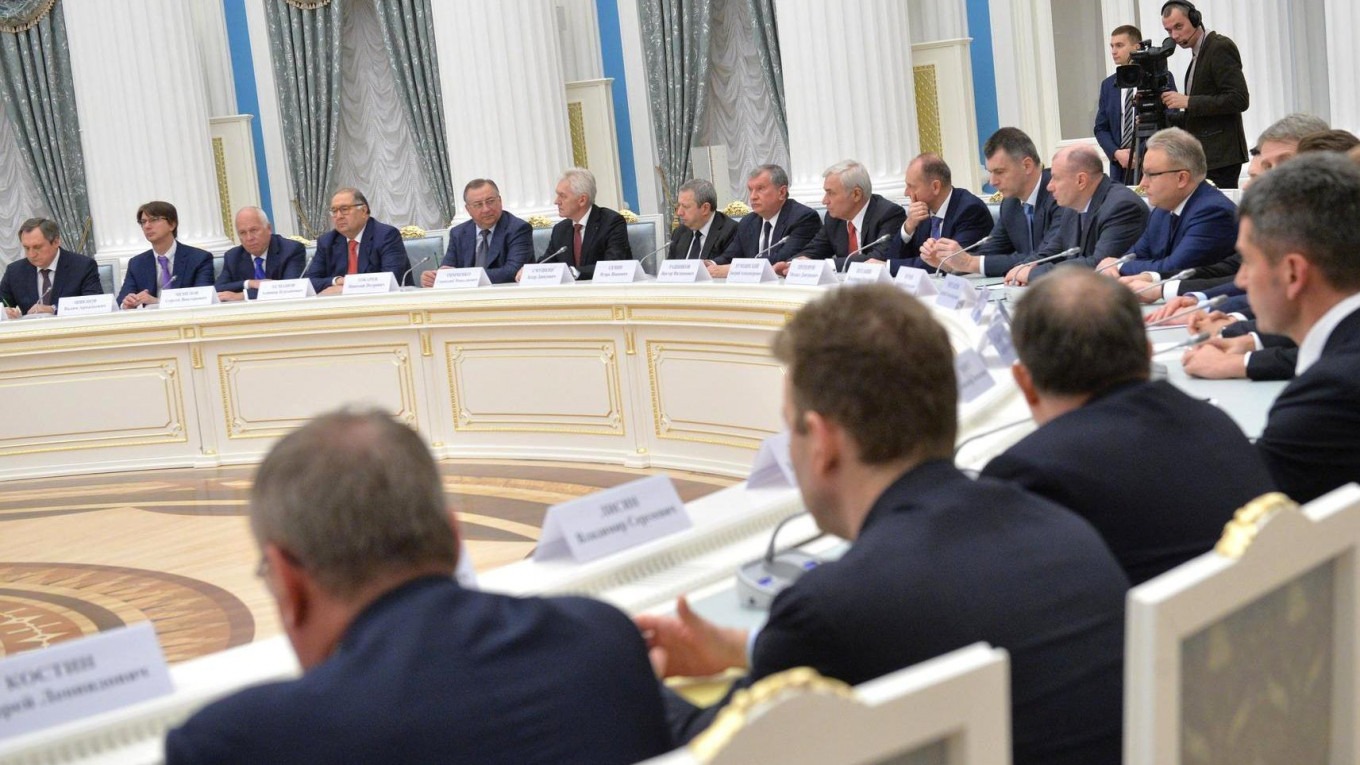
In October 2026, Reuters reported that Russian oligarchs had transferred 471 billion rubles (about €5 billion) to the state over the course of the year in the form of so-called “voluntary donations.” That amounts to more than one percent of Russia’s federal spending. According to the agency, the payments followed a closed-door meeting between Vladimir Putin and representatives of big business in March. The Russian authorities also expect to raise another 385 billion rubles (about €4.1 billion) from selling assets that have previously passed into state ownership. The stated grounds for some of these seizures include corruption and foreign ownership of strategic enterprises.
What deserves attention here is not just the money involved, but the relationship between the Russian authorities and the owners of assets located inside Russia.
The donations are publicly described as “voluntary.” Fair enough. But how do you measure the voluntariness of an owner who knows perfectly well that the fate of his business depends not only on market conditions and compliance with the law, but also on the attitude of the people who make political decisions directly affecting him?
Russian oligarchs treat the Kremlin’s goodwill as a decisive factor in their business affairs. They simply cannot ignore it, any more than they can ignore an earthquake or a tsunami.
Actually, that’s not quite right. For them, it isn’t a sudden natural disaster. It’s a permanent condition. Like gravity.
And this has been going on for a long time. Russian oligarchs Oleg Deripaska and Vladimir Potanin publicly declared their willingness to hand their assets over to the state free of charge long before the first wave of Western sanctions. In 2014, Gennady Timchenko, who had just come under sanctions himself, made a similar statement.
So why can the Kremlin count on formally private assets as though they were resources the Russian state is entitled to use at its own discretion? And why does this seem so perfectly compatible with the way Russia’s economy works?
My view is that we are dealing with more than arbitrary state intervention driven by the circumstances of the moment. What we are seeing is a distinctive model of ownership, one I like to call hybrid ownership: private in law, but dependent in practice on political power.
The Russian Constitution guarantees the right to private property. Russia has private companies, shareholders, markets, and entrepreneurs who put their own money at risk. Although a substantial part of the Russian economy is state-owned, private business does operate there.
But private property is more than an entry in a register and the ability to make a profit. It also requires effective protection against arbitrary interference. An owner should be confident that his business cannot simply be taken away because someone else has decided they have a better use for it.
In Russia, that confidence is far from absolute. As the political analyst Kirill Rogov has argued in his works, the protection of property can function as a kind of rent distributed by the state in exchange for loyalty.
Rogov describes Putin’s regime as a system in which rents are allocated in stages. The package includes not only protection of property but also a degree of immunity from prosecution — as long as the recipient pays his share to the boss, if he is a state official, or to the minder appointed by the security services or the authorities, if he is a businessman.
This kind of racketeering is not the only force making private business dependent on the bureaucracy, nor is it inevitable in every case. A common view among experts is that the regime tends to take an interest in businesses only once they grow beyond a certain regional scale.
Either way, one owner may have an asset that provides a reliable source of income; another may find himself bargaining with the authorities over it; a third may discover that his business has become a potential target for criminal prosecution. In practice, a great deal depends on who owns the asset, how much political influence they have, and whose interests their property affects.
Of course, the seizure of property under the law and politically motivated expropriation are not the same thing. What interests me are the cases in which legal guarantees give way to political expediency, and property remains “private” only until the authorities decide otherwise.
In this sense, every Russian property owner occupies a peculiar position. He may own a factory, a bank, or an oil company, yet tacitly acknowledge that the decisive voice in the fate of his assets belongs to an outside force — the state, a government official, or the security services. Formally, he is the owner. In practice, there is always another authority above him that can rewrite the terms of ownership.
That is what makes Russian property hybrid: private in legal form, but constrained by political dependence.
In such a system, the regime does not need to nationalize the entire economy to control a substantial part of it. It only needs to retain the power to intervene in the fate of virtually any major asset.
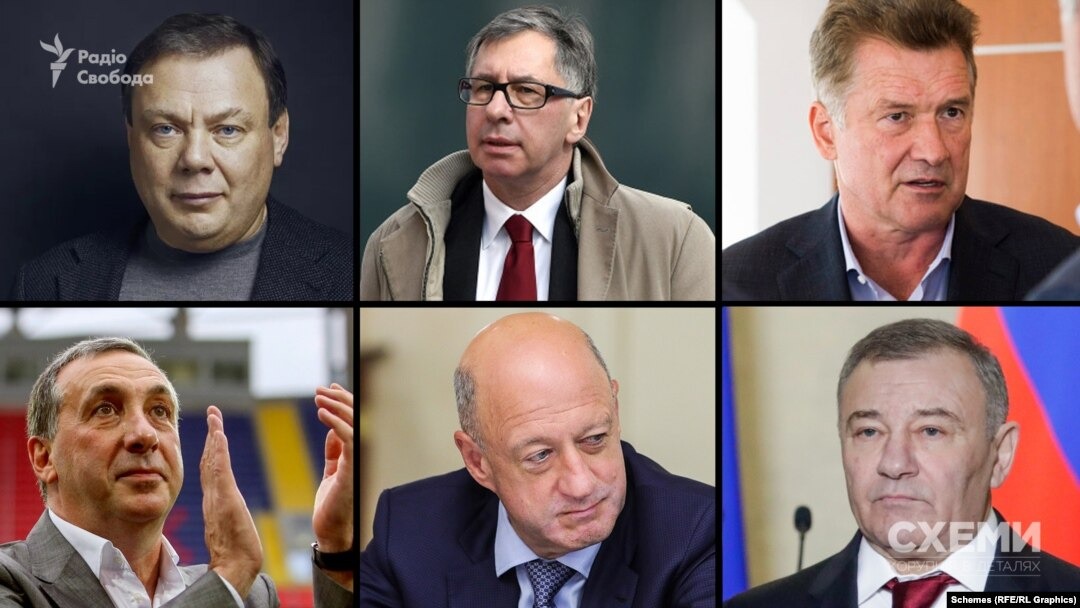
The privatization of the 1990s created a class of major private owners in Russia, but it did not establish either a broad social acceptance of the new property relations or reliable institutions to protect them. Many enterprises ended up in the hands of people who had the “right connections,” knew how to strike deals with officials, and could influence government decisions. From the outset, property and political power were closely intertwined.
At the time, it looked as though big business had privatized the state. Oligarchs financed political projects, influenced decisions in the Kremlin, took part in the struggle for power, and resisted attempts — even largely cosmetic ones — to establish effective checks and balances. Big business and the state were competing for control over the country’s resources. That alone blurred the distinction between private ownership and political power.
Later, the balance shifted. The state grew stronger, while big business became increasingly dependent on it. To retain control of their assets, oligarchs now had to accept the new rules of the game and abandon attempts to build an independent political power base. Otherwise, their position became much less secure. The Yukos affair is an obvious example.
This transformation has been described, among others, by Michael Rochlitz, Anton Kazun, and Andrei Yakovlev in their paper, “Property Rights in Russia after 2009: From Business Capture to Centralized Corruption?” ( https://www.tandfonline.com/doi/full/10.1080/1060586X.2020.1786777 ) They identify several stages in the relationship between business and the state: from business influence over government decisions in the 1990s, to growing state control over business in the 2000s, and then to an even more centralized system of corrupt relationships.
The outcome can be put more simply. In the 1990s, major owners tried to influence the state. Later, the state became increasingly successful at deciding who would be allowed to remain a major owner in the first place.
The idea that supreme political authority should have the final say over property in Russia predates Putin, Yeltsin, and even the Soviet nomenklatura. It was built into the tradition of imperial autocracy.
When Nicholas II filled out the 1897 census form, he listed his occupation as “Owner of the Russian Land.” The phrase reflected an understanding of the monarch’s authority as extending over the country and its population. Of course, private property existed in imperial Russia, and the possessions of the tsar’s subjects were not legally identical to the monarch’s personal property. But autocracy had no independent system of political constraints comparable to that of a modern constitutional state. In principle, the tsar’s will could override the property rights of his subjects.
The emancipation reform of 1861 offers an instructive example. Alexander II abolished serfdom by decree, ending the landlords’ legal ownership of serfs.
There is something darkly amusing about the fact that ideologues of Putin’s regime sometimes present serfdom as one of the historical “bonds” that supposedly held Russia together — and as something worth restoring in spirit. Actual subjugation fits their idea of an “ideal state” remarkably well.
Contemporary Russia may not have returned to monarchy in a literal sense, but its rulers present themselves as the ultimate authority entitled to determine the fate of any property.
The Soviet system radically changed the legal form of ownership. Private ownership was abolished, and the nomenklatura was entrusted with managing property on behalf of the people. There was an exception for what was called citizens’ “personal property,” but that was not considered private property in the full sense: it was not supposed to be used as a means of accumulating wealth.
The people were the nominal owners; the administrative and economic apparatus was the actual manager. And that apparatus was accountable not to individual citizens, but to the party elite.
After the collapse of the Soviet Union, ownership in Russia underwent another mutation. Private owners and capital markets emerged, but the independence of property from political elites did not automatically follow. Old management networks, weak legal institutions, and business dependence on the state continued to shape the economy.
What strikes me is the persistence of a similar principle. The monarchy, the Soviet nomenklatura, and today’s Russian regime are obviously very different systems. Yet all three have preserved the idea that political power should have the final say over the property of its subjects.
The legal form of ownership changes. The belief that supreme authority can control that form and alter it at its own discretion remains remarkably persistent.
There is another element to add to these systemic arrangements governing property: the criminal one.
In the Russian underworld, there is a concept known as the obshchak — a common fund belonging to a gang or criminal group and controlled by its bosses. Anyone who contributes money to the fund gives the pakhan the greater part of the power to decide how that money will be spent.
The Russian regime’s budget is obviously not a criminal common fund in the literal sense. But the comparison vividly captures a system in which the boundary between state resources, the interests of the ruling group, and private property becomes increasingly blurred.
If the authorities believe they are entitled to mobilize private wealth not only through general laws but also through political pressure, “conditionally private” capital becomes a reserve the regime believes it can sink its claws into whenever necessary.
There is no need to take every asset away from its owner. It is enough for the owner to understand that his own judgment about how his property should be used may at any moment be declared “contrary to the interests of the state.”
That is why the recent “donations” and asset seizures are revealing more than just a way to raise money for the budget. They show how blurred the boundary has become between “conditionally private” property and resources the authorities consider unconditionally available to them.
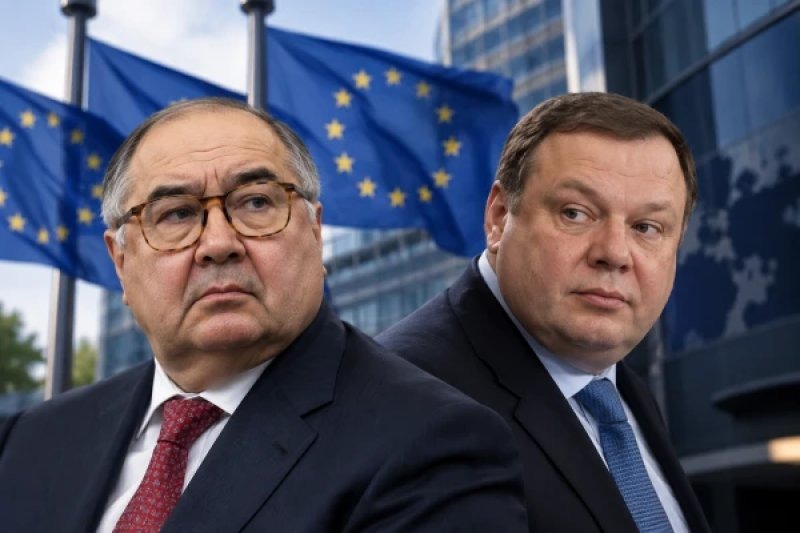
In the short term, this system can be convenient. It allows the state to concentrate money and assets quickly without formally changing the entire structure of ownership.
Over the long term, however, it undermines the efficiency of the economy as a whole.
An entrepreneur who cannot be sure that his property rights will be protected has to think about more than production, technology, and competition. He must also account for political risks, find patrons, avoid conflicts with the authorities, and preserve the ability to move his capital out of harm’s way if necessary.
Long-term investment becomes less attractive. Political connections turn into a costly resource — not because they necessarily make a business more productive, but because they have to be maintained through a continuous stream of payments and favors. They keep the engine running, but they do not, in themselves, make it more efficient.
When these factors become systemic, the economy starts rewarding not so much entrepreneurial initiative as the ability to fit into the political hierarchy.
Russia has never resolved the central problem that emerged in the 1990s: how to turn formal property rights into rights protected against arbitrary interference by the state.
Perhaps Putin’s regime has an interest in keeping the privatization of the 1990s only “partly legitimate,” allowing big business to continue seeing the origins of its wealth as a vulnerability. In their paper “The Legitimacy of Private Property in Russia: An Unresolved Issue,” Leonid Grigoryev and Andrei Kurdin note that doubts about the fairness of the redistribution of property have persisted for decades ( https://www.researchgate.net/publication/332097738_Unresolved_issue_of_private_property_legitimacy_in_Russia ).
When society does not regard property relations as fair and settled, while the state fails to guarantee their independence and legal protection, private property becomes vulnerable from both directions.
This does not explain every feature of the Russian economy. But it helps explain how property can be legally recognized while remaining politically and corruptly dependent.
A market economy can function with a substantial state-owned sector. It can adapt to high taxes, extensive regulation, and even partial nationalization. But can it grow when owners cannot trust the authorities to protect their rights — or even to want to protect them?
Perhaps this is where the line between a modern market economy and Russia’s hybrid model really lies.
Perhaps this is where the line between a modern market economy and Russia’s hybrid model really lies.
In a functioning market economy, the state sets the rules and is itself required to obey them.
In Putin’s Russia, the laws formally exist, but the supreme authorities reserve the right to ignore them whenever it suits them.
And so history begins to repeat itself with unnerving persistence. Russia moves from monarchy to the Soviet system, from the Soviet system to the market, and from the market to hypertrophied state capitalism. Yet the same question keeps returning: who is ultimately the owner — the person whose name appears on the legal documents, or the person who actually decides what happens to the property?
As long as the answer favors Putin’s criminal regime, private property in Russia will remain private only in quotation marks.
And that qualification may reveal more about the country’s political economy than any of its other defining features.