Category

Skeleton article title placeholder text spanning two or three lines while the content loads from the CMS


How Russian army is still capable to advance on the Ukrainian front — at least on the most critical parts of it?
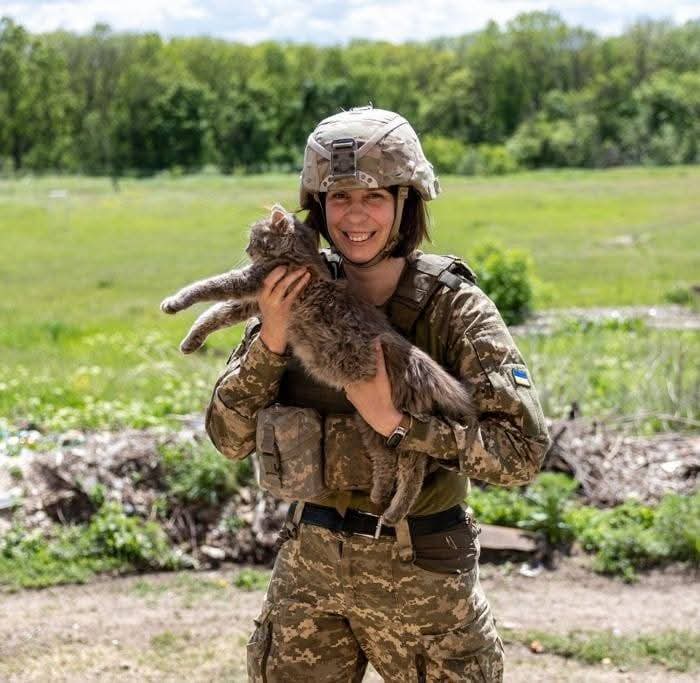
How Russian army is still capable to advance on the Ukrainian front — at least on the most critical parts of it?
Mainly because of their ability to increase substantially and essentially the air offense potential — drones and gliding aviation bombs.
Thus they manage to sustain the same tactics — cut off the supply lines of Ukrainian troops in the ground, forcing then to withdraw, when the level of isolation becomes critical.
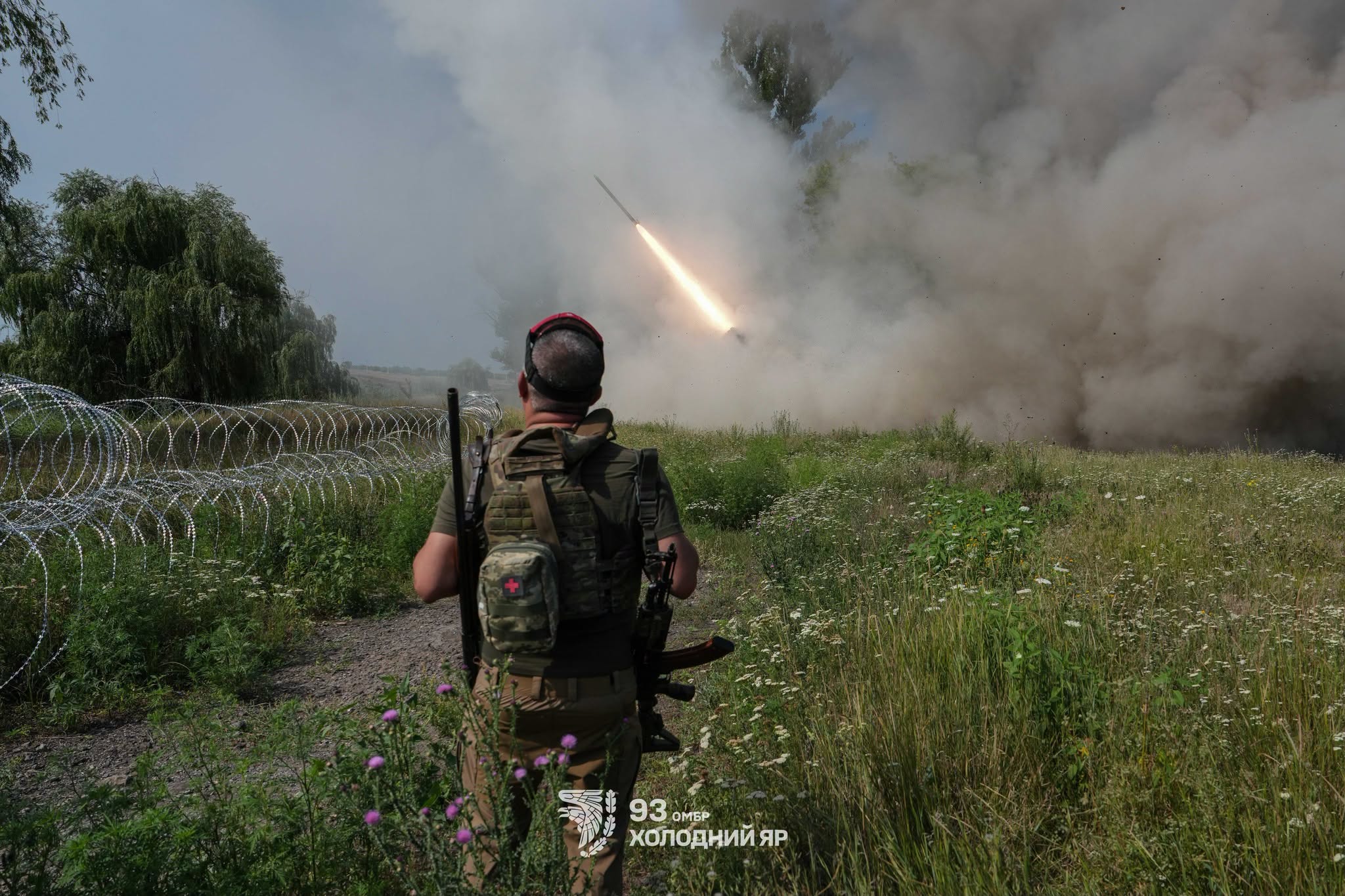
That is the take of Iryna Rybakova, press officer of the 93d brigade of the Armed forces of Ukraine "Cholodnyj Yar".
This one of the most experienced and battle hardened brigades is always deployed on the most critical parts of the frontlines. After the battle of Bakhmut, it still remains in the Donetsk oblast and now defending Druzhkivka with the positions around it.
Druzhkivka is the critically important city just 10 kilometers from Kostyantynivka, which was stormed by Russian forces for almost a year and still remains in so called grey zone. If Russians are succeeding to squeeze Ukrainian forces out of Druzhkivka, they are having one of the main routes to the last Ukrainian strongholds in the oblast Kramatorsk and Slovyansk opened.
"Arch Frontline" is talking with officer Rybakova about the situation on the ground there and its dynamics.
We are almost the year here, in current positions, but there were almost no significant changes of the lines so far. For the meantime, so to say.
Of course, there are some points of turbulence, were the enemy succeeded to push further — especially, at those places, where our positions are bordering with the positions of neighboring units and brigades. The enemy is always testing such points and trying to infiltrate or breakthrough.
Then we push them back counterattacking, or in some place we conduct some tactical offenses, which are at some point successful. But overall, as I've said, there are no significant moves of strategical level.
You can say that intensity and scale of enemy's infantry and stormtroopers assaults on the ground, so called "meat assaults" kind of being reduced recently.
Apparently, they have the problems with the manpower. Mainly, they still have the incoming people, whose main motivation is money — including mercenaries from all over, including Africa.
They, of course, somehow will have to solve this. The main way, apparently, is mobilization.
I wouldn't say that all this is some kind of very critical or dramatic problem for them, signaling, that their potential is crumbling or collapsing. No, it is still more or less stable, but some tension is creeping in.
Our situation with this, with critical manpower shortage, has slightly improved recently. I'm talking on behalf of our brigade. We just got more people — because, that the distribution of mobilized people among the units, corps and brigades became more just and balanced.
This problem of the unbalanced distribution was well known for years, but it started to be really addressed just recently. I think we should thank for that our former commander of the brigade Pavlo Palisa, who is now deputy chief of the administration of president of Ukraine. He knows the things on the ground extremely well.
So, from the enemy side earlier there were tens of attempts of assaults during the month. Now there're less of them. But, of course, they are still holding on the same essential tactic of continuous, permanent infiltration of small groups of 2-3 men, or even one person, when they try to sneak into our territory as far and as secretly, as possible and then wait secretly for the other ones, who are coming the same way.
And they can be hiding in one place, they've succeeded to reach, for several weeks or even a month.
Sometimes we let them do it on purpose — actually, on two purposes. First, sometimes it is too dangerous for us to try to intercept them on the ground, because our positions then can come out into full display. Second, it is good to wait for some more of them coming and then just smashing them all with one drone strike.
You see, the main thing and task for everybody there is to hide and cover up as well, as possible. Because the frontline — if we still can apply this word to the situation there — is completely taken over by drones and other unmanned tools of strike and detection. So that is the game for infantry, which still has to control the ground.
One way or another, now their main course and way of offense and pushing forward is expanding the so called kill zone as much as possible and cutting off all our logistic lines.
By this they're trying to make position of our troops on the ground untenable and forcing them to withdraw before they're completely cut off by the air strikes.
And in order to do this, enemy recently scaled up this air campaign and its armory just dramatically.
Now the sky, simply speaking, is just black because of things out there. We couldn't see such situation even when Russians were storming Pokrovsk and Kostyantynivka.
Enemy is conducting the attacks of swarms of drones, which may be 5, 6 or more drones big, they use so called "mothers", which bring those swarms as far as possible and then releasing them further. And if some of them are not succeeding to hit the targets, they are returning to the "mothers" to recharge.
Sometimes you can see dozen or more drones above the city. And these are only those drones, which we can see, because they are guided by radio waves. We just don't see the other ones, which are on the fiber optic cables.
And they are constantly hunting all moving objects, including civilian ones. For example, when the drone operator sees that the battery is low and about to die, he or she can just direct FPV drone to some old man on the bicycle, who happened to be around.
Also, some people are just dying in their homes and remaining there for weeks.
That is why in such cities, as Druzhkivka, there are dead civilians lying just on the streets for days, because nobody can pick them — the risk to be also killed on the spot is too big.
Our team car just the day ago was attacked by drone in Druzhkivka three times, and the third one was the hit. Luckily, we managed to jump out of the car seconds before.
And we have so called "waiters" or "sleepers" — drones, which are sitting on the ground and waiting for the prey to pass. Some of them even do not need to see it, they have the sound detectors and they pull off for the attack after detecting the sound of the engine of the vehicle.
Another major kind of arms the enemy has been always using in this air offensive — gliding aviation bombs, which they are also constantly modernizing and updating and against which we still have no essential counter measures.
Enemy is conducting the attacks with these bombs against the cities of Kramatorsk and Slovyansk, using 3 or 4 bombs at once in the one attack, attacking several times a day.
So, all this created situation, when any kind of logistic is maximally complicated and risky. Even for unmanned ground drones, which is the recent ever growing trend in order to save the people.
Everything, including those drones, are now being attacked in kill zone, which is roughly ten kilometers wide in average or even more.
So, for example, logistic lines for the troops on the ground are constantly being more and more sophisticated. First, ground drones are getting to the positions of so called "vampires" — the operators of the heavy attacks drones "Vampires", which are able to carry multiple explosives they are dropping on the enemy positions from above.
Then supplies are being carried by "Vampires" to the last lines and being dropped to our troops. And this have to be conducted as much secretly, as rapidly, because enemy, needless to say, also attacks these lines.
Now the sky, simply speaking, is just black because of things out there.
Well, it is hard for me to say, whether the Russians succeed to capture Kramatorsk, Slovyansk and the rest of Donetsk oblast till the end of the year, because I don't see the overall situation. I just can doubt it, because I see, how slow they are able to move.
But, anyway, they, so to say, want to do this very badly. That's why they, as I've said, scaled up everything, which they can, like there's no tomorrow.