Category

Skeleton article title placeholder text spanning two or three lines while the content loads from the CMS


The election of governments broadly aligned with President Donald Trump has created a rare strategic opening for Washington in Latin America.
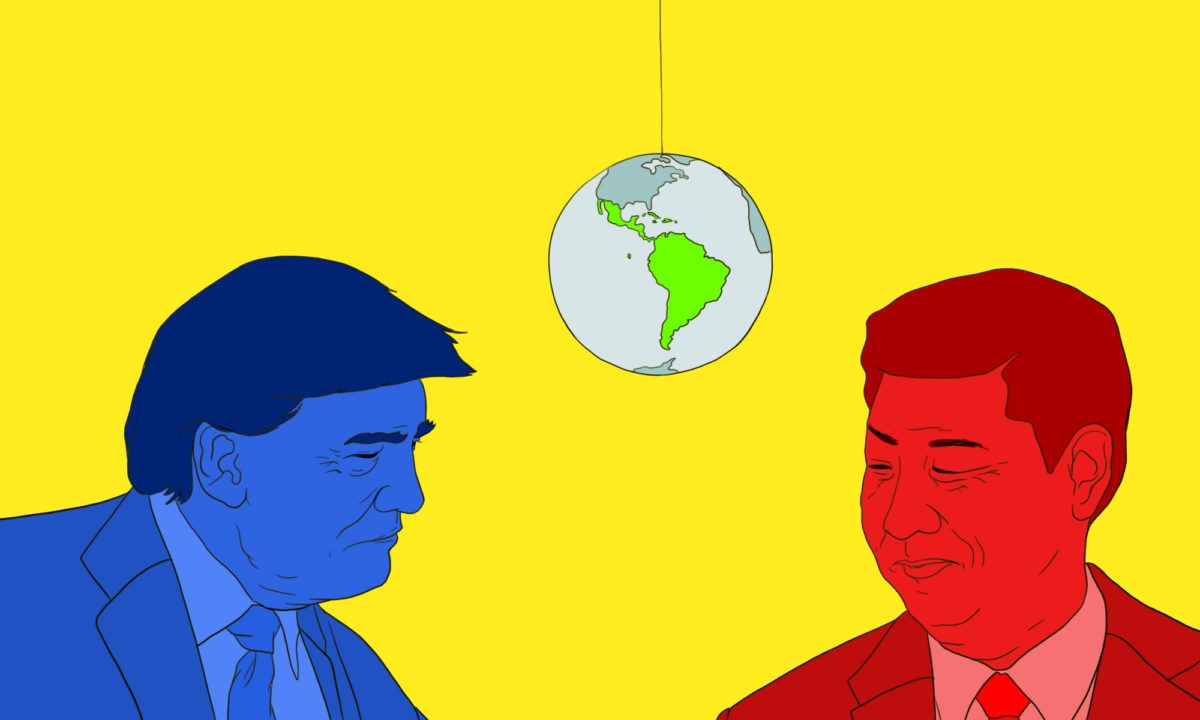
The election of governments broadly aligned with President Donald Trump has created a rare strategic opening for Washington in Latin America. Argentina under Javier Milei, Ecuador under Daniel Noboa and Chile under its new administration are more receptive to U.S. priorities than many of their predecessors, while other governments across the hemisphere have demonstrated greater willingness to cooperate with Washington on security, migration and regional stability. The Trump administration has consequently sought to frame this political shift as an opportunity to reinforce U.S. influence and constrain the role of extra-hemispheric powers, particularly China.
Yet Washington risks overestimating what this political realignment means for the broader U.S.-China competition. Political alignment does not automatically produce economic realignment. China's influence in Latin America is not primarily sustained by ideological affinity. It rests on trade, investment, financing, infrastructure, technology and access to the Chinese market — relationships that have accumulated over years and are considerably more resistant to electoral change than diplomatic rhetoric.
Recent developments illustrate the gap. On August 18, Ecuadorian President Daniel Noboa met President Xi Jinping in Beijing, where the two governments announced a series of agreements covering economic and trade cooperation, green industry, the digital economy and other areas. Among them were agreements involving Ecuador's government communications authorities and China Media Group, China's state-controlled media conglomerate, as well as a digital-economy memorandum involving Ecuador's Ministry of Infrastructure and Technology and China's National Data Administration. The latter envisages cooperation in areas including digital transformation, policy and technology exchanges, and applications in agriculture, manufacturing and health.
The strategic significance of these agreements lies not simply in their existence, but in their transparency and long-term implications. The public availability of the agreements' broad descriptions does not necessarily provide sufficient information about their implementation, data governance or institutional oversight. This does not establish that Ecuador has compromised the privacy of its citizens or its digital sovereignty. It does, however, raise legitimate questions about what data may be exchanged, what standards may be adopted and how Ecuador will preserve regulatory autonomy as Chinese technology and institutions become more deeply embedded in its digital economy.
Ecuador is not an isolated case. Chilean Foreign Minister Francisco Pérez Mackenna travelled to Beijing this month to deepen bilateral economic relations and attract Chinese investment across sectors including energy, mining, infrastructure, telecommunications and technology. El Salvador has continued to develop institutional ties with Beijing, while Argentina — despite being one of Washington's closest political partners in the hemisphere — renewed its currency-swap arrangement with China for another five years.
These developments should not be interpreted as evidence that Trump's strategy has failed. They demonstrate something more important: Latin American governments can move closer to Washington politically while maintaining substantial economic relationships with Beijing.
For the United States, this distinction should become central to hemispheric strategy. Washington should not measure success by whether Latin American governments publicly distance themselves from China. It should measure success by whether American capital, technology, trade and supply chains are becoming sufficiently valuable to provide credible alternatives to Chinese economic influence.
The objective is not to force Latin America to choose between Washington and Beijing.
It is to make the American option more valuable.
Washington has good reason to view the current political environment as an opportunity. Governments that are more receptive to U.S. security cooperation, more skeptical of authoritarianism and more concerned about China's strategic presence provide a substantially more favorable environment for American diplomacy.
But political realignment can occur in months. Economic realignment takes years.
A president can change the tone of foreign policy almost immediately after taking office. He cannot, with equal speed, redirect commodity exports, replace infrastructure, unwind financing agreements, restructure telecommunications systems or reconstruct supply chains. The economic relationships China has developed across Latin America therefore possess a degree of institutional resilience that political change alone cannot overcome.
This matters because Beijing does not need Latin American governments to become politically pro-China. China does not need Ecuador, Chile or Argentina to formally choose Beijing over Washington. It benefits if these countries continue to purchase Chinese goods, rely on Chinese markets, use Chinese technology, attract Chinese investment and maintain access to Chinese financing.
That is a much lower strategic threshold.
China's model of influence is therefore compatible with political diversity. A government can be conservative, nationalist, progressive or strongly pro-American and still conclude that Chinese economic engagement serves its national interests.
This is why Washington should be cautious about treating presidential rhetoric as a proxy for strategic influence.
The relevant question is not simply whether a Latin American leader is closer to Trump than his predecessor. It is whether the economic architecture of that country is becoming more integrated with the United States or remaining structurally dependent on China.
At the same time, Washington should avoid the opposite analytical mistake: treating every Chinese commercial presence as evidence of Chinese strategic control.
Chinese investment does not automatically translate into political leverage. A Chinese company building infrastructure, purchasing commodities or entering a consumer market does not necessarily mean that Beijing has acquired control over the host country's strategic decision-making. Latin American governments have their own institutions, interests and ability to diversify partnerships.
This distinction matters because excessive securitization can weaken U.S. credibility. If Washington treats every Chinese trade relationship as a national-security threat, Latin American governments may conclude that the United States is attempting to constrain their economic autonomy rather than strengthen it.
The better approach is to distinguish between commercial presence and strategic dependency.
The sectors that deserve the greatest attention are those in which economic relationships can create long-term technological, financial or infrastructural dependence: telecommunications and cloud infrastructure, ports and logistics, electricity grids, critical minerals, financial infrastructure, artificial intelligence, data centers and digital public infrastructure.
The strategic question is not whether Chinese companies are present.
It is whether their presence creates dependencies that could eventually constrain a country's policy choices.
That is where U.S. competition should concentrate.
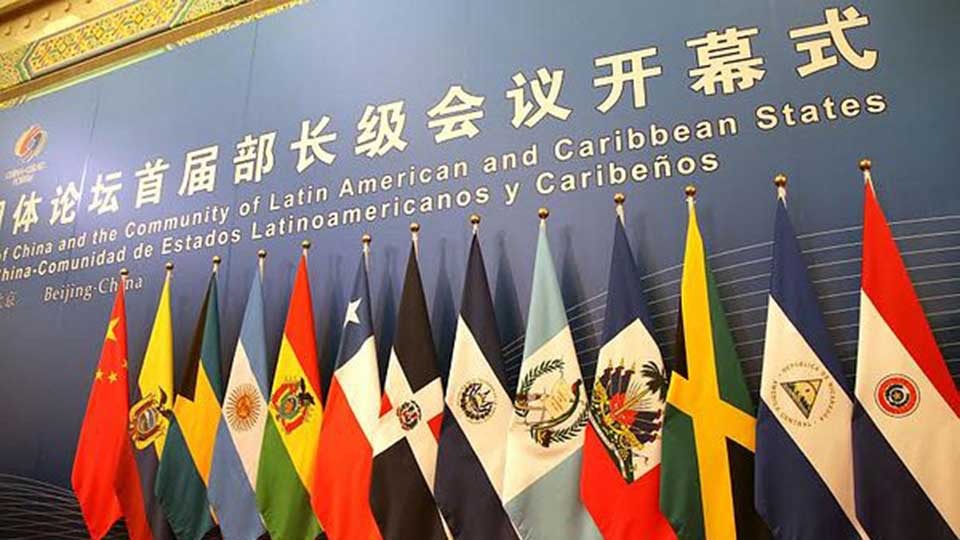
Ecuador demonstrates why this distinction matters.
Noboa's government is considerably more receptive to Washington than many recent governments in Quito. Yet his visit to Beijing shows that closer relations with the United States do not eliminate the economic incentives for cooperation with China.
The most strategically significant element of the visit may not be the headline trade agreements, but the institutional agreements concerning digitalization and communications.
Digital infrastructure is different from conventional trade because technological standards can become embedded for years. Data governance is different from an ordinary investment because decisions about collection, storage, processing and access can affect both state capacity and individual privacy. Media cooperation also deserves scrutiny when the counterpart is a state-controlled international media organization.
Again, this does not mean that Ecuador has surrendered digital sovereignty to Beijing. It means that the long-term consequences of such agreements deserve greater transparency and scrutiny.
For Washington, the appropriate response is not simply to warn Ecuador about China.
It is to offer alternatives.
If Ecuador wants to expand digital public infrastructure, the United States and its allies should be able to provide trusted cloud services, cybersecurity capabilities, data-governance expertise, telecommunications infrastructure and digital standards. If Ecuador needs investment in strategic sectors, American and allied capital should be positioned to compete.
The policy objective should therefore shift from opposing Chinese involvement to expanding the availability of Western alternatives.
That is a much more sustainable form of competition.
Chile provides a similar lesson.
Pérez Mackenna's visit to Beijing was explicitly connected to strengthening economic relations and attracting Chinese investment. Chinese companies are already important participants in Chile's economy, including in areas such as mining, energy, infrastructure, telecommunications and technology.
A change in political orientation does not erase those relationships.
Nor should Washington expect it to.
Chile's government has to consider employment, investment, exports, technological development and economic growth. If Chinese companies are prepared to provide capital in sectors where Chile wants investment, Santiago will have incentives to maintain those relationships even while strengthening political and security ties with Washington.
This is not necessarily strategic ambiguity.
It is national interest.
For Washington, however, the implication is significant. If the United States wants Chile to diversify strategically away from China, it needs to make diversification economically feasible.
That means American investment, not simply American diplomacy.
Argentina offers an even clearer example because the political relationship between Buenos Aires and Washington is unusually close.
Milei has emerged as one of the most openly pro-American leaders in Latin America. Yet Argentina's economic circumstances continue to make China relevant. In August, the Central Bank of Argentina and the People's Bank of China renewed their currency-swap agreement for RMB 130 billion for another five years, maintaining a RMB 35 billion portion activated in 2023.
This does not mean Argentina has moved closer to Beijing politically.
It demonstrates something more important: economic constraints can coexist with ideological alignment.
Buenos Aires can view Washington as its preferred strategic partner while simultaneously concluding that access to Chinese financial instruments remains useful for economic stability and trade.
For Beijing, this is sufficient.
China does not need Milei to endorse Chinese ideology. It needs Chinese financial instruments to remain economically useful.
That distinction should fundamentally change how Washington measures strategic success.
If a pro-American government continues to rely on Chinese financial, technological or commercial instruments, the problem is not necessarily that the government lacks political loyalty. It may simply lack an equally valuable alternative.
That is a problem Washington can address.
This is the central weakness in Washington's current approach.
The United States increasingly asks Latin American governments to limit Chinese involvement in strategic sectors. In some cases, that is justified by legitimate national-security concerns. But diplomatic pressure cannot substitute for economic alternatives.
If an Ecuadorian government needs digital infrastructure, China can offer a package.
If Argentina needs financial liquidity, China can offer a financial instrument.
If Chile wants foreign investment, Chinese companies can offer capital.
If Latin American economies want access to a massive consumer market for commodities and manufactured goods, China can provide demand.
Washington cannot expect governments to reject these opportunities simply because the United States considers Chinese participation strategically undesirable.
It has to compete.
This leads to the central policy conclusion:
The United States does not need Latin America to become anti-China. It needs Latin America to have credible alternatives to China.
That requires moving beyond a strategy based primarily on diplomatic pressure and toward one based on economic statecraft.
Washington should concentrate its hemispheric economic strategy around three priorities.
The United States should expand opportunities for Latin American economies to sell into the American market. If Washington wants countries to diversify their exports away from China, it needs to provide alternative demand. Trade policy should therefore be treated as an instrument of strategic competition rather than as a separate economic issue.
U.S. development finance, export finance and private investment should be better coordinated around strategic projects in Latin America. Washington does not need to finance every infrastructure project in the hemisphere. It needs to ensure that American and allied capital can compete effectively where Chinese financing would otherwise create long-term strategic dependencies.
The United States and its allies should provide credible alternatives in telecommunications, cloud computing, cybersecurity, artificial intelligence, data centers and digital public infrastructure. This is particularly important because technological decisions made today can determine standards and dependencies for decades.
These three instruments reinforce one another. Market access makes investment more attractive. Investment creates commercial relationships. Technology partnerships create standards and interoperability. Together, they produce something diplomatic pressure cannot: durable economic integration.
This is also where the concept of a renewed Monroe Doctrine requires refinement.
A twenty-first-century Monroe Doctrine cannot simply mean that external powers should not operate in the Western Hemisphere. Such a policy would be difficult to enforce and increasingly difficult to reconcile with the economic interests of Latin American states.
The more sustainable interpretation is that the United States should ensure that the hemisphere's critical economic and technological architecture remains open to trusted partners and deeply connected to the U.S. economy.
That requires a shift from exclusion to competition.
The old question was:
How does Washington keep China out?
The more useful question is:
How does Washington make deeper integration with the United States more valuable than deeper dependence on China?
The distinction is fundamental.
A strategy based on exclusion asks Latin American governments to accept constraints.
A strategy based on competition gives them incentives.
China has already demonstrated the effectiveness of the second approach. Beijing has generally not required Latin American governments to abandon Washington before engaging economically with China. It has offered markets, financing, infrastructure and investment and allowed economic interdependence to generate influence over time.
Washington should learn from this without attempting to reproduce China's state-capitalist model.
Washington should also reconsider how it measures success in the hemisphere.
The number of Latin American leaders who meet Trump is politically useful but strategically insufficient. Public statements supporting U.S. positions are useful but insufficient. Even diplomatic votes are insufficient.
More meaningful indicators would include the share of regional strategic infrastructure financed by U.S. and allied capital, the market share of American technology providers in critical digital sectors, the degree of integration between Latin American and North American supply chains, the availability of alternatives to Chinese financing and the extent to which critical infrastructure follows trusted technological and governance standards.
These indicators capture influence where it actually matters.
They also prevent Washington from confusing diplomatic visibility with strategic position.
A president can stand beside Trump at the White House while his country's telecommunications infrastructure is built by Chinese companies. A government can support Washington on regional security while relying on Chinese financial instruments. A country can deepen its political relationship with the United States while continuing to attract Chinese investment.
None of these outcomes should automatically be considered a U.S. failure.
But they demonstrate why political alignment alone is an inadequate measure of strategic influence.
Ideological alignment is not a substitute for economic influence.
The current political environment nevertheless gives Washington an important opportunity.
Governments more receptive to U.S. priorities create political conditions for deeper cooperation on security, supply chains, energy, technology and investment. This opportunity should not be underestimated.
But political goodwill is a wasting asset if it is not converted into durable economic relationships.
If Washington does not provide credible alternatives, Latin American governments will continue to diversify their partnerships according to their material interests. China will remain ready to fill gaps in financing, infrastructure, technology and trade.
The current moment should therefore be understood not as the conclusion of a U.S. strategic victory, but as an opportunity to build one.
Washington has a favorable political environment.
What it lacks is a sufficiently ambitious economic strategy to convert that environment into lasting influence.
The election of governments aligned with President Trump represents a significant opportunity for Washington in Latin America, but it should not be mistaken for the retreat of China. Ecuador's agreements with Beijing, Chile's continued pursuit of Chinese investment and Argentina's decision to renew its RMB 130 billion currency-swap arrangement demonstrate that China's economic position remains resilient even where political relations with Washington are strong.
The broader lesson is straightforward: ideological alignment is not a substitute for economic influence.
Latin American governments can share Washington's political preferences and still conclude that Chinese markets, financing, technology or investment serve their national interests. Elections can change governments; they do not automatically reconstruct the economic relationships on which those governments depend.
Washington therefore needs to redefine what success looks like.
The objective should not be to force Latin America to choose between the United States and China. Nor should it be to treat every Chinese commercial presence as a strategic threat. The objective should be to identify sectors where economic dependence could translate into strategic leverage and then ensure that Latin American governments have credible American and allied alternatives.
That means more trade, more investment, more infrastructure finance, more technology partnerships and deeper supply-chain integration.
It also means accepting a basic reality of great-power competition: countries rarely abandon an economically valuable relationship simply because another power asks them to.
They do so when a better alternative exists.
The political realignment of Latin America has opened a door for Washington.
Now the United States needs an economic strategy capable of walking through it.
Trump's political allies may create the opportunity for a hemispheric realignment. Only American trade, investment and economic integration can make that realignment durable.