Category

Skeleton article title placeholder text spanning two or three lines while the content loads from the CMS


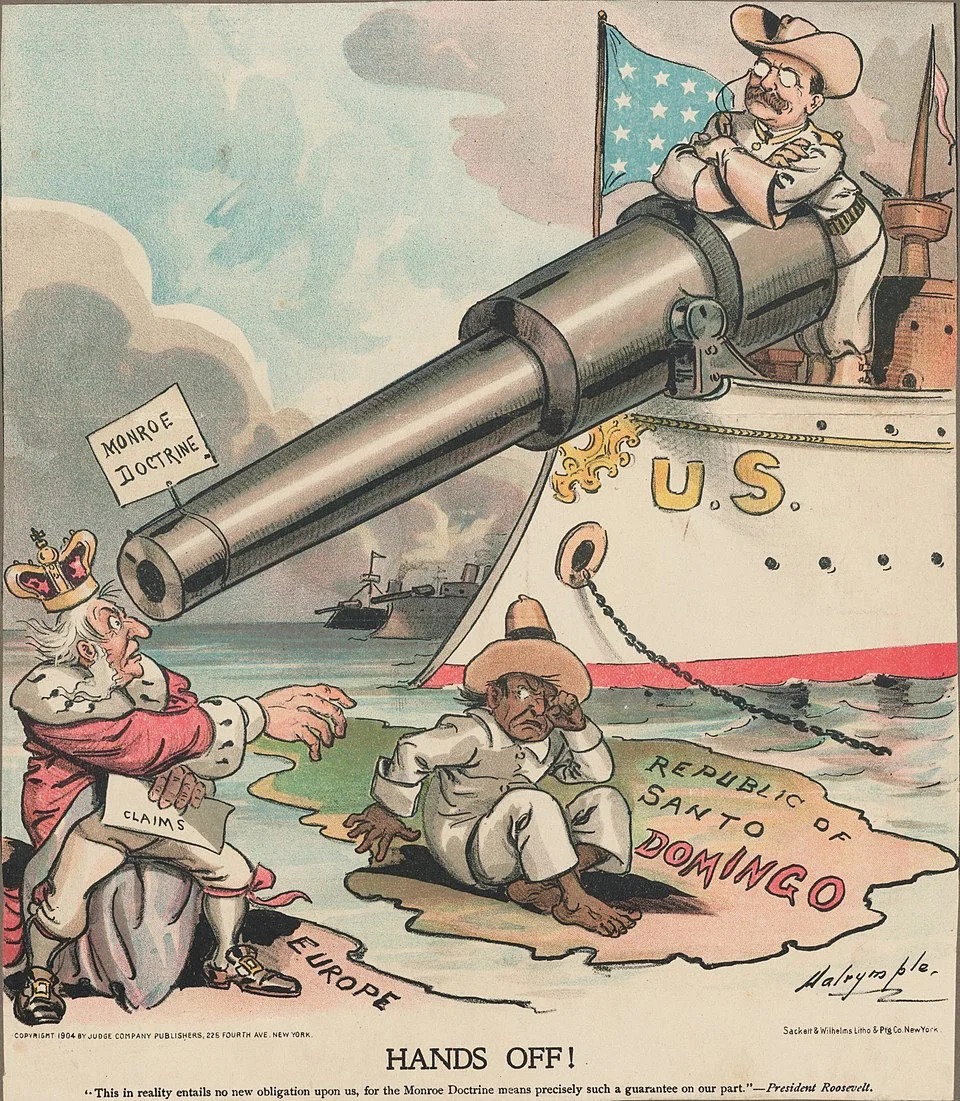
For much of the past year, discussion of U.S. policy toward Cuba has centered on one question: is Washington preparing for a more confrontational approach toward Havana? The recent announcement that the Central Intelligence Agency has established a dedicated task force focused exclusively on Cuba has only reinforced that perception, prompting speculation that the island has once again become a top national security priority.
Yet focusing solely on the CIA initiative risks missing the broader strategic picture.
The creation of a specialized intelligence unit is not, in itself, an extraordinary development. Similar structures have existed at previous moments when Cuba occupied a central place in U.S. foreign policy. What deserves closer attention is the changing regional environment in which this decision has been made.
Developments in Venezuela, the continued strategic demands of the conflict with Iran, and Washington's increasingly limited capacity to manage multiple crises simultaneously suggest that U.S. policy toward Cuba may be entering a different phase. Rather than preparing the conditions for direct military intervention, the Trump administration may increasingly favor a strategy aimed at reshaping political dynamics from within the Cuban regime itself.
If reporting about the mandate of the new CIA task force is accurate, this would represent an important evolution in American strategy. Instead of relying primarily on external pressure, Washington may now be seeking to encourage internal political fragmentation while preserving military power largely as a source of deterrence.
Whether such an approach can produce meaningful political change remains uncertain. What is becoming increasingly clear, however, is that the strategic debate in Washington is no longer simply about how to pressure Cuba from the outside — it is increasingly about whether the regime can be weakened from within.
Cuba has never disappeared from Washington's strategic agenda. Even during periods of diplomatic engagement, successive U.S. administrations have continued to view the island through the broader lens of regional security, geopolitical competition and authoritarian influence in the Western Hemisphere.
What has changed in recent months is not Cuba itself, but the wider strategic environment surrounding it.
The fall of Nicolás Maduro fundamentally altered political dynamics across Latin America. For decades, Caracas and Havana functioned as mutually reinforcing pillars of the region's anti-American political bloc. Venezuela provided economic resources and strategic depth, while Cuba supplied intelligence expertise, political coordination and institutional support that extended well beyond its own borders.
Maduro's removal disrupted that balance.
Although the Cuban government remains firmly in power, it now faces a regional landscape that is considerably less favorable than it was only a year ago. At the same time, Washington has demonstrated an increasingly assertive approach toward governments it considers hostile to U.S. interests, leading many observers to speculate that Havana could become the next major focus of American policy.
Against this backdrop, the CIA's decision to establish a dedicated Cuba Task Force has inevitably attracted attention. Placing Cuba alongside countries such as China, Russia and Iran within the Agency's organizational priorities signals that Washington once again considers developments on the island to be of strategic importance.
That conclusion, however, should not automatically be interpreted as evidence that the United States is preparing for another military confrontation in the Caribbean.
History suggests a more cautious reading.
Whenever Cuba has emerged as a major strategic concern, Washington has typically expanded its intelligence capabilities accordingly. Dedicated analytical and operational structures have accompanied previous periods of heightened attention, including the years preceding the Bay of Pigs operation and several later phases of Cold War competition. The existence of a specialized task force therefore tells us relatively little about the specific policies the administration ultimately intends to pursue.
The more important question is not why such a unit has been created, but what objectives it has been assigned.
According to The New York Times reporting citing officials familiar with the initiative, the task force's mission is expected to remain narrowly focused. Rather than preparing the ground for direct military action, its activities would reportedly concentrate on identifying vulnerabilities within Cuba's political leadership, monitoring divisions among regime elites and increasing pressure on those responsible for maintaining the country's most uncompromising anti-American policies.
If those reports accurately reflect Washington's intentions, they point toward something more significant than an organizational change inside the intelligence community. They suggest that the United States may be reassessing the very mechanism through which it hopes political change in Cuba could eventually occur.
For decades, U.S. policy relied overwhelmingly on external pressure: economic sanctions, diplomatic isolation and the persistent threat of additional coercive measures. Those policies undoubtedly imposed substantial economic costs on Havana, but they failed to produce meaningful political transformation.
A strategy aimed at influencing the internal calculations of Cuba's ruling elite would represent a different theory of change altogether.
Rather than attempting to force political transformation from outside the regime, Washington may increasingly believe that the more effective approach is to encourage it from within.
Whether that assumption proves correct remains to be seen. But if it does reflect the administration's evolving strategy, it marks one of the most consequential shifts in U.S. policy toward Cuba in years.
To understand why such a shift may be taking place, however, it is necessary to look beyond Havana itself. The answer lies not only in Cuba, but also in developments unfolding simultaneously in Venezuela, the Middle East and the broader geopolitical environment confronting the United States.
What has changed in recent months is not Cuba itself, but the wider strategic environment surrounding it.
Only a few months ago, a military option against Cuba appeared considerably more plausible than it does today. This was not because Cuba itself had become more threatening, but because the broader regional environment appeared to favor a more assertive U.S. posture. The successful operation that removed Nicolás Maduro from power suggested that Washington was prepared to accept greater strategic risks in pursuit of long-term political objectives in Latin America.
That assumption has since become far less convincing.
The first reason is that Venezuela has proven significantly more demanding than many policymakers initially anticipated.
Following Maduro's removal, there were indications that Washington intended to pursue a relatively pragmatic approach toward the country's transition. Rather than immediately investing substantial political capital in negotiations over democratic reforms, the administration appeared focused on stabilizing the post-Maduro environment and preserving continuity in sectors critical to regional energy markets. While democratic transition remained an official objective, it did not initially appear to be Washington's most urgent priority.
Events during the summer changed that calculation.
The devastating earthquakes that struck Venezuela in late June transformed both the humanitarian and political landscape. The disaster exposed the weakness of the country's remaining institutions and intensified pressure from the democratic opposition, regional governments and international partners to accelerate negotiations over a political transition.
Whether anticipated or not, Washington suddenly found itself managing a far more complex situation than originally expected.
Negotiations over democratic governance are inherently resource-intensive. They require sustained diplomatic engagement, continuous intelligence assessments, coordination with international partners and constant management of competing political interests inside Venezuela itself. Unlike military operations, political transitions cannot be managed through short-term decision-making alone. They demand long-term attention from policymakers across multiple institutions.
As a result, Venezuela once again became a strategic priority consuming diplomatic and intelligence resources that might otherwise have been directed elsewhere.
This shift is particularly important when viewed alongside developments in other theaters.
At the same time that Venezuela demanded greater attention, the United States remained deeply engaged in managing the consequences of its confrontation with Iran.
Despite repeated statements expressing a desire to reduce America's military commitments in the Middle East, the administration has been unable to disengage on favorable terms. Any premature reduction of pressure risks allowing Tehran to recover strategically while undermining the credibility of U.S. deterrence across the region.
This creates a dilemma familiar to every major power.
Foreign policy is rarely constrained by a lack of objectives. More often, it is constrained by limited political attention, finite intelligence resources and competing strategic priorities.
The United States currently faces simultaneous challenges in Eastern Europe, the Middle East and Latin America. Each demands sustained engagement. Each competes for the attention of senior decision-makers. Each carries significant political costs if mismanaged.
Viewed in isolation, Cuba might justify a more assertive policy.
Viewed alongside Ukraine, Iran and Venezuela, however, the strategic picture becomes considerably more complicated.
This does not imply that Washington has lost interest in Cuba. On the contrary, recent organizational changes inside the intelligence community suggest the opposite. Cuba is clearly receiving renewed attention. The more important question is how that attention is likely to be translated into policy.
Launching a new military operation while simultaneously managing complex transitions elsewhere would require substantial political capital, financial resources and military planning. It would also expose the administration to considerable domestic political risks at a moment when foreign policy successes are increasingly expected to produce rapid, measurable results.
Under such circumstances, a strategy centered on intelligence operations, political influence and calibrated pressure appears significantly more sustainable than one dependent on direct military intervention.
This broader context also helps explain the reported mandate of the CIA's new Cuba Task Force.
If its principal objective is indeed to identify fractures within Cuba's political elite rather than prepare operational plans for military escalation, the initiative fits within a broader pattern emerging across U.S. foreign policy. Rather than seeking immediate regime collapse through overwhelming external pressure, Washington increasingly appears interested in shaping the internal political calculations of authoritarian governments.
Such a strategy carries fewer immediate risks than military intervention while preserving flexibility should circumstances change.
Whether it ultimately proves more effective is another question. Authoritarian systems often survive precisely because they are designed to prevent elite fragmentation. Yet encouraging divisions within ruling coalitions has historically offered a lower-cost alternative to direct intervention — particularly when policymakers face multiple strategic commitments simultaneously.
From this perspective, the CIA task force should be understood less as a signal of impending confrontation than as evidence of changing strategic priorities. The United States may still seek political change in Cuba, but it increasingly appears willing to pursue that objective through different instruments than those many observers expected only a few months ago.
If the United States is indeed moving away from a strategy centered on military coercion, the obvious question becomes: what does Washington hope to gain instead?
The answer is unlikely to be regime change in the immediate sense.
Political transformation in Cuba remains a long-term objective, but there is little evidence to suggest that the current administration expects the collapse of the Cuban system in the near future. Nor would such an outcome necessarily serve Washington's short-term strategic interests. Abrupt political transitions often create instability, humanitarian crises and security risks that require prolonged international engagement — precisely the type of commitment the United States appears increasingly reluctant to undertake.
A more realistic objective would be to alter the strategic behavior of the regime rather than immediately replace it.
That distinction is important.
For decades, Cuba's geopolitical value has not been defined by its economy. Unlike Venezuela, Havana possesses no vast energy reserves capable of transforming bilateral relations through commercial agreements alone. Cuba's strategic importance lies elsewhere — in its location, its intelligence partnerships and its role within the broader competition between the United States and its principal geopolitical rivals.
From Washington's perspective, these issues are likely to carry considerably greater weight than purely economic considerations.
The presence of Russian and Chinese intelligence infrastructure in Cuba has become an increasingly important concern as strategic competition with both powers has intensified. Regardless of the precise capabilities of those facilities, their existence places foreign intelligence assets within close proximity to the continental United States, making them a persistent feature of American national security planning.
If the Trump administration ultimately pursues negotiations with Havana, reducing that intelligence footprint could become one of its primary objectives.
Such an outcome would offer several advantages.
It would allow Washington to demonstrate tangible progress on a core national security issue without assuming the political, financial and military costs associated with direct intervention. At the same time, it would enable the administration to present a measurable foreign policy achievement ahead of domestic political milestones while maintaining pressure on the Cuban leadership through other instruments.
Whether Havana would accept such an arrangement remains uncertain.
For the Cuban government, cooperation with Russia and China is not merely symbolic. It represents an important source of political support, intelligence cooperation and strategic leverage in its relationship with Washington. Agreeing to significantly reduce that cooperation would require concessions that extend well beyond technical security issues.
This suggests that any future understanding between the two governments is likely to be limited rather than comprehensive.
Instead of pursuing a grand bargain, Washington may seek a series of narrower agreements focused on specific security concerns while leaving the broader political dispute unresolved. Such an approach would be consistent with the Trump administration's preference for transactional diplomacy — agreements designed to produce concrete, visible outcomes without requiring a fundamental transformation of the overall relationship.
None of this should be interpreted as evidence that the United States has abandoned its commitment to democratic change in Cuba.
Rather, recent developments suggest that Washington may be reassessing the means through which that objective can realistically be pursued.
The establishment of a dedicated CIA Cuba Task Force should therefore be understood as one element of a broader strategic adjustment rather than as a precursor to military intervention. Taken together with the evolving situation in Venezuela and the continuing demands imposed by crises in the Middle East and Eastern Europe, it points toward an administration seeking to maximize political leverage while minimizing the costs of another major foreign policy confrontation.
Whether this strategy succeeds will depend less on the CIA itself than on the internal dynamics of the Cuban regime.
If divisions within the political elite deepen, Washington may conclude that gradual internal fragmentation offers a more sustainable path toward political change than direct military action ever could.
If, however, the Cuban leadership maintains its cohesion, the United States may once again be forced to reconsider the balance between pressure, deterrence and diplomacy.
For now, the evidence suggests that Washington is not abandoning its long-term objectives in Cuba. It is changing the way it hopes to achieve them.