Category

Skeleton article title placeholder text spanning two or three lines while the content loads from the CMS


Has World War III already started and we are already in it, still without fully understanding it? Or is it just around the corner? Or maybe it has not yet started and, moreover, is still avoidable?
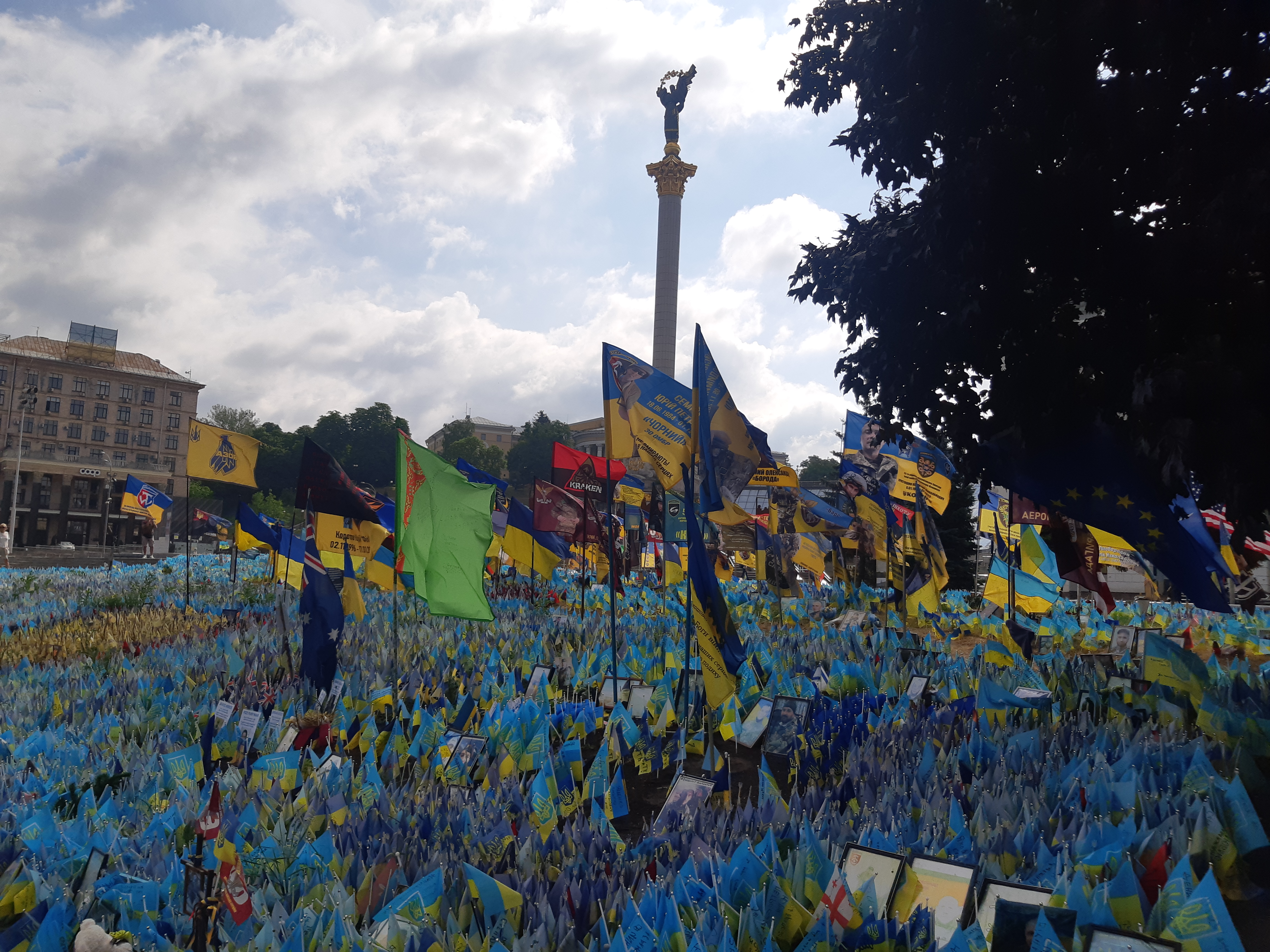
Has World War III already started and we are already in it, still without fully understanding it? Or is it just around the corner?
Or maybe it has not yet started and, moreover, is still avoidable? And if that is the case, what must — and must not — be done to avoid it?
These questions loom over nearly all narratives about the “collapse of the old world order as we know it” — meaning that not only international law, but even the basic rules of engagement of any kind, increasingly seem to have ceased to exist.
First of all, what exactly do people have in mind — or imagine — when they talk about WWIII?
The most widespread vision is a nuclear Armageddon, in which the main world superpowers drag one another, along with the rest of the world, into a fiery apocalypse. In that scenario, even if humanity survives, civilization itself would be condemned to a new stone age under a nuclear winter.
Of course, there are less apocalyptic visions as well.
One is that some superpower, or several of them, would begin using nuclear weapons on a “limited scale” in order to force others to give in and quickly “de-escalate” on the aggressor’s terms – or simply to de-escalate lest we should slip into the abyss while we still can do anything about it.
The second concept of WWIII is that it would resemble the global reality we are already witnessing — an ever-growing avalanche of wars all over the globe, with major powers actively taking part in the chaos and even clashing with one another directly, while still avoiding both nuclear Armageddon and the actual use of nuclear weapons.
Interwoven with this is another global confrontation: the standoff between democracy and authoritarianism — both internationally and within particular states and societies themselves.
So, which course of thought and prediction is the more viable?
Before answering that, we should ask another question: what actually motivates the use of the term “World War III” in today’s discourse?
Is it a bid at rational discussion and reflection, analysis of possible super scenarios of the future and faith of the world?
Or is it not a genuine move to create real discourse and self-sufficient space of discussion and competition of narratives, but just a chatter, in which this abbreviation is being thrown randomly into various separate discourses on the state of the world? Where, most possibly, the main motivation is the wish to highlight your “pessimistic realism” about this state of things and how unprecedentedly bad it is already now?
Since every prediction of the future is, first of all, projection of the current situation into future, only being more „intense" or „thick" there, so the only form of current state of the world in the future can be WWIII and the (nuclear) Armageddon.
In my opinion, contemporary discussions about WWIII belong much more to the category of political projection than to rational analysis.
But does that make the subject itself unserious or unworthy of analysis and reality checks? Of course not.
But first of all, just like in any other case, we have to set the stage to be able to move further, to define the key object we are trying to grasp with our analysis.
So when we speak about “World War III” — or simply “world war” — the most relevant meaning remains a direct military clash of the world’s major powers, one that potentially ends into a nuclear war.
And because some of those powers are authoritarian regimes or outright dictatorships, the broader context of the standoff between democracy and authoritarianism becomes inseparable from this issue – a standoff that is a key factor and driver of the process.
Second, we have to look into wars that are already happening and have global implications, which might become (or already have become) possible tipping points, causing the eruption of WWIII as we described it.
Of course, this is not the only approach possible. These wars-in-progress might not be the exact tipping points – just the context of ever-growing global tensions, indirectly contributing to an outburst somewhere else. Speaking figuratively, the black swans of global Armageddon could be breeding and swimming in ponds other than those lakes of fire that are already in full display.
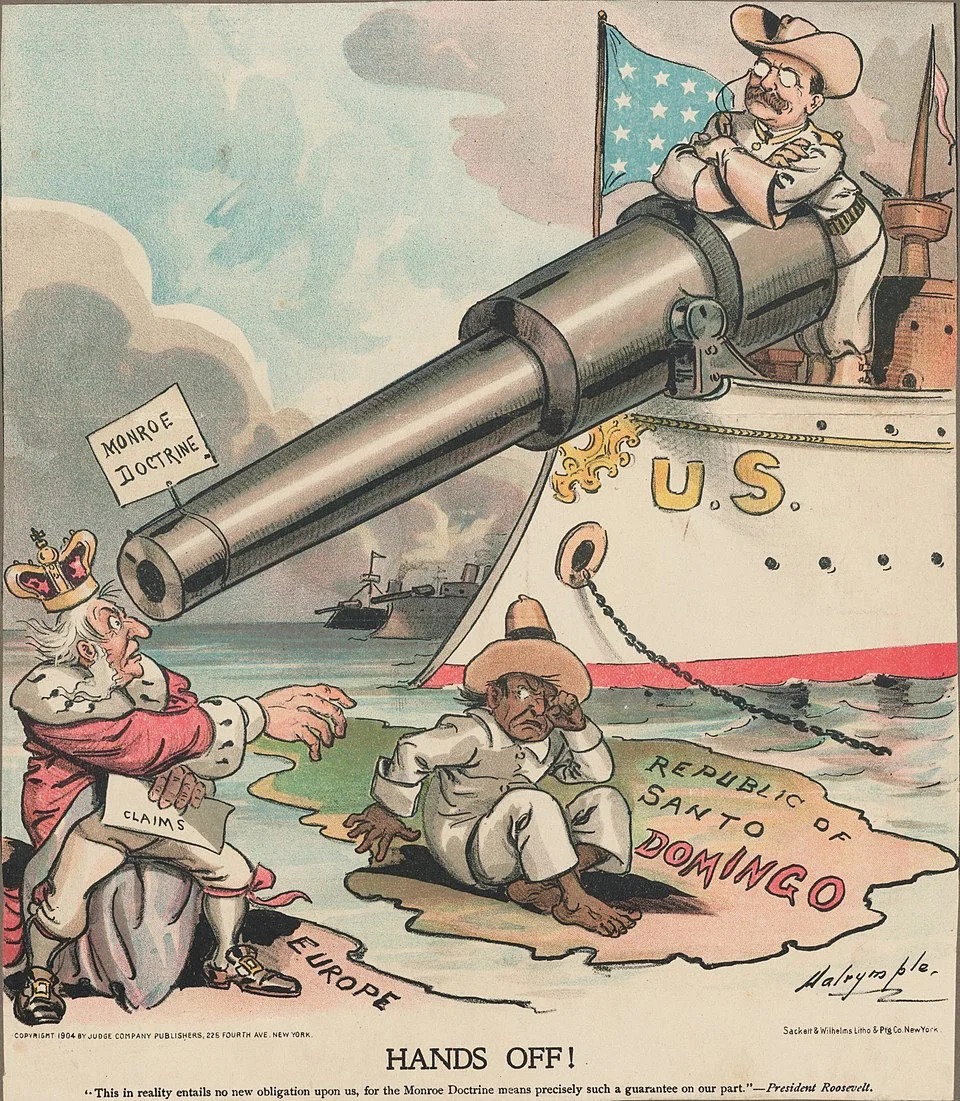
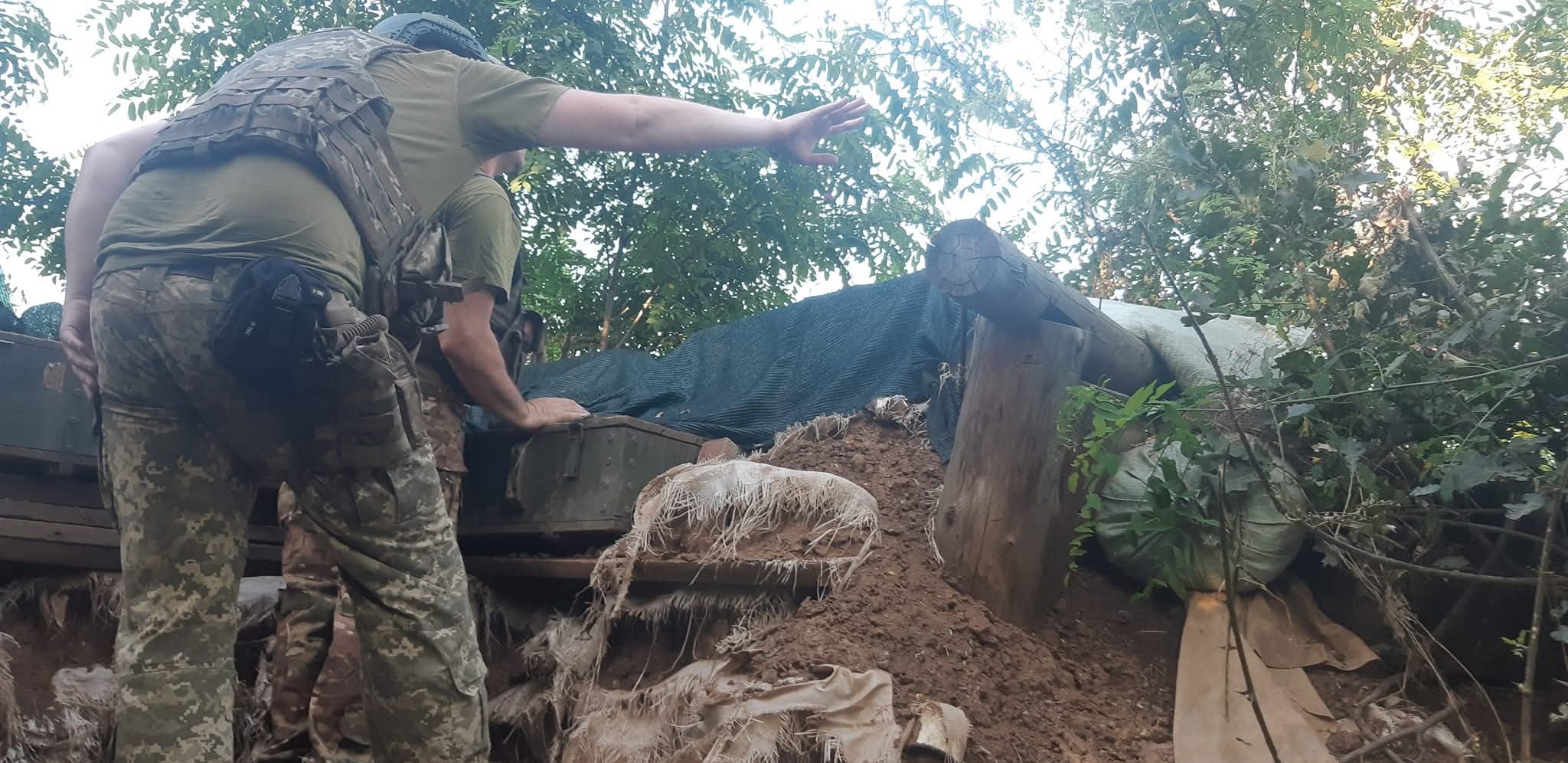
The first war that automatically comes to mind in this context is, of course, Russia’s war against Ukraine.
The major Western powers, by coming to Ukraine’s aid, made sure that Ukraine is still standing and still controls the majority of its sovereign and internationally recognized territory. We could argue and discuss whether the Western military, infrastructural, financial, and economical support was and still is the key and decisive reason behind Ukraine surviving as a sovereign state and nation. For the very Ukrainian society and its resilience obviously played an equally decisive role here – or even more so.
But it is beyond the doubt that without this support Ukraine would not have been able to be in this position and maintain the potential it had and still has.
Nonetheless, the West has supported Ukraine in such a way as to avoid, at almost any cost, two interwoven dangers: “uncontrolled escalation” and the possibility of being accused by Russia of “direct participation” in the war.
Many of these fears about crossing "red lines" were exaggerated — or perhaps entirely fictional.
Yet the evolution of this war has repeatedly demonstrated that many of these fears about crossing “red lines” were exaggerated — or perhaps entirely fictional.
From the Kremlin’s perspective, every move — or even every word — showing solidarity with Ukraine already constitutes direct participation in a war against Russia and hence must be met with capital punishment as such.
Military aid, intelligence sharing, training and logistical support are all, according to Russian rhetoric, equivalent to direct military engagement.
So, in the eyes of the Russian regime and that major part of the society that supports it and its war, it is not only Ukraine, but everyone who has supported and is still supporting it any way, however minor or symbolic, deserves vengeance, punishment, death and destruction.
Russian state propaganda has always been crystal clear on this point: all Western countries are enemies no different from Ukraine itself, which is only a mere tool for them to fight Russia. So, regime has no other option but to hit them with even more military strength than it is directing towards Ukraine.
And it is true – in the deepest psychological sense, which constitutes the very fundamentals of such regimes, as Russian. Dictatorship just has no other option but to deliver a humiliating crush to everyone who dared to stand against it. Otherwise, the regime itself is losing its legitimacy, power, and sacred status, this latter emanating directly from that power.
But why hasn't the regime done this already? Moreover, why is it still pretending that the West hasn’t crossed the last “red lines”, still constantly issuing warnings and threats not to cross them, not to create a situation where the Western supporters of Ukraine will become “direct participants of the conflict”?
And, talking about “escalation”, why is the dictatorship still withholding itself from raising the stakes to the highest possible level?
Why is it not nuking, for example, Kyiv or some other strategically crucial parts of the frontlines, complete with Ukrainian troops and infrastructure? Why is it not killing Ukrainian president Volodymyr Zelensky and not fulfilling its constant threats to “hit the decision-making centers”?
Why is Russia still carefully remaining in so called “grey zone” while attacking the Western countries in various ways that hark back to terrorism? Yes, sometimes this destructive activity is getting past the lines with which frame “hybrid threats”, but, in general, Russia is more or less careful not to get into a situation where the Western countries are plainly and demonstratively faced with the fact that they are under attack by the Russian state in a conventional military way, which pushes the situation over the threshold of NATO’s Article 5.
There're several possible reasons for that.
The first and easiest answer is that Russia still hopes for returning from its current isolation to some legitimacy in the international community. So, despite all the atrocities, war crimes and genocidal acts it has already committed and is still committing in Ukraine, Moscow could be withholding from such acts, which it regards as a possible “too-much” for Western countries that would prevent it from returning to the “business as usual”, at least to an extent.
Does this sound delusional? The policies of the current US administration towards Russia and its war, pro-Russian, anti-Ukrainian, far-right isolationist, authoritarian and populist tendencies in many European countries show that it might not be so.
Of course, killing Zelensky and other current political and military leadership of Ukraine and destroying this state and society on a massive genocidal scale still remains not only a strategic, but also existential goal of the Russian regime. But, for the time being, it shows restraint from such acts, and not just because it lacks power and possibilities to do this: it is also a political decision.
Another reason why Russia is not trying to wipe out the Ukrainian leadership might be the fear that the Ukrainian side would respond in kind. Quite possibly it might even be some sort of a deal, made through back channels of the Moscow-Kyiv communication.
And what about possibility of a direct military Russian attack on NATO countries, and not just the neighboring ones?
The general view of the Western expert, military and intelligence community is that it is very possible, but still not something that will happen in the nearest future. Because Russia is still stuck in Ukraine and has no resources and will to engage in full scale war with NATO – even a one on a limited scale, not to speak about a full-on ground invasion into any NATO country.
But, according to this dominant narrative, given the upper hand and some pause in Ukraine, Russia is eager to engage in war with European NATO countries – Moscow is already preparing its armed forces for that to happen in three to five years.
On the other hand, in the West and in the political elites and societies in particular, there is a strong belief and narrative that Russia never intended and will never intend to attack any Western country belonging to NATO or/and EU and is eager to just maintain its “influence and security interests” in its “region”: its closest geographical, geopolitical and historical proximity. Therefore, Russia won't start a war with Europe, it is never going to do this, unless it is “provoked”.
So, in order to maintain “balance” and “stability" it is better to acknowledge and accept these “interests” and “reality". In case of Ukraine, that means forcing it to give in or just allow Russia to obliterate it.
Even when it comes to Ukraine, representatives of such a view towards Russian regime are trying to convince us that Moscow’s goals in that country are not that “maximalist”. It is not seeking to obliterate the Ukrainian state and identity as such, and really just wants, among other things, to “demilitarize”, “denationalize” Ukraine or some eastern and southern parts of it, and the rest could be left in peace as a sovereign and independent country.
That is that main and deepest ideological, conceptual, strategic division within the West, and it is not only staying so deep, as it always has, but has recently been becoming even deeper.
And the Russian dictatorship is counting that the “realistic“, “pragmatic“ side of this division will win over the other side, calling for a confrontation, and not just with the Russian dictatorship by any means.