Category

Skeleton article title placeholder text spanning two or three lines while the content loads from the CMS


Seven months after the U.S. operation that resulted in the removal of Nicolás Maduro, Venezuela remains suspended between the collapse of the old order and the uncertain emergence of a new one. While many expected a swift democratic transition, the country instead faces prolonged negotiations with remnants of the Chavista regime, fragile institutions, humanitarian challenges, and competing geopolitical interests.
How should the first months after Maduro's fall be assessed? Can negotiations with elements of the former regime realistically deliver democracy? Is Washington prioritizing Venezuela's democratic transition, or its own strategic and economic interests? And who truly represents the Venezuelan people at the negotiating table?
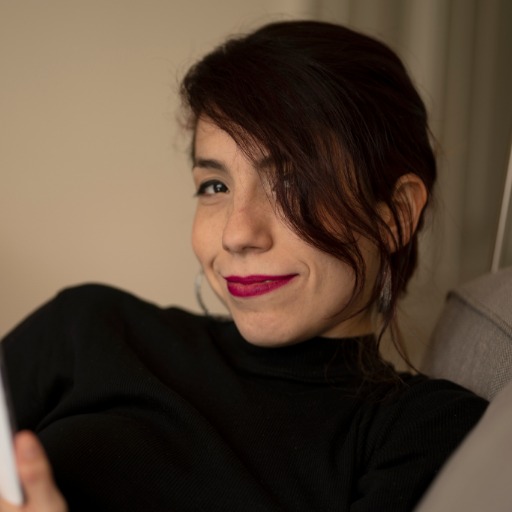
These are among the questions discussed in this interview with Estefanía Meléndez — former Venezuelan Ambassador to the Western Balkans, expert on Russian influence in Latin America, and Associate Fellow at the Center for the Study of Democracy (CSD).
Meléndez argues that Venezuela's democratic transition cannot be measured in months. Instead, she sees the current negotiations as an imperfect but necessary process, one that reflects the political realities on the ground rather than the aspirations of the democratic opposition. She also contends that the United States has deliberately chosen a gradual strategy aimed at minimizing risks while maintaining pressure on the remaining Chavista leadership.
Looking beyond the negotiations themselves, Meléndez emphasizes that restoring democracy will require rebuilding Venezuela's institutions from the ground up. In her view, sovereignty is not something that will automatically return once a political agreement is signed — it must be reconstructed through free elections, functioning democratic institutions, and the gradual restoration of the rule of law.
A great deal has happened — though not necessarily what many of us had hoped for. The year began under extraordinary circumstances with the military operation that led to Nicolás Maduro’s capture. I do not believe such an event is healthy for any country, but it is important to remember that Venezuela had been moving toward that outcome for twenty-seven years.The responsibility lies squarely with the regime. Over the years, there were countless opportunities to prevent the country from reaching this point through political solutions, yet those opportunities were consistently ignored.
Recently, I listened to an interview with Delcy Rodríguez, the so-called interim president. Perhaps I am misinterpreting her remarks, but it seemed evident that she disagreed with many of her own allies over the decisions that ultimately led to these events. That caught my attention.Although Maduro’s arrest and the prospect of him facing justice are undoubtedly important, the circumstances that made such an outcome necessary reflect a profound institutional failure. Nevertheless, the country must move forward, and significant changes are taking place.
Our greatest concern remains the restoration of democracy. Progress has certainly not come at the pace we would have liked, but there are signs that movement is beginning — for example, the launch of a new negotiation process.
The recent earthquakes, however, brought much of the country to a standstill. They were devastating not only for Venezuela itself but also for Venezuelans abroad. More importantly, the disaster exposed something we have been warning about for years: the complete inability of state institutions to respond effectively and protect their own citizens. This tragedy has once again demonstrated why rebuilding democratic and functioning institutions is so urgent. Venezuela needs free elections and a government that genuinely represents its people and possesses the capacity to govern effectively.
That is probably a question best directed to the U.S. administration itself. However, I do not believe democratic forces need to be "installed" in power by anyone from the outside.
María Corina Machado and Edmundo González Urrutia already won the presidential election two years ago. Since María Corina Machado was barred from running, Edmundo González became the opposition’s candidate instead. The Venezuelan people made their democratic choice very clearly, and they know who they regard as their legitimate leaders. The regime simply refused to respect that outcome. The reality, however, is that democratic forces lacked the means to assume power. That is precisely what unfolded in 2024. We witnessed widespread repression, arbitrary arrests, and the torture of people who sought to defend the true election results and show the world what had really happened.
This is how authoritarian regimes operate. They control territory through armed forces and security services deployed across the country. The democratic opposition is peaceful — it does not possess weapons or coercive institutions. We can speak out, protest, and insist that truth is on our side, but that alone is insufficient to remove an entrenched authoritarian regime.
So the question is not simply whether the United States wished to place democratic leaders in power. It is far more complicated than that. Ultimately, only the U.S. administration can fully explain why it chose this strategy. Washington opted for dialogue with the remaining elements of the regime, and that approach inevitably moves at its own pace. Comparisons with Panama are understandable but imperfect. Panama was a much smaller country, operating in a completely different historical and geopolitical context. Venezuela is far larger and presents considerably greater risks.
My interpretation is that the United States chose a path intended to minimise those risks while preserving the option of coercive pressure. The events of January 3 demonstrated that military force remains available should negotiations ultimately fail. In my view, that serves as an important source of leverage. Frankly, I never believed that one of the world's most corrupt and repressive regimes could be transformed within three, five, or even seven months, despite the expectations of many Venezuelans. Of course, many people say, "This is not what we hoped for." But we also have to ask ourselves a difficult question: what practical tools does the democratic opposition actually possess?
In my opinion, if it had possessed those tools, it would have assumed power immediately after winning the election two years ago. For now, we must place a degree of trust in the process being led by the United States, while recognising that Washington has its own national interests, just as Venezuelans have theirs.
Listening to President Trump requires a certain degree of caution. His public statements do not necessarily reflect the reality on the ground in Venezuela.
We have every right — and indeed every obligation — to criticise developments when progress falls short, because we have a direct interest in seeing our country improve. At the same time, President Trump is also driven by domestic political considerations, and Venezuela plays an important role in that context.
It would be inaccurate to suggest that the United States exercises complete control over events inside Venezuela. Yes, Venezuelans love to dance, and people continue to dance. But that should not be mistaken for genuine happiness or interpreted as evidence that the country's problems have been solved.
Those problems will only begin to be addressed once Venezuela has legitimate political leadership and a representative government. At present, the regime remains firmly in positions of power.
One of the major challenges facing Secretary of State Marco Rubio and his widely discussed three-stage strategy — stabilisation, recovery, and political reconciliation — is that much of it still depends on negotiating with representatives of the existing regime. Simply reshuffling individuals within the same political structure will not produce meaningful change, and that is largely what we are witnessing today.
Much of what is happening takes place behind closed doors. There are also differing views within the White House regarding the direction this process should take. Nevertheless, the fact that the process continues to move forward is, in itself, an encouraging sign.
As María Corina Machado herself has publicly stated, neither she nor her team are participating directly in the negotiations. She has also emphasised that this process is not about her personally or about her role as a political leader.
I would not say that. There are representatives of the democratic movement participating in the talks through the 2015 National Assembly, which remains the only Venezuelan institution recognised by the United States as democratically legitimate. It was the last national institution elected in genuinely democratic elections.
María Corina Machado and Edmundo González Urrutia won the presidential election, but they were never allowed to assume office or take control of the institutions of the state. As a result, they possess democratic legitimacy in the eyes of many Venezuelans, but not institutional authority.
For that reason, successive U.S. administrations have continued to recognise the 2015 National Assembly as the country's legitimate democratic institution. Although this situation may appear paradoxical, it explains why its representatives are participating in the negotiations.
Many of those involved have been fighting for democracy not only since 2015, but since the very beginning of Chavista rule. María Corina Machado herself has repeatedly referred to the Panama Manifesto, which includes many of the same political parties and democratic actors represented through the 2015 Assembly. Ultimately, everyone shares the same objective.
Perhaps communication between these democratic forces could be stronger, but I believe they understand that they are working toward a common goal.
We must also acknowledge a political reality. María Corina Machado's direct participation in the negotiations appears to be a red line for Delcy Rodríguez. Whether we agree with that position or not is beside the point. If the other side refuses to negotiate with a particular individual, we have very limited options.
María Corina Machado cannot simply return to Venezuela and demand a seat at the table. Nor do Venezuelans possess the leverage to compel the regime to accept every condition proposed by the democratic opposition. Negotiations often require accepting an imperfect arrangement in order to keep the broader process alive. If we cannot force the regime to negotiate directly with María Corina Machado, then we must continue working with those interlocutors who are accepted by both sides.
This is not the first negotiation process Venezuela has experienced. We have seen talks in Mexico, Barbados and elsewhere, none of which ultimately produced meaningful political change.
What has changed today is the balance of power. That is encouraging. At the same time, the regime's red lines remain largely unchanged, and we must find ways to move forward despite those constraints.
Anyone who genuinely supports democracy in Venezuela should hope these negotiations succeed, because they are likely to be long, difficult and politically costly — but they may also represent the country's best opportunity for a peaceful democratic transition.
Venezuelans have always been known for wanting to shape their own future — what María Corina Machado often describes as finding an "A la Venezolana" solution. That approach does not necessarily coincide with Washington's preferences.
I do believe that Dinorah Figuera represents the Venezuelan people. At the same time, it is equally true that without the political backing of the United States, her position would be considerably weaker.
The parties you mentioned, including leaders such as Leopoldo López, have consistently supported María Corina Machado. I believe this is a moment when the democratic movement must look forward rather than dwell on its internal differences.
Political transitions in Venezuela have never been easy, and they will not become easy now. We have to remain focused on the common objective, which is the restoration of democracy.
That democracy may not be perfect from day one. No democracy is built overnight. Rebuilding institutions, restoring public trust and strengthening the rule of law all require time.
If these negotiations ultimately become a long and difficult process — as I expect they will — we should nevertheless be prepared to support them if they offer a realistic path toward democratic change.
The alternative is difficult to identify. I am not convinced Venezuela will have another opportunity like this in the foreseeable future.
I do not believe Venezuela's sovereignty will simply be restored the moment these negotiations conclude. On the contrary, I see the negotiations as only the beginning of a much longer process of rebuilding national sovereignty.
True sovereignty cannot exist without democratic legitimacy. It requires free and fair elections — not only for the presidency, but also at the regional, municipal and national levels. It requires functioning institutions that are accountable to the people and operate under the rule of law.
For nearly three decades, Venezuela's institutions have been systematically weakened and politicised. Rebuilding them will take time, patience and sustained political commitment.
The same applies to sovereignty. It cannot be achieved through a single agreement or a single political transition. It must be rebuilt institution by institution, election by election, until Venezuelans once again have a state that genuinely represents them and is capable of acting independently in their national interest.
That is why I see these negotiations not as the end of the process, but as the first step toward restoring both Venezuelan democracy and Venezuelan sovereignty.
Sovereignty must be rebuilt institution by institution, election by election.