
Russia won't stop its aggression in Ukraine, the Middle East also will be in flames at least until the current regime in Iran is in power. But the major global conflict, involving simultaneous China's aggression against Taiwan and Russian attack on NATO is still avoidable.
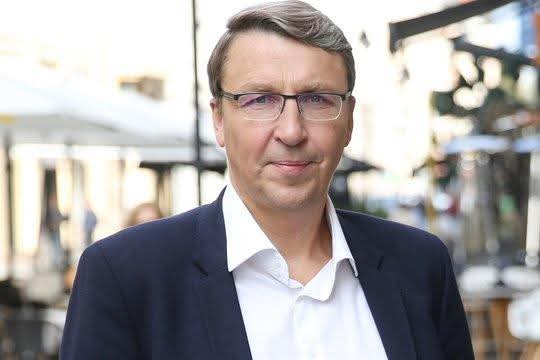
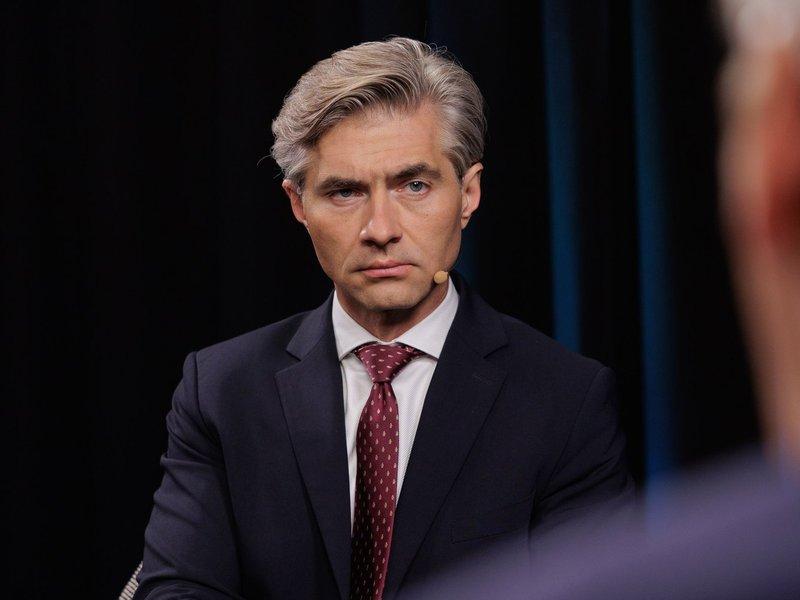
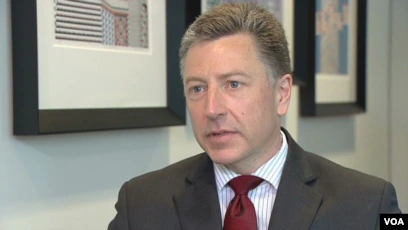
These were some of the main thoughts of the speakers at the opening discussion of “Arch Frontline”, broadcasted by Lithuanian national news agency ELTA – the minister of foreign affairs of Lithuania Kęstutis Budrys and former US ambassador to NATO, former US special envoy for Ukraine, distinguished fellow at Center for European Policy Analysis Kurt D.Volker.
Nevertheless, minister Budrys said, that he's alarmed, because now Russian regime and its leader Vladimir Putin can be more seriously, than ever, considering the open attack on NATO country or countries. But Mr.Budrys and ambassador Volker expressed conviction, that the risk to be crushed by retaliation and/or severely limited resources will stop Putin from taking this step.
But the main process, according to the both speakers – the transformation of NATO, strengthening European part of the alliance. That is, strengthening the European part of the West, as the transatlantic geopolitical subject itself. The future of this subject and the state of the world will be very much defined by the course and success of this process.
-Yes, indeed, it is in transformation right now. We are moving to the phase NATO 3.0, the very concept that was offered by Pentagon recently. I like it a lot. I like the very idea of a stronger European part within NATO, with Europe being the conventional power within the Alliance and the one that is more and more taking responsibility for the security and stability in its neighbourhood.
So this is number one. How to assess the overall situation of NATO, where we are, it very much depends on the locus, on the place where you are, whether within or whether you are outside the Alliance.
So from outside, and speaking about all the commentators and media reports, and even in Ankara, there was the attempt to make this big drama that we are collapsing, something major will happen, we don't know whether the US president Donald Trump – that was months before the Ankara summit – will come, then we knew that for sure, he is coming with both secretaries, and then there was still intrigue what he will say, and everything was really smooth and stable as it has to be within NATO. So from inside, from inside the organization is much, much looks much, much stronger than from the outside. And this is the problem then we are talking about the perception and when we're talking about the effectiveness of deterrence. And that's why the message of unity was so important – just to say that we are here together, we are 32 at the table, we are discussing the things how to become stronger, we are showing each other the numbers, we're implementing the pledge. So that was that was the message to the outside, to our adversaries: don't try to test us.
If we would take the numbers and we would look into the tables, what we achieved during the last year after The Hague summit, after the pledge to increase our defence spending each up to 5% – the numbers are showing the good trend. We are climbing up and the European Canadian parties becoming bigger and bigger in comparison to the United States and in total numbers. So overall it is it is good story unfolding. What it will look like from the historical from the historical perspective, looking from the future point of view, we will see, but as we now changed our assessment of The Hague summit right now, we forgot about also uncertainties and some speculations that it's the last summit of NATO. I think that Ankara assignment will also be perceived as a success story.
-Well, I think this was a very positive summit. Maybe the best way to assess it is to put yourself in Vladimir Putin's shoes and think about what you see. What you see is unity. Even President Trump talking about Alliance unity, something he hasn't done before, you see much greater levels of defence spending, including investment in defence industry, which is going to produce more capability over time. You see continued support for Ukraine, president of Türjye Recep Erdogan inviting president of Ukraine Volodymyr Zelensky to be there, and then Zelensky and Trump having a bilateral meeting where Trump is very supportive and even says he's going to allow Ukraine to develop Patriot missiles under a license from the United States, which is going to help Ukraine with its air defence against Russian missile attacks. So if you're Vladimir Putin, you were hoping to be able to disrupt this summit, including by a 90-minute phone call with President Trump just in advance, and in reality, you ended up with a pretty strong show of force from NATO.
So I think that this was quite successful from that perspective. And would just echo what the minister said: you have to look at this as a little bit like a reality TV show. President Trump likes the drama, he likes the theatrics, he likes to keep people guessing. He goes and publicly criticizes Spain for its lack of commitment to NATO and defence spending. He calls into question various things, maybe he'll move US forces out of Europe. And then with all that tension, he provides the dramatic release as well, saying, oh, it was a great summit, everything's fine, great meeting, a lot of love in that room. And it made for a very successful summit. So that that's the way I look at that and I and I think we can come out of this feeling pretty good about where NATO is and I hope that we keep it this way.
- Yes, to some extent, but on the other hand, I disagree with this assessment more, starting from the very point that we know what we have to do, all the numbers which we are racing to achieve or already achieved...
-Yes, those were the numbers that we knew before the new administration – before the Trump administration coming into the position, we knew after we agreed on our regional defence plans. According to them, we put down NATO capability targets and that's why I'm advocating for declassifying them those just to stop these speculations that ‘oh we’re almost there’ – there are huge gaps in our capabilities and we knew the price to fill in those gaps with the with the costs that were some years ago and we knew that we have to increase our defence spending almost up to 4 percent of GDP – we knew this number. So that exercise was done in the same manner as we did it in Lithuania with our national division. We said that we need this capability, it looks like this, you know, it needs so many, you know, tanks and stockpiles and everything and the price is like this, you know, and, and that's what it cost: a total of around 25–26 billion for us only.
So we knew the price for it. And then the question was how to get there when the countries were not even making 2 percent and we need above 3 percent.
And then we had this, we had this huge factor coming into the scene that was president Trump that was our strongest ally saying that look guys, we need to spend more and then we need to increase our spending till 5 percent, because there was no discussion why we have to do this before the Hague summit – all the discussion was around whether we can make it and how to implement it because everyone feels tension and political burden with all the other priorities nationally, as we do in in Lithuania.
So that was clear what we have to do. What is a bit in the grey zone, is the ambition of Europe where they cannot also feel on my fingertips what we are talking here about, about this autonomous European pillar. Because if we cannot fulfil the European pillar within NATO with the huge backbone that is United States, how come you can't become autonomous with not spending even twice what we pledged in The Hague? So this is something vague – it is a concept and some hologram that is not working with Putin: he doesn't believe this stuff. Not in these tables, concepts – he believes what he sees. He sees armor.
-Yeah, not words. And this is why I'm really sceptical about the debate that is ongoing in Europe and paradoxically, most intensively in those capitals that are spending least, about how Europe can be autonomous – autonomous where? In ‘blah blah’ field or in in a field where we could and should be able to plan our operations and implement them swiftly and independently and we know that we cannot.
So these are two tracks and I see that they sometimes create illusion that we have a choice – we don't have a choice. If we want to have credible deterrence – that's with the NATO and that's keeping the US as much involved into European affairs strategically as it is possible.
-I completely agree with the minister here. The criticism that you read out is reflective of that attitude that ‘oh, we Europeans can't do anything, we have to know what the United States plan is’. No, that's the whole point of this greater European leadership and greater European capability – you don't need to wait for the United States, you can decide, you can do. And the fact of doing that actually makes NATO stronger.
-Of course, there's an enormous potential – half a billion of people, an enormous GDP, lots of technological innovation, lots of industrial capability, lots of interoperability, lots of experience. Europe has enormous potential. The difficulty is in organizing itself, making decisions, deciding to spend the money, deciding how to do it efficiently. Take a look at the European defence industry – I think that it is still far too fragmented, I think that there is no EU plan for how to stimulate industrial development as much as there could be, and I know this is a great frustration to the Commissioner, who happens to be Lithuanian. I know he would like to see more, but the EU has found it very hard to organize this way. But the potential is enormous.
-Well, I think you're right. I think it was demonstrative from Putin to do this just in advance of the summit and try to show NATO that, hey, we're still here, we're powerful, you have to respond to us, you can't just support Ukraine and think that this is going to be OK, we have these means. That's the message he was trying to convey.
I think he actually achieved the opposite effect and actually contributed to President Trump's decision to agree that Ukraine can produce its own Patriot missiles because clearly they need the air defence capability and there aren't enough Patriot missiles to go around. I think it contributed to that. I think it contributed to the greater sense of unity and support of Ukraine. If you think back over the past year and a half when President Trump has talked about NATO, Ukraine, NATO’s support for Ukraine, he's always kept a bit of a distance. And I'd say at this summit, this was the most we've seen in terms of alliance unity in support of Ukraine probably because of the kinds of attacks that Putin is doing as well as Ukraine's success in pushing back on that, bringing long range strikes and medium range strikes onto Russian strategic capabilities and logistical capabilities, turning the tide in the war and I think that this is actually helping unify NATO even more.
-Yeah, that issue was particularly discussed during the summit, because we had the NATO Ukraine Council meeting in the format of foreign ministers, and then also leaders addressed this topic. And I think I agree with both of you that was a deliberate demonstration of power from Russia – but not only that, as they also wanted to demonstrate the lack of support to Ukraine and some certain critical shortage. So there are missiles flying above the main cities,
-Yes, and what you can do about it? You can do basically nothing in the meantime. And they know the reason - and we know the reason, because there is there is lack of interceptors in Ukraine, PAC-3 in particular, the ones that the Patriot system uses. And we know why – because we cannot produce collectively and mainly where those sites are right now, and those stockpiles that we still have in some European countries, we are not providing to Ukraine because of other considerations and because of the need we have also for our own air defence. So this is really a big problem. And of course, there was an attempt to show this overwhelming upper hand of Putin and an advantage on the battlefield. That is not true – on the ground and on a battlefield and what concerns the vulnerabilities of Russia's own air defence and success of Ukraine attacks deep in the country, they show that that the situation is changing and the very mood was that there is some moment that is created by Ukraine and it was not only for the summit, but it was overall during this year that they can change the curve or the tide as ambassador just said. But to be more assured about the upcoming winter, we have to put more efforts in and bringing more air defence to Ukraine.
-Well, some of the preparational solutions are there. Of course we should also believe and trust Ukraine defence industry’s capabilities. They found the way to create the deep strikes capabilities on their own: drone, hybrid with the missiles and so forth, counter drone and then air defence that was the most effective that they created themselves and actually now exporting to Gulf countries also to Lithuania. But what concerns anti-ballistic, it is still lacking this element.
So this is the one line of effort, as I see it. The other was increasing the production capacity, maybe bringing it closer to the to the place where it is the most needed. The other thing, of course, is to put additional pressure on Russia in other ways to put Russia at the table and negotiate, because be it different, different parties to the to the war and be it us, for example on the side that is defending – we wouldn't be acting like this. You wouldn't be allowing just taking those barrages of ballistic missiles – you would just hit where they're flying from and then they hit the other targets deep in Russia causing them damage.
-Well, I certainly respect both generals. I know general Zaluzhny fairly well and I understand what they're saying – that you shouldn't be complacent. You shouldn't think the job is already done and you certainly shouldn't think that Putin is going to stop. Putin has made this a quasi-religious cause for him to rebuild the Russian Empire and to make sure that Ukraine is subordinate to Russia, so he will not stop in those goals. And the only thing that Ukraine really needs to fight for is a ceasefire, because Putin will never reach an actual peace agreement. And even if he does sign a piece of paper, he won't mean it. So we have to stop him militarily, force the ceasefire and continue to build. So I get the caution.
That being said, I think there are two factors here that come together very significantly. One of them is money. Ukraine by taking out Russian oil refining capacity, Russian export capacity, is really hurting the Kremlin's finances, and with oil prices back down to normal levels again after a spike during the US war on Iran, I think that the money available to the Kremlin to keep this war going is gradually drying up. It will take time, it's not a sudden change, but that the financial pressure on Russia is real. We can and should contribute to that with more sanctions, but that's one factor.
The other factor is troops, basically. The Ukrainians have mastered drone warfare on the front line in such a way that the Russians are unable to advance and they are losing thousands and thousands of soldiers every month, and they can't replace them at that rate. So it's going to force an issue in Russia that Putin will have to decide: do we keep trying to, you know, get fifteen, twenty, thirty thousand soldiers a month into the military and keep losing them, in which case you have to institute some kind of national conscription in order to keep up those numbers, or do we have to recognize that we are not going to have those numbers in the future and our military effort is not going to achieve the goals that they set out of taking the four oblasts that they claim are part of Russia and maintaining Crimea and changing the government in Kyiv and so forth.
So I think those two things, the money and the military efforts are really starting to squeeze Putin and he's going to have to make some fundamental decisions about a ceasefire either this fall or, if he wants to play out the winter, certainly by the time we're in the spring next year.
-When I have time, I still check what's happening in the most radical Telegram channels of the pro-war people, just to get the feeling what they are concerned about, what they're angry about.
-Yes, I still have some 15 on my list. So, those voices were calling for escalation and especially with NATO from the very beginning of this “special operation”. And also some of the voices were recognized in the West, for example, official pundit Sergei Karaganov calling for a nuclear strike on Poland just to prove everyone that nuclear deterrence is a serious thing, and if someone laughs at you, you just you have to hit them. So there was this party within. So we shouldn't also take everything, you know all the noise as something that is changing the very approach…
-Yes. But what we see there is something new and that what you can see in the reports that are really alarming is that some of the ideas might turn into the plans and then the plans can be put on the table for picking which direction to go. Because yes, this moment or the point in the development of the events is coming and the kill rate is above the mobilization, current mobilization rate and there are some decisions that have to be made by russian regime, otherwise Ukrainians will be in a better position.
-If I would have to advise him, and I’m sending my small advice here: just go and negotiate.
-Yes, because take all these circumstances – you can have a win-win situation and all those that intermediate will have the good outcome.
-He cannot properly with the current situation, but that's why some maybe extra encouragement would be needed with our extra sanctions -- in the best way coordinated within G7.
The other options that might seem the attractive for the regime would be to escalate somewhere else and then to deescalate all the theatres at once. So I think that would be a huge mistake to go this direction from the side of the regime even though knowing that previously there were so many times when they miscalculated or made the decisions on very wrong assessment or those assessments were made on the wrong intelligence or some false intelligence. So to avoid this scenario, and this is our primary interest as being on the very front line is to send the clear signal that we know what you are thinking about that and what you are cooking – that’s number one; and number two, if something, some of these scenarios will be implemented, we will directly go with full defence and there will be no grey zones and no time for negotiations or something. So we will get immediately into the hot phase with NATO. We want to avoid that. So don't do this.
-Well, I think we always have to remind ourselves that Putin is not holding back right now. It's not like he's waiting for something to decide whether, OK, then I'll escalate and I'll do something else. He's doing everything he can, and it's not working, so he doesn't have that capacity to really escalate. I mean, he's losing the ground, he's losing the war slowly against Ukraine. He would certainly not win a war against NATO and he's not going to try to take that on. In fact, my, my best judgment, and I don't know this as a fact, but my best guess is that the reports we've had about him considering an attack on Poland, something kinetic as you just described, are leaked into their setup, their intelligence. You know, they're conversations among russians that are meant to be picked up by our intelligence to get us to believe that they might consider that so that we react to that. I don't believe it's real at all because they know they would be destroyed if they were to attack NATO in that way.
And likewise, nuclear weapons, I think they do the same thing – they talk about nuclear weapons to get us to react, not because they think that they would actually achieve any purpose or that they could actually use them and get away with it.
So I think his options for escalation are quite limited. And also, as I mentioned, I don't believe Putin ever will negotiate because negotiating will mean recognizing that Ukraine is a sovereign, independent country, yes, it would mean recognizing that Zelensky is the legitimate leader of Ukraine, and it would mean recognizing that there's an international border between Russia and Ukraine. He'll never accept those things. So I think the best that we can hope for is a ceasefire that we then prolong and deepen and make real for the long term – that's the best we can achieve.
If I could give advice to Putin, it would be – “stop before it's too late”. You are going to come to a point where you're going to have to choose between continuing this war or fragmentation of the Russian state, the finances, the regions, the support of the intelligence services and the military and the elites. This is all getting more and more tense, you got to stop before it gets too far. And I think that that is what we should be pushing to make that choice as clear as possible to Putin.
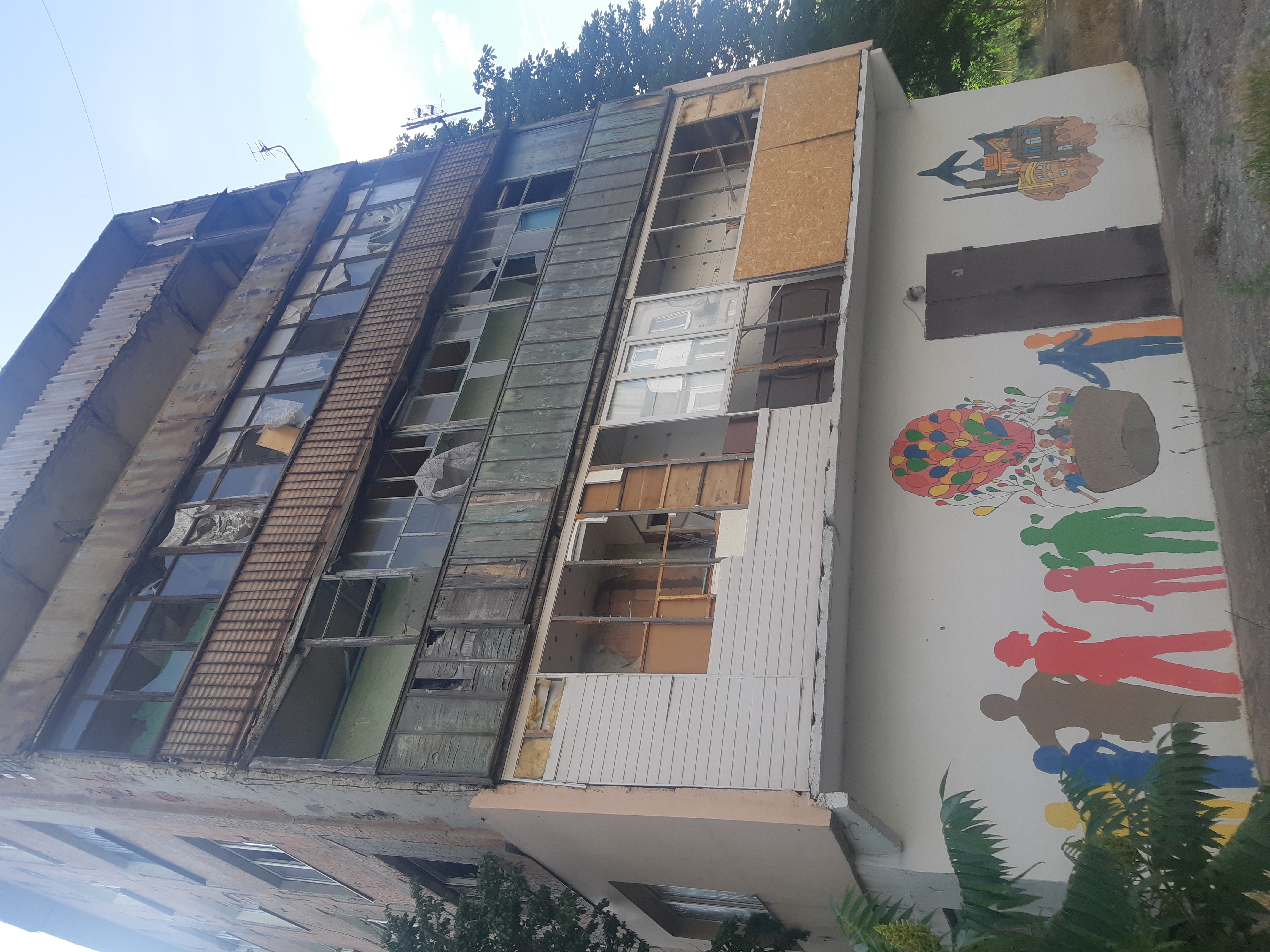
-The overall effect on the global stability, be it political, be it security-wise or economic-wise is huge and you can see it everywhere, be it a gas station or with the inflation of the prices everywhere in the shop. And we will see them even more in the second-half of this year when the prices of fertilizers will hit the farmers hard everywhere. So it's a big thing and that's why we have to share also the solution as Europe and as a European nation.
So first of all, we do not see it as something outside there, that it is not ours, that we don't want to have anything related to it. Lithuania took stance, we said that we will share this, with our contribution being part of the solution. First of all, free navigation through Hormuz strait – it’s in our interest for oil, for oil products, for LNG, for fertilizers to move swiftly and without the creation of any bad precedent of tolls collected from the vessels crossing the streets that would create a nightmare everywhere in in the world.
Indirectly and directly, it affects the very aggression against Ukraine and the dynamics also. First of all, it feeds the Russian war machine through the increased prices of oil.
-As the minister, I can say, that the working hours of the leaders that are making the decisions and what they are working on at the specific time is important, but limited resource. If you spend four or five hours on the Middle East, it means you have less time to spend on Ukraine issue. And yes, the attention is now back again directed and concentrated on Middle East.
So this is the effect. The potential to supply Ukraine with the air defence, now with the increased demand in the Gulf countries, we see that it also decreased the overall stockpiles in the United States. We also see it might be a factor to attract some ideas about ‘let's maybe test it for how long they would last in a two-theatre scenario’ and so forth.
So there are many, many reasons for us to get more engaged into solving this. I'm not even mentioning the Iranian proxies and Hezbollah in Lebanon that were activated, the Houthis in Yemen.
-Yes, so everything is under tension and is set to boil, so I think even for Russia this situation is really disadvantageous, but also it creates some opportunities. But overall, it won't play for them well because we have a broader coalition that it is interested in breaking the Iranian–Russian axis and that is the countries in the Gulf region that see how Russia also assists Iran in keeping what they are doing: retaliating, hitting them. So I think that’s why the European Union as an organization has to be more active and all of us as NATO allies, we nationally have to be also more active in it, as did Lithuania. We already have the mandate to be part of US-led and/or UK-, France-led naval operations in Hormuz strait. So, we say we will be there, we already have a mandate.
-Well, that's, that's exactly the point: unless the regime is taken out, we're going to have a problem. And we don't have the will to take out the regime. So we have a problem.
-We, the United States, we the world. Because, you know, the United States started this war against Iran but didn't really think it through and was not prepared to go all the way in for regime change, did not want to use ground troops, did not want a long war, underestimated the effect on global oil prices, on the global economy, on gasoline prices in the United States. And so we don't want that to continue, we want the war to be over, we want the global economy to be stable and oil prices to be low.
And yet, we're not going to get that – well, let me say we are going to get that if we just allow the Iranian regime to survive and keep, keep the war from re-emerging. But that means Iran is going to try to exercise control over the Strait of Hormuz. But of course we and the world find that unacceptable as well, so we keep pushing back on the Iranians – no, don't do that, no, don't do that – but we're not willing to go all the way for regime change to bring about that kind of freedom in the Persian Gulf again.
So we are stuck right now, and I think we are stuck through the midterm elections in the United States. I don't think President Trump's going to resume a major war before the midterm elections and as a result, Iran's going to increasingly try to assert control over the Persian Gulf.
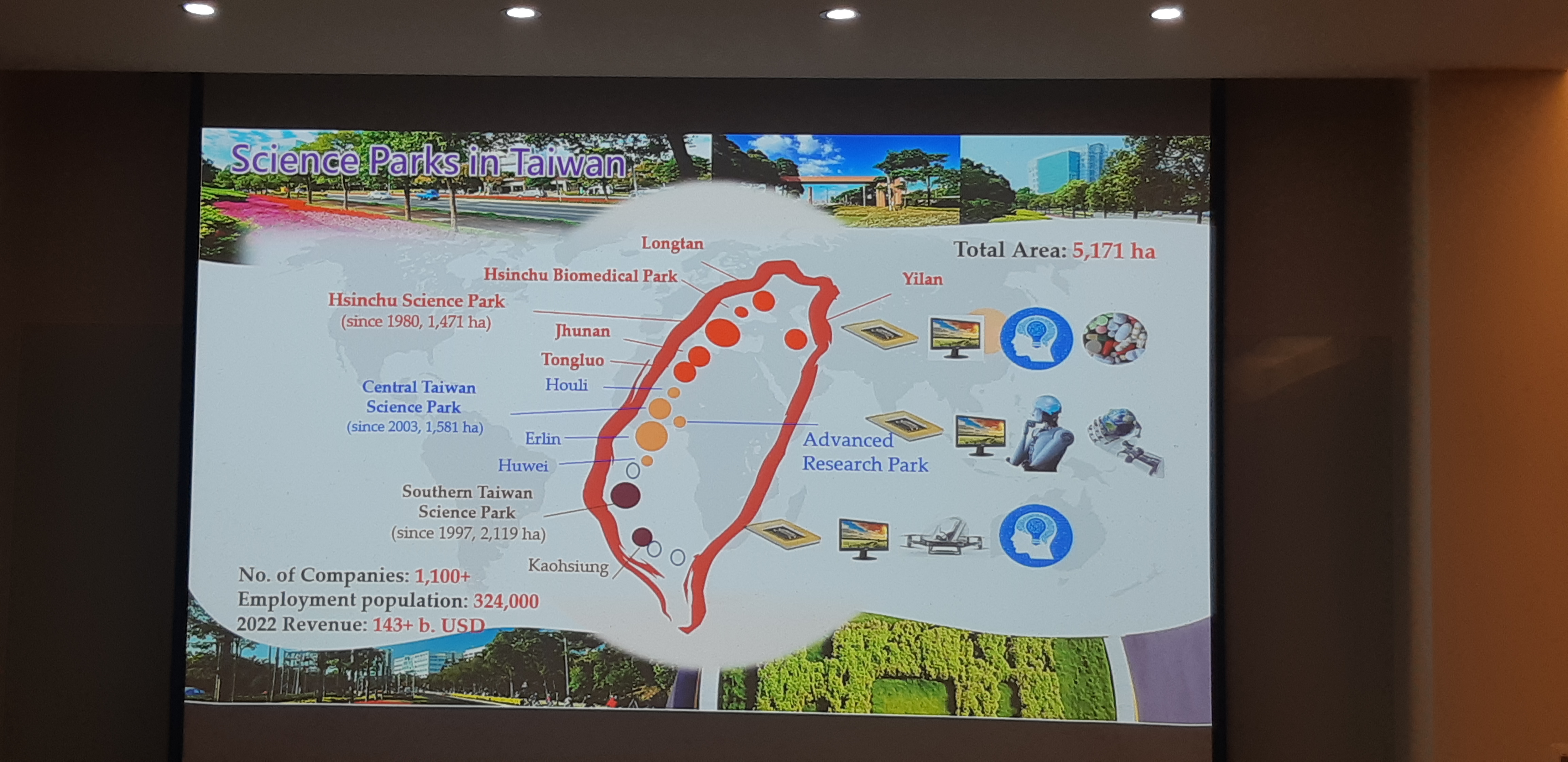
-Ok, I'm now better placed in a position where I could answer what to do and what we should be prepared and what we are planning instead of drawing this scenario. So I would be happy to hear from ambassador's point of view what would be the scenario, but I can assure you that two-theatre situation is connected by a potential attempt to test or overstretch united capabilities of United States.
We all understand that this is this is the glue for these two scenarios and especially now, when we have the third one in in the Middle East, when we understand what are the consequences for the for the level of the stockpiles of the United States. We all see in some of the tables where you can, you can see how many years it will take to rebuild and then regenerate some of the some of the missiles that were used in the region. And it is obviously known for both Russia and China what our current status is. And when we have these timelines and especially when we circulate them publicly and discuss them when we say that, ohh, well, we will be ready in seven years, we'll be ready in nine years, and we will reach 5 percent of GDP, all of us in 2035. Be me on the other side, I would think why wait, why do you wait for those 5-7 years? And if I have the task in front of me and if I can calculate that OK, maybe it's 80/20 chances that I will be successful, the challenge in front of us is how to make deterrence in both theatres effective.
We know what we have to do in Europe already. It means that we understand that in case there are two theatres, more US capabilities will be drawn back to the United States first of all, because that's the top priority and that's what we heard in the national security strategy and defence strategy, and the other part will be also given to the to the Indo-Pacific, and then we Europeans will have to manage conventionally more difficult situations than we thought. So we know what we what to do.
Then the question is what's our contribution in the Indo-Pacific as Europe's contribution in in the case something is there? That's why the NATO IP4 meeting during the Ankara summit, where we also had South Korea, Japan, Australia and New Zealand, was so important for it shows to the others that we connect these things. We already see that OK, this is not North Atlantic, but still we see as it affects our security situation and we want to cooperate, we want to keep stability.
So there are many, many challenges already based on this assumption that these potential theatres or security situation, if you will, they are connected.
-First off, let me just say I agree with the minister's comments there – in terms of what we do, the number one thing is deterrence. We have to have the capabilities, we have to have the will; we have to have the messaging to make clear to potential adversaries that this will not work.
So deterrence is the main thing.
Now in terms of the likelihood of these of this nightmare scenario, I just want to say I don't think it's terribly likely on the European side, I think that Putin knows he would lose and lose badly in any direct conflict with NATO and deterrence there does work and he won't do it.
So we've managed that for the time being. There's a scenario where if the war in Ukraine ends, we get complacent, he builds up his military again for another five years, then we could face a different scenario. But right now, I don't think we face that prospect.
Second, in Asia, I'd say the difference here between Russia and China is that Putin is reckless, Putin is aggressive, China's cautious and patient, and I think that's something that we can work with better in an Asia scenario than we can dealing with Putin.
And then third, we have to remember that Putin and Xi are not equals and Xi does not view Russia – Putin – as a strategic ally. In fact, they have a lot of differences and China would love to get Russia's east back into Chinese orbit again. So there's a lot that keeps them apart at the same time, and we can be taking advantage of those differences rather than being afraid that they're going to collaborate and create this global war – I think that’s less likely.